
We were in reception at 9:00am, waiting for one person to arrive from the airport. He had been caught in a snow storm in New York and after a convoluted route and four days, he arrived in Huahine to be re-united with his wife. The poor chap only had time to drop his luggage in reception, and we were off.
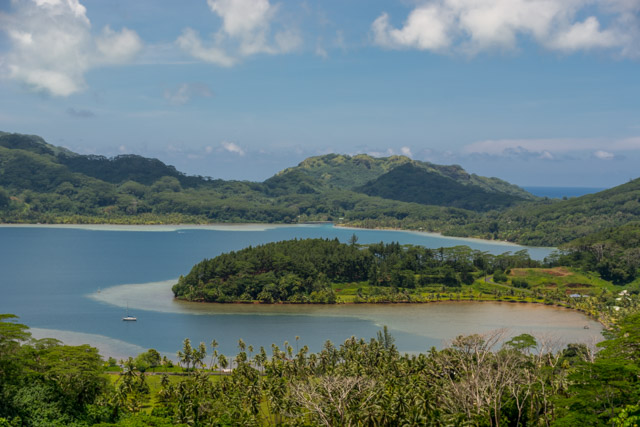
We had a half day tour of Huahine ahead of us. We would explore both Huahine Nui (Big Huahine) and Huahine Iti (Small Huahine) in a figure of eight – the two islands are separated by a narrow channel and connected by a bridge.
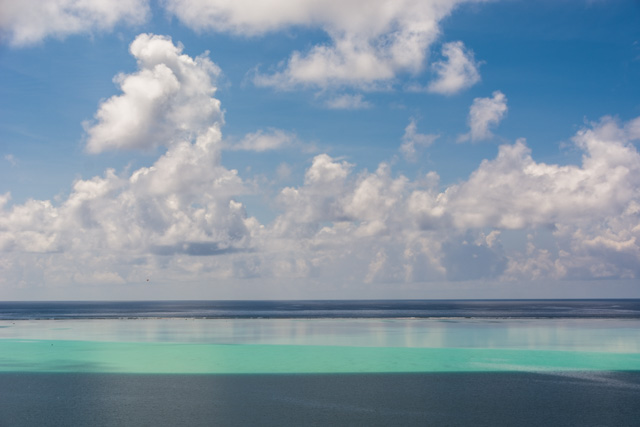
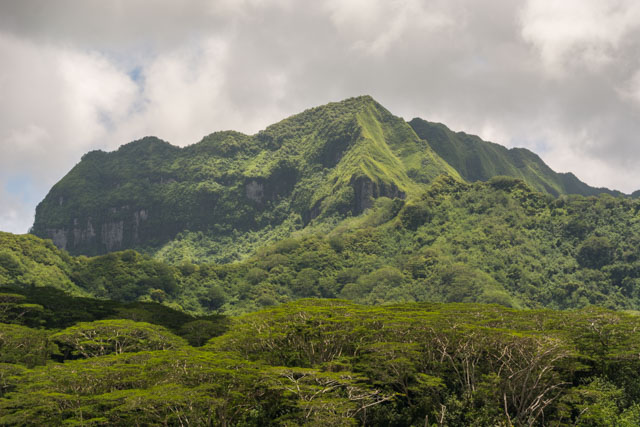
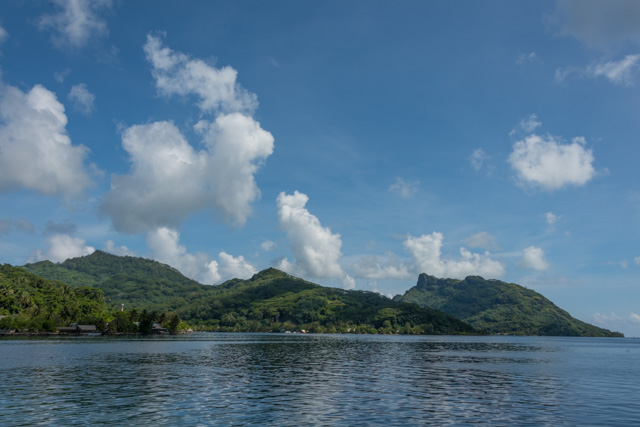
Just like the other Society Islands, Huahine has a beautiful lagoon surrounding a lush green interior.
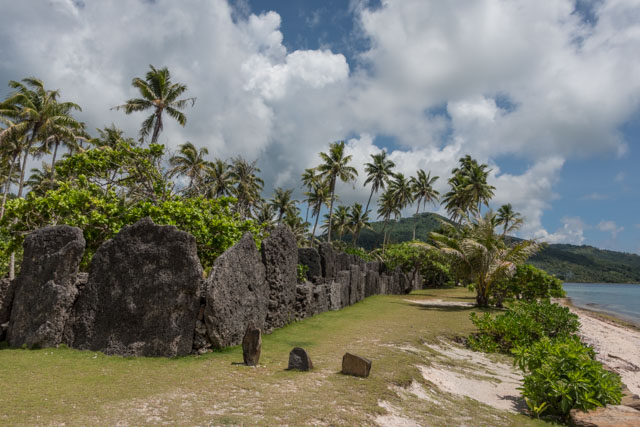
Our guide, Manava, told us about Polynesian origins and migrations, some aspects of traditional Polynesian culture, religion on Huahine (in one village, there have eight different denominations) and Marae (temples). He talked about archaeological finds, explorers, missionaries, colonial France, flora, fauna, island formation and some aspects of life as it is today and he even speculated as to the future of the island. It was a non-stop flow of information… in just over four hours.
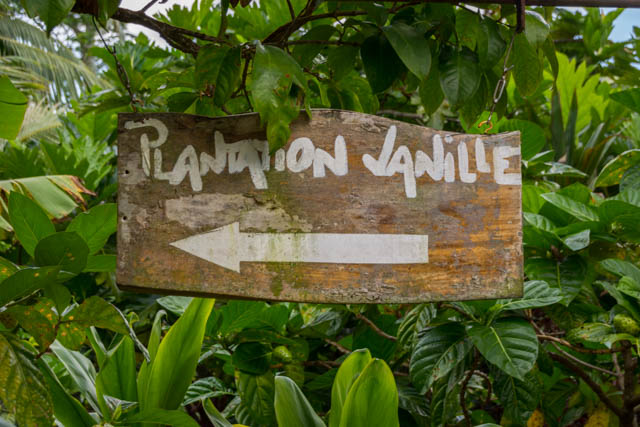
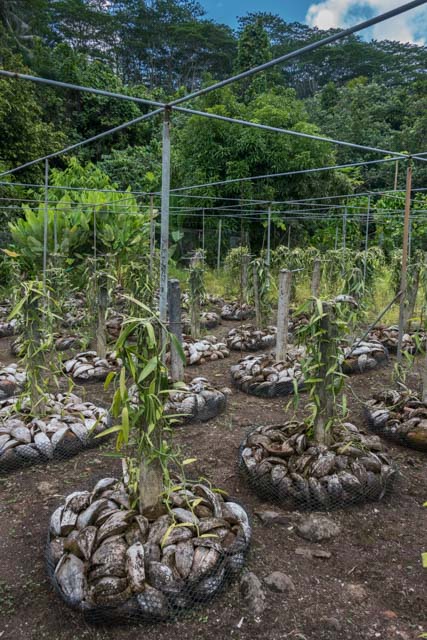
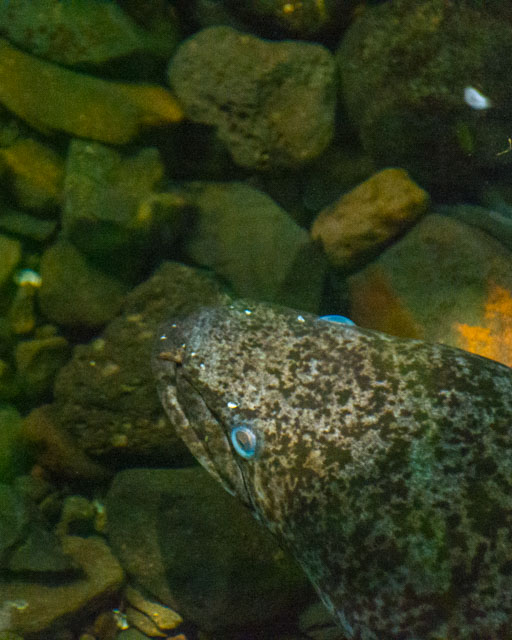
We visited a vanilla plantation, stopped to looked at a mangrove and learnt more about how they grow, observed a motu from a distance (a motu is a reef islet formed by broken coral and sand within an atoll). And then we stopped to look at the sacred blue-eyed eels from Faie. Weird things if you ask me.
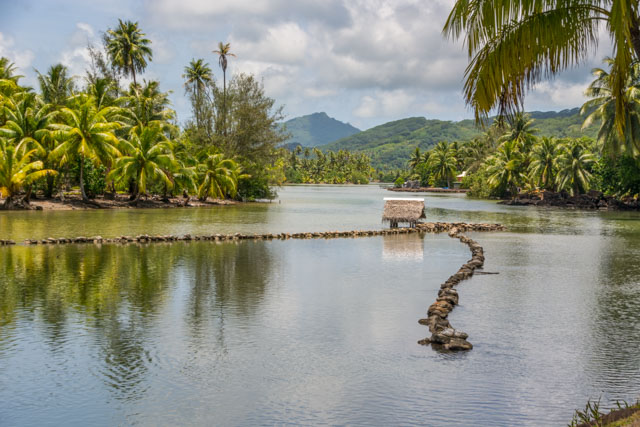
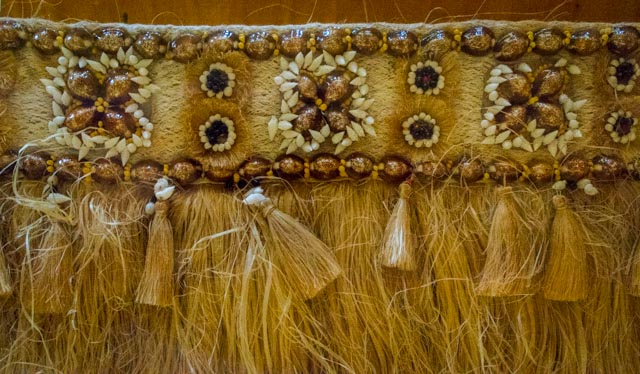
Up to the Maroe belvedere, where we stopped for the obligatory photos. And then on to the 400 year old fish traps (which we saw yesterday), some of which are still in use today. Our final stop was the Maeva Marae where we visited the museum, which we didn’t have time to do yesterday. The museum is in a fare potee (open traditional house). We learn that each temple was dedicated to one god – there was a fishing god and a sports god amongst others.
Huahine is a less visited island and yet, it is rumoured to be one of the most picturesque of all the Society Islands. Around 7,000 live on the island. Tourism is less developed here, and consequently, people live a more typical Polynesian lifestyle.
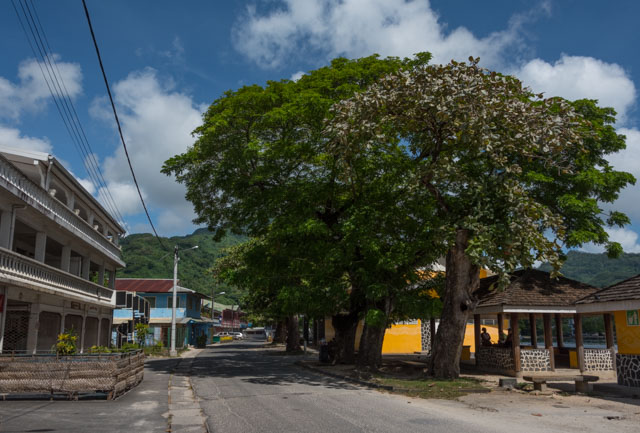
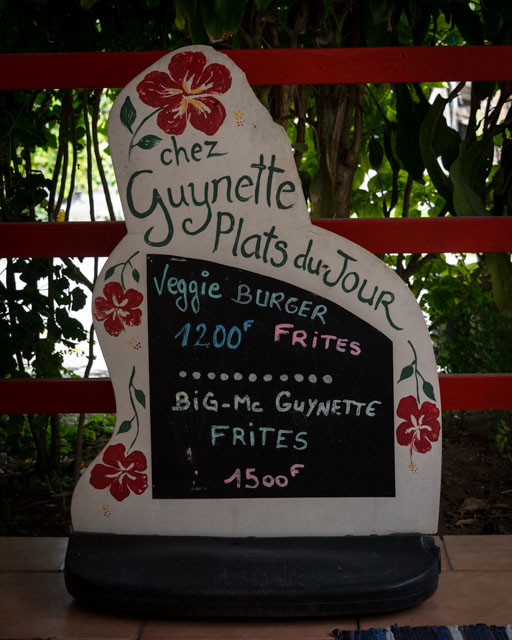
After the tour, we walked five minutes or so along the beach to Fare. This is the biggest ‘town’ on the island. There’s a total of four restaurants, a big supermarket… and not much else. We stopped for a late lunch at ‘Chez Guynette’ (our first choice had zero vegetarian options). By the jetty, we had our best view of the “Pregnant Woman” – every island finds character in the shape of their hills, and in Huahine, it’s a pregnant woman!
Fortified, we decided to check out the archeological site next to the hotel, the Tahu’ea Marae (that took fives minutes) and then we borrowed the Botanical and Historical Tour guide to the hotel’s garden. Initially, this was something to do… but we were soon impressed by the variety of plants and trees, including fruit trees: banana, mango, breadfruit, coconut, passion fruit and papaya. The guide also explained all the medicinal and nutritional properties. The trees are also used to make tools, canoes and the bark can be used to make clothing. And then, right in the middle of the complex, we have the earliest ceremonial marae identified so far in East Polynesia, dating back to 1,000 A.D. – the Vaitotia archeological site.
We finished the afternoon with our now traditional swim in the sea and the pool.
We were seating on our terrace with a Mai Tai cocktail (me) and a beer (Andy) when our laundry turned up. Please explain to me how we had to fill in a laundry form when we handed our clothes in this morning (this is the first time we’ve had to do this) and yet two items are missing (another first).
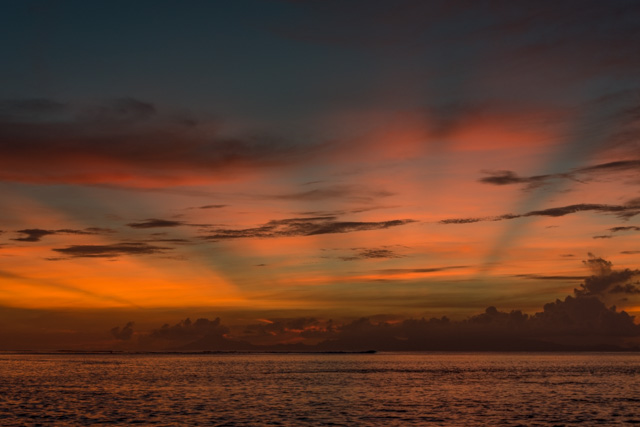
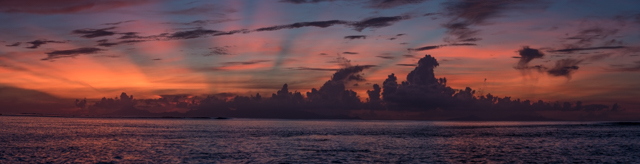
The last two (amazing) sunset pictures look a bit like Nothern lights – is something like that going on? Good to see vegetarian choices on menu after all those omelettes and cheese sandwiches ( and salad with plain rolls on planes). Perhaps Andy will start to fill out again? Finally you’ve mentioned ‘belvedere’ a few times. It would be great if you were able to tag all the belvedere pictures. Just so we can see what Belvederes are meant to look like. A work colleague moved to London from France with his young family and chose to live in Belvedere. He was please how cheap it was but was in a hurry and thought it must have a decent view somewhere. After a few weeks he was broken into and robbed so has now moved into a secure gated flat.
Belvedere – noun – a building, or architectural feature of a building, designed and situated to look out upon a pleasing scene.
There’s a reason why Belvedere SE17 is cheap… Maybe it had a view once, a nice vista across the thames estuary towards Rainham.
🙂
While at west street primary school in Erith, next to Belvedere, I remember learning that in victorian days there used to be a beach at Erith and there were even regattas along that stretch of the Thames Seems very far-fetched given all the industry there but maybe Belvedere did once deserve its name.
You see, this is why travelling is good for you. I am learning so much. Read the history section here – https://en.wikipedia.org/wiki/Belvedere,_London
Taking personal responsibility will always more effective than people following a process!
Indeed. Staff taking pride in their job, a solid process in place, a detailed training manual and induction.