Life is a Series of Hellos and Goodbyes

I’m afraid it’s time for goodbye again.

Today we said goodbye to 10 of our group, over half of us – all of them had been with us since the day we joined so it’s going to make things feel very different.

We left our campsite at 8:30, traffic into Auckland was light at this time on a Sunday so we arrived in the town centre by 9:00. As we crossed the harbour bridge, the tall buildings in the centre were just shadows in the mist and rain. While bags were unloaded and goodbyes started we went back to The Shaky Isles to grab some flat whites, it’s quieter on a Sunday morning but still a steady flow of customers. We said our goodbyes and had a look in the shops along the waterfront, they were all open early because there were too very large liners docked opposite. I bought a couple of t-shirts. At the next till, a Russian couple seemed to be buying the whole shop.

We left at 10:00 with 10 new passengers. Our first stop was a petrol station on the edge of the city for fuel and toilets. We then headed towards the Coromandel Peninsula.

The peninsula has some of New Zealand’s best beaches, big hills and deep valleys. We stopped for lunch in Tairua. We headed for Flock and had a roasted vegetable and haloumi plate with a local beer for Florence and another flat white for me, all very nice. It was a short drive over a mountain pass from Tairua to our campsite at Hot Water Beach.

Hot Water Beach is pretty self-explanatory; there are two hot-springs in the cliffs behind the beach. When the tide is low, you can dig a hole in the sand and sit in a pool of warm to hot water, or bury yourself in the sand. Close by some quite wild waves crash onto the beach. This is NZ’s fourth most dangerous beach measured by drownings. Even going in up to waist height, the currents are enough to pull me over. The water isn’t nearly as cold as it looks and it’s a refreshing way to clean off the sand after the hot pool experience.

Everything was a bit rushed today so we had 15 minutes to clean up and change then head out again for a walk to Cathedral Cove. The walk takes you over some fairly high cliffs with views up and down the coast and over the many islands offshore. The cove itself is named after the huge cave that goes through the headland dividing the beach in half. The tide was coming in so we couldn’t explore the far side of the beach but the cave itself was very impressive. Because of the recent rain there’s a waterfall down the cliff at one end of the beach too. We started the walk in a shower but by the time we reached the beach, the sun was starting to come out – it had been promised by 4pm so this wasn’t too bad.

Back at the campsite we bought a couple of Coromandel Brewery beers to have with dinner – both very tasty. One person in the group had beer from the Hot Water Beach brewery so this was even more local.

As we had dinner a full moon rose through the trees – we’ve seen more blue sky in the last hour than we had since we last left Auckland on Thursday, it doesn’t sound long but its felt like a lot longer!

Sunny afternoon

The heavy rain continued overnight and as we drove towards Opononi this morning, we came across many flooded fields, rivers having burst their banks and flooded roads.

Whilst the majority of the group went sand dune boarding, we went to The Landing Café for brunch – excellent scrambled eggs on toast with mushroom on the side, smoothies and flat whites. We’d skipped the team breakfast again this morning – a small price to pay for more sleep time.

The woman at the i-SITE (these are tourist information places) reckons that the rain has now stopped, and the forecast’s for 100% humidity.

Travelling through the Waipoua Forest, we stopped to take a look at a large Kauri tree. We had to clean and spray our shoes on the way in and on the way back. This is to stop spreading the dieback disease which is killing the trees.

The next stop was at the Kauri Walks, not far away – a series of walks to go and see various old Kauri trees such as the second or seventh largest Kauri trees in New Zealand. With the timeframe we had, we constricted ourselves to the Four Sisters, a group of four Kauri trees rooted together. The walk through the forest was lovely with the green popping out from the rain and I can confirm that the lady at the i-SITE wasn’t kidding. Humidity is high.

Just as we left, the rain started again. Later than the last few days so we took that as a sign that things are improving. Our timings for New Zealand were good, summer going into autumn. But this definitely feels like autumn going into winter.

Dargaville, where we had our lunch stop, is the kumara capital of New Zealand. From my time in the Kerikeri library yesterday, I now know that kumara is the Maori world for sweet potatoes. That’s its claim to fame. It produces two-thirds of the country’s sweet potatoes. Apart from that, there isn’t much else especially since the demise of the Kauri timber and gum exports. We’d planned to skip lunch (that’s why we had brunch) and were aiming for the Dargaville Museum.

It’s an award winning museum – allegedly – and a pretty good regional museum. There’s supposed to be a gumdigging display, Maori and musical instruments and a model railway. The museum also has the masts of the Rainbow Warrior. That name brought back many memories – mainly of demonstrations outside the French Embassy in London in the mid-90’s. But of course, it wasn’t to be. The museum is out of town. We could have been dropped off there, but it was a 38 mins walk back to the meeting point and our lunch stop was one hour.

Andy went off the explore the waterfront, and I took to the streets in search of historic buildings. We did see the masts from a distance, so that’s something. The rain had eased off by then and was replaced by a scorching sun. The North Face waterproof trousers we’ve been wearing for days were instantly uncomfortable.

Back on the bus, we drove on to Orewa where we’re setting camp right by the beach. We celebrated our arrival with a leap of joy; it hadn’t rained for two hours. Our cabin is literally as far as it could be from the group. It has a bathroom, a kitchen, a bedroom, a lounge and an outdoor terrace. We had an early dinner as some people were keen to go swimming. Andy and I walked along the beach; we’re only about 40 mins from Auckland so this is a commuting town, and the campsite definitely has a lot of permanent holiday caravans. The beach is quite mucky – lots of seaweed remains, probably from the bad weather we’ve had.

Back at the cabin, we wrote our diaries (we’re a little behind) and watched the end of the film we started yesterday.

Random musings and observations:

  • It’s a Kiwi thing to walk around without shoes on. Wherever you are. On the road, in towns, everywhere
  • There are lots of classic cars about. These are not just to show off at the weekend, people drive them all the time
  • There are 30 million possums in New Zealand (human population: four millions). They are hated with a passion, mostly due to the huge impact they have on the ecosystems. The damage to native plants and forests can be seen all too clearly in many areas. Possums ignore old leaves and select the best new growth. In some areas they have eaten whole canopies of rata, totara, titoki, kowhai and kohekohe
  • Letterboxes. These are generally at the end of drives, on the main roads. There seems to be a lot of work involved in making your letterbox as quirky or individual as possible
  • We have seen more moos then baas so far, and plenty of beehives – manuka honey being a big thing here (and as an export)
  • There are boards by the side of the road with pie charts. These can tell you the daily risk of fire, flooding or facial eczema – going for low to extremely likely. An arrow indicates the risk level for the day. Is that someone’s job? Daily?

Raindrops Keep Falling On My Head

And so the weather continues.

Today we should have been exploring the beautiful Bay of Isles with over 100 islands surrounded by clear blue sea. But all boat trips are cancelled because of the wind and the visibility is about 10 feet so not much point anyway.

Holly our leader is not one to let a bit of rain stop her so she devised an alternative itinerary for the day for us – the Holly and Simon Tiki Tour. Most of the group were on the bus for 10:00 for a trip to the nearby hot springs. These are fairly basic, run by Maori who own the land. For your $4 entrance fee you get a choice of about 15 pools, each about 2m square, ranging from warm to very hot; the smell of bad eggs is thrown in for nothing and hangs over everything. The water is dark grey; you can’t see your hand when it’s just below the surface. The rain continued while we sat in the pools making interesting splashes on the surface.

We returned to the camp for a quick shower before our next adventure – a visit to the town of Kerikeri. The main site is the oldest building in New Zealand, built in 1836, but it’s out of town and the rain had now become torrential so we gave it a miss and went to the Village Cafe instead. Florence had poached eggs on toast; I had a pumpkin salad – with a flat white. Lonely Planet recommends sitting in the pleasant courtyard but we stayed inside.

After lunch we took a walk along the high street, the rain had now gone up a level – tropical? Biblical? Water was overflowing the sides of the road onto the pavements; fortunately the shops have large canopies along the front so we kept out of some of it. We went into one shop to browse, a very loud alarm went off down the street, the shop owner didn’t seem worried, she explained it’s probably a traffic accident so they’re rousing the volunteer fire brigade.

We found a nice looking cafe for afternoon tea then set-up camp in the local library for an hour – free wifi and local books to peruse. The wifi took ages to get going so we never made it back to the café.

The rain stopped at about 4pm so we had a quick look up and down the high street, a sculpture in the window of a gallery appeared to be beseeching the rain gods to stop. Another gallery had some colourful abstract works by an artist from Sicily. The skate park was flooded, it was being used for cycling and swimming.

Back at the camp the river was now about a metre higher than yesterday evening, logs, bushes and what looked like a whole tree rushed past in the torrents.

Day 100

I’m pretty sure New Zealand hates us.

We woke up to sunshine in Auckland this morning. The troupe was in high spirits.

Andy and I wandered over to The Shaky Isles for breakfast. Really tasty food and coffees. We’ll definitely pay the place another visit when we’re next in Auckland.

Fact of the day. There are more people in Auckland than the whole of the South Island.

After collecting our bags from the hotel, we walked to the meeting point. As we boarded the bus, we said goodbye (again) to the guys who left the trip yesterday – they’d come to wave us off. And we welcomed four new people onboard.

We headed north over the Auckland Harbour Bridge. We were not even half an hour away from Auckland when the sky turned grey. As we progressed North, the grey turned to heavy rain… and this is the forecast for the next two days. And this coincides exactly with the number of days we have in the Bay of Islands.

The plan for today was to head north to Northland towards the golden beaches and warm waters of the Bay of Islands. Our first scheduled stop of the day was meant to be at the beautiful Uretiti beach. We could swim (if we were keen), play frisbees or take body boards to the sea. Chill, and relax. When we got to Uretiti beach, we couldn’t even see it, so we pressed on.

We stopped in Wellsford for lunch. As it was relatively dry, we picked up a few bits and pieces to eat in the bus later, and instead walked down the high street, and too late came across the Albertland Heritage Centre. We poked our head round the door. We were 22 mins into our 30 mins stop so we sensibly turned back. It looks like a good local museum, full of pioneer-era stuff. One for next time? Thinking about this further, maybe not. Most towns around here have similar museums, so we just need to make sure we catch one of them.

We spent the next couple of hours in the bus talking about our options for tomorrow. Bearing in mind the weather, do we want to pay a substantial amount of money to potentially see not much at all? Or do we play it safe. We’re torn. The safe option could be fun, but it would mean missing out on the scenery around here… which is supposed to be outstanding. Or do we take a chance and who knows?

Which is funny, in a non-funny way. Because they’ve had a drought up here. And locals have been praying for rain (yeah, it worked). The communities further north are poorer, and the infrastructure not so good. Most people are not connected to water mains, and get their water from tanks. So the rain is welcome. I chatted to a woman at lunchtime. She was happy the rain was on its way. I told her I understood but I wished it’d held up another three days. The rain is making front page news.

Back on the bus, Holly lifted our spirits by playing rain-themed songs and choruses of ‘it’s raining men’; ‘always look on the bright side of life’ and ‘it’s a beautiful day’ amongst others soon filled the bus.

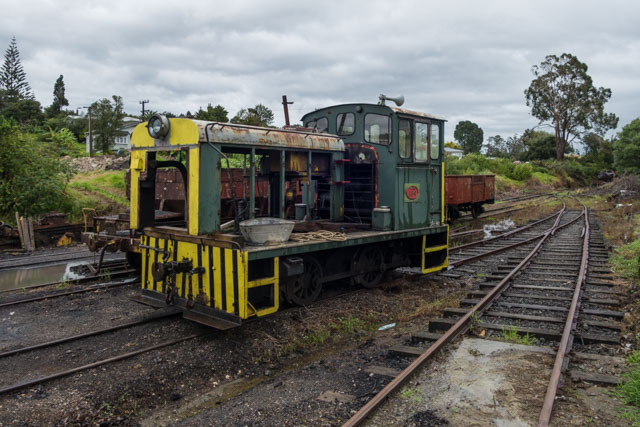
Now Kawakawa was a stop with a difference. This small bustling town was dying until 1997 when the regeneration of its public toilets brought it world recognition. The town is now well established on the tourist route, with buckets of tourists visiting the ‘attraction’ daily. The internationally regarded Austrian architect and ecologist Friedensreich Hundertwasser was commissioned to design and build the toilets. He’d been living in that part of the world for a little while, and he made use of local materials and talent during the construction. The fact that the town also has a railway line running down the main street, and a historic railway stations with old engines (one of them built in Bristol), well… that was just a bonus.

At Paihia, we had the option to stay in town and have a look around or take a 1.5 hours walk. From town, the walk would go through a mangrove to the thundering Haruru waterfalls. At the time, the rain was heavy, so we decided to stay in town. Paihia is a quirky town. We walked the grounds of the public library. A woman walked towards us and offered us a fig each. The library used to be the house of Reverend Henry Williams, who was keen that the house remains part of the community. His descendants (including current ones) made sure of that and the house and its ground have survived many development threats and are now a historic estate of national importance. The grounds have been converted into a mini outdoor museum. The mini orchard is healthy; the figs were tasty. We continued our exploration of Piahia. The waterfront was recently done up and has cool features like a mosaic bench representing local wildlife and with coins displayed here and there. The water re-filling station was designed by local kids so people could refill their water-bottles so as to reduce the amount of plastic bottles. There’s a mini free-exchange library. Cool stuff. We walked down Paihia Lanes, but at 3.45pm, all shops and galleries were shut for the day.

We went to collect the brave walkers, who’d got lucky as it didn’t rain during the duration of their walk. Fortune does favour the brave. The only reason we didn’t go for it was that Andy wasn’t wearing his waterproof trousers. Because of the rain, the waterfall was big and powerful.

At the campsite, we collected the key to our nice chalet – fully equipped with a kitchen and an en-suite. Holly informed the guys not to pitch near the river – which is full flowing and close to bursting its banks. The river, we’re told, is normally low and rocky. We took a walk along the river banks.

After dinner, we stayed up and shared a couple of bottles of wine and tried to figure out what to do tomorrow, as we’re expecting the same weather as today.

Kia Kaha (be strong).

The Sun Ain’t Gonna Shine Any More

This morning, we were particularly glad not to be sleeping in tents. The night started wet and finished very windy; a few tents lost their peg bags, broke some poles, etc. A lot of very tired looking people on the bus today. We decided extra sleep was worth more than breakfast – it seemed the right decision when the alarm went off.

First stop after about 90 minutes was Mokau. The butcher’s shop opposite the coffee shop had a sign in the window claiming to be Mokau’s ‘Home Kill Specialists’. I had a cashew nut cake for breakfast and we had flat whites of course.

The wind had threatened to blow the clouds away earlier but the rain was back again. We stopped in Te Kuiti to pick up supplies for lunch and a few other necessities – yes Pinot Noir.

First activities of the day were at Waitomo, options were black-water rafting – underground floating – glowworm cave walks and a nature walk. We chose the underground walk. Van our driver – really – took us a short way into the country to the cave entrance, then it was about 150 steps down into the depths. The caves have solar powered remote-controlled LED lighting so Van can switch the lights on and off to show more or less of the caves and glowworms. The worms look like tiny points of blue light on the ceilings. They use enzymes to generate light, the same way that glo-sticks work. The worms are gnat lavae, they hang themselves from cave roofs in a web of sticky thread. Their glow attracts insects who get caught in the web and eaten. At one point in the cave, the lights were turned off completely and we walked with one hand on the handrail with only the glowworms to guide us – it was a very strange experience. Van demonstrated the lighting used by the earliest visitors in the 1890s, first candles and then burning magnesium.

Once we emerged blinking back into the light we were given a cup of herbal tea to refresh us.

Our picnic lunch was enjoyed sheltering under cover of the local rugby club bar.

Back on the road we passed a hotel complex that has a boat, an old plane and hobbit burrows for its rooms.

Uneventful drive to Auckland this afternoon. Google suggested we’d be at the hotel by 17:30 but we hit some traffic on the way in and didn’t arrive until 18:30. Auckland feels like the roads haven’t expanded to manage demand.

We had about 15 minutes in our room to shower, change and hit the town to meet some friends for a very tasty local beer and a very good curry. Nice evening all round topped off by a final Pinot Noir. The barmaid that served us recommended a few wineries to try when we’re in Queenstown. The Black Caps are on TV in a one-day against South Africa, not sure where they were playing but it looks more like Bexley Cricket club than an international venue.

Florence and the machine

We were due to meet the bus at 12 noon so essentially we had a free morning to explore Wellington further.

We started with flat whites from 86; this place was closed last time we were in town. The coffees were good and so it was worth giving them another chance. Wellington could well be the world coffee capital. There are a few chains about but mostly, you can’t walk more than a few metres without coming across an indie coffee place.

Back to Best Ugly Bagels for breakfast. As nice – if not nicer – than last time.

We’d planned to visit the Wellington City Gallery next and were at the door a few minutes before opening time, which gave Andy wi-fi and time to upload yesterday’s post. The gallery normally has a vast range of New Zealand art but they currently have a Cindy Sherman exhibition taking over the whole gallery so we decided to skip it. Instead we explored some of the street art and sculptures along the waterfront.

I was particularly looking forward to our next stop. I was looking at cool things to do in Wellington when I was researching our trip and this came up. Too good to miss! The Monetary National Income Analogue Computer, otherwise known as the MONIAC machine. This is the invention of Bill Phillips – a New Zealand economist brought up on a dairy farm. Bill has an interesting history and I encourage you to look it up. 14 machines were built in total and one of them is in the Science Museum in London. It represents the flow of money round an economy by the circular flow of water. In other words, it’s a hydraulic econometric computer. It is primarily a teaching tool and you can only see it in action one Wednesday each month. The museum curator was fascinated to hear that we’d come in especially to see the MONIAC… so much so that he told us today was our lucky day. He gave us fascinating background information into Bill’s life and the machine and then switched it on. You folks can watch this video.

Mr Kind Informative (I’m sorry I didn’t get his name) also told us to watch out for the green person on the traffic signs (the ones you look up to when crossing a road). On a few of the traffic lights between the museum and the railway station, it displays a Mary Poppins type person. This is Kate Sheppard. She was instrumental in the movement to grant women the vote and as such, she not only gets to be on pedestrian crossings, she’s also on the $10 NZD bill.

Back to the hotel, we collected our bags, checked out and walked the few metres to the railway station where our new bus – and our new driver, Simon – were waiting for us on platform 9.

Driving north along the west coast, we stopped after an hour or so in Otaki for lunch. We have just under 30 minutes so we ate lunch quickly at a local cafe cum bakery which allowed us to spend 5 mins at the Historic Railway Station. It was built in 1886, and at the time it served as a trading stop and Post Office and with a railway cafe, it was a focal point for the community.

I used the remaining few minutes we had left to sit in a toy tractor 🙂

We continued our journey north. The forecast for the days ahead is considerably gloomier than first thought. We were told this morning that we were behind the weather warnings by a couple of days so to expect grey and drizzle, but this has now changed to ‘damp’. This led me to think that if Farrow and Ball were thinking of developing a new collection of paint, they could call it the ‘Wellington range’ and it would have more shades of grey than you knew existed.

We pass farmlands; a town with Dutch heritage with a windmill and a large courtyard with houses for sale – presumably you buy your house and they wheel it to your land? Or take it apart and then put it back together for you on location? They were many sizes available.

As the trickle became proper rain and the windows of the bus steamed, Holly put on a film for us to watch (we have a TV on the bus!). Hunt for the Wilderpeople is a good adventure-comedy-drama film with a touch of Wes Anderson feel to it.

We continued to push north. Near New Plymouth – our destination for the night – we passed through Eltham!

We have a tiny cabin – rail tracks at the back, and lads with posh boats on either side (we think they’re in a club or something, a fishing competition perhaps?).

As the weather was closing in, we went for a brief walk along the coastal path. Long enough to go down on the beach, and look at impressively smart houses.

South to North

Usual timetable this morning. We had to reluctantly leave our luxury studio for an 8:30 departure. On the way, we picked up four brave souls who’d been up at 6:00 to jump out of aeroplanes. They were all in one piece and buzzing with excitement about their jumps.

The road follows the coast of Tasman Bay. The sky had very light cloud with lots of interesting patterns. After a couple of hours we arrived at Nelson, the sunniest city in New Zealand. We had two hours to explore and eat. First stop was DeVille cafe, we had a very tasty plate of eggs and haloumi cheese – and of course two flat whites.

Next stop was the Suter Art Gallery. It has two large rooms. The first was a general overview of work by local artists from the last 150 years or so, a couple of traditional straight landscapes and a number of more modern works. One had recreations of TV remote controls made out of local stone alongside traditional tools made from the same materials, the point being that the remote controls were obsolete so fast but the stone tools lasted much much longer.

The second was loosely themed around rivers, some semi-abstract photography, a video depicting the recreation of The Haywain and what looked like big slabs of local granite but were made of sponge.

We would have liked to stay longer at the gallery but didn’t have much time to check out the wool shop, the pharmacy, the book shop and buy some food for later.

Nelson is the home of Flying Kiwi – our tour company – so today we changed buses, guides and drivers. We only have the bus for this afternoon – fortunately – it’s the oldest they have and a bit basic. As we left Nelson, we said goodbye to our guide Magan, she has been replaced by Holly – a bundle of enthusiasm.

Next stop was Pelorus Bridge, the road crosses over a river gorge. The river is a rich green colour. We looked at it from the road bridge then walked down the side of the valley to the water.

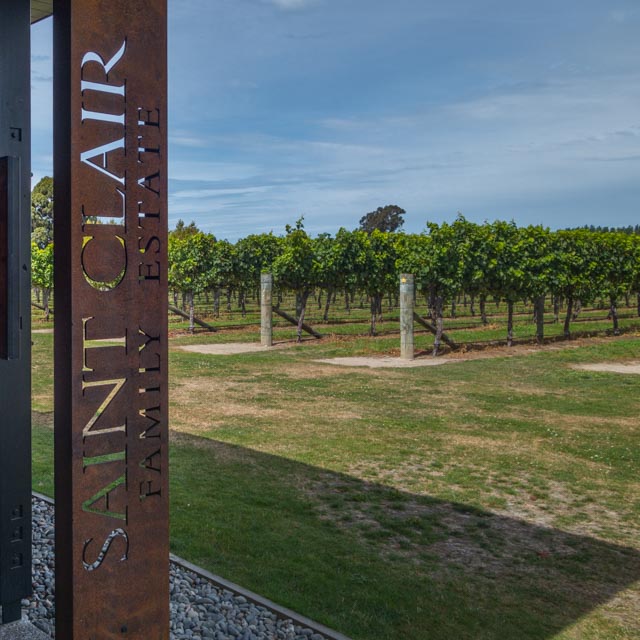
Back on the road after half an hour, we headed for the Saint Clair Winery in Marlborough for a Flying Kiwi complementary tasting. We tasted five wines: a rose, two whites, a red and an option of a dessert or another red. I managed to sweet talk the host into letting me try both. For once the Pinot Noir wasn’t the winner and we left with a bottle of Sauvignon Blanc and a Malbec. The winery had 35 wines on their list, this made us a bit suspicious – definitely not sticking to one thing and doing it well. To be fair however they do grow their grapes all over the country and ship them back to Marlborough to make the wine. The food shop next door had some peanut butter laced with chilli and smoked paprika – this tasted amazing, I’ll definitely be trying to recreate it when we get home.

After the winery it was a short drive to Picton, the ferry port for our crossing to the North Island. On the way we passed through Havelock, this looks like an interesting town – lots of boats, cafes and museums. In Picton, we said goodbye to our bus driver, a few of our group and the old bus.

Picton has two main attractions, it’s location amongst the islands and inlets of Marlborough Sound and the museum built around the old wooden ship, the Edwin Fox. This ship, launched in 1854, has been round the world 34 times, carried convicts to Australia, immigrants to New Zealand and dairy products and fruit back to Europe. It is claimed it’s the 9th oldest ship in the world. We also came across some more of the Kiwi humour. We’ve been following Captain Cook across the Pacific, the place where he landed in New Zealand, Ship’s Bay, is in Marlborough Sound.

Our ferry sailed at 18:30 to make the three hour crossing to Wellington. There are up to eight sailings each way in the peak season. There are lots of cars and lorries on board as well as a container train.

The first part of the journey took us out through Marlborough sound, the route twists and turns around headlands and islands. After about an hour, we were into the Cook Straits that separate the two islands, these waters have been swum many times, the current record is 4h37. As night fell the water looked dark and menacing, a little reminiscent of some of our trips further south, to reinforce this impression a couple of albatross kept us company for a while.

We arrived in Wellington at 9:30. A shuttle took us to our hotel which must have been a grand place when it opened in the 1930s but now it’s a bit down at heel. It still has some interesting period features remaining though.

Coastal ecology

We got picked up at 8:30 this morning, a short drive to the jetty where – because of the low tide – a tractor pulled our boat to sea.

We’re spending the day with Stew from Abel Tasman Eco Tours. He started the day with depressing stories about the damage done ecologically to New Zealand ever since people arrived here – introducing alien plants and animals.

Before the mood got too dark, we circumnavigated Fisherman and Adele islands where rats have been eradicated and birds are now happily breeding there again.

We sailed past Observation Beach to Te Pukatea for a wet landing. We had coffee and cake, and then took a 45 mins walk through the forest to a couple of viewpoints. On the way, he pointed out various plants and trees, and told us more about the recent conservation efforts in Abel Tasman. They are killing off pine trees by injecting them, and once the trees die and fall down, endemic trees will be able to prosper. We saw the silver fern, which is the national emblem of New Zealand.

Stew also told us that the whole coast was cleaned yesterday – the whole place gets a face-lift once a year – and they removed 120 kilos of rubbish. Some of it had washed up from the sea but sadly a fair bit is directly linked to the hundreds of people walking the trail each day, or using the camping facilities.

Our next stop was Onetahuti Beach where we started with lunch on the beach. We’d bought sandwiches and savoury muffins from Hooked Cafe in town this morning. And then we foolishly decided to go for a swim. We’ve been missing our daily swims and the opportunity was too good to miss. And once we got over how cold the water was, we enjoyed it. We dried off quickly enough on the beach and went for a stroll to check out a mini waterfall.

We continued our way up the National Park towards the Tonga Island Marine Reserve. Blue cod are now abundant there, as well as crayfish.

As the tide was coming in, we were able to go into the Awaroa Inlet. Fish were swarming in hoping for a good meal.

In Sandfly Bay, we were lucky to see the endemic grey duck, a white-faced heron and about three variable oystercatchers (also endemic to New Zealand), and one or two pied oystercatchers.

Big boulders and fat slabs remain from the quarries. The marble was used for the Parliament Buildings in Wellington.

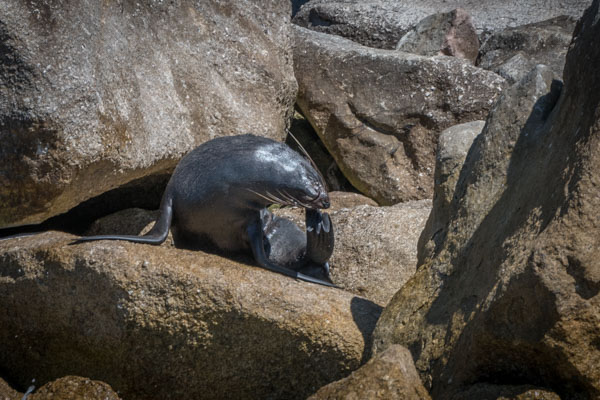
On our way back, we sailed past Tonga Island where we saw fur seals and pups. Most of the adults seem to be having fun in the water. The pups remained in the sun on the rocks.

Stew dropped us back at the campsite. We dropped our bags in our studio and went to borrow some bikes from our bus. We cycled all the way back to the jetty, exploring Marahau a little further and on the way back, we stopped for ice-creams. We cycled for about an hour all in all – with many stops.

Dinner. I picked up a pizza from The Park Café and joined Andy and the group in The Fat Tui – a burger place which only had one vegetarian option which didn’t grab me. After the meal, the two of us popped to The Park Café for a drink.

Today was one of our better days in New Zealand. We had a little more control over our activities and the weather was decent.

A Day With Abel Tasman

It was still dark when the alarm went off at 6:15 this morning. We had to be packed, showered, breakfasted and on the bus by 8pm. Today was a day of driving with a few refreshment breaks along the way. The West Coast of New Zealand faces the Tasman sea, approximately 1000 miles of water separating them from Australia. It’s rough sea, lots of currents and big tides, not a place for swimming.

The coast line north is rugged and remote, we’re on the coast side of the bus and in a couple of places there are long sheer drops to the waves crashing onto rocks far below.

After about an hour we turned inland, driving up the valley of the Buller River which flows off of the mountains. The scenery in these big rivers is very reminiscent of what we saw in British Columbia, but without there are no bears.

We stopped at a cafe in a small settlement called Berlin, this was the site of the first gold discovery on the West Coast in 1859. A couple of the locals looked like they might have been there to witness it. We both had a flat white – not the best.

We drove further up the Buller valley then turned north onto flatter more arable land. We stopped briefly for a snack in Murchison – date muffin for me, egg sandwich for Florence. Final stop before lunch was a brief ‘comfort break’ in the small town of Tapawera, the coach stopped outside a small museum which included the remains of Kiwi Station, a small station on a line built in 1905 to connect the small towns in the region to Nelson.

Lunch was in Motueka. We were dropped off on the high street with 90 minutes to feed ourselves and explore the town. We looked in a number of places but nothing really grabbed us, we eventually settled on the town museum cafe – it was okay. We bought some haloumi cheese and pinot noir to go with the barbecue planned for dinner. It was only a half hour drive to our accommodation for tonight, at the entrance to the Abel Tasman National Park. We have our own cottage, big rooms, a jacuzzi, terrace and garden – hopefully we’ll have enough time to enjoy it.

Abel Tasman National Park covers 70km of coast on the North West corner of the South Island. It faces across Tasman Bay to the North Island. Abel Tasman was a Dutch sailor, he was the first European to visit Tasmania and New Zealand, he came here in 1642. It wasn’t the best start, he sent boat’s ashore to collect water and four of the men were killed by Maoris.

Once we settled in, we went for a walk along the coast. The path starts across a series of low bridges crossing a shallow estuary then joins a number of bays and beaches up the coast. We went as far as the first beach, Porter Beach, and stared at the sea in the distance across the sand, oyster catchers, herons and gulls waded in the water looking for food.

Unfortunately by the time we got back the ice cream stall had shut for the day – we need to be back earlier tomorrow. The barbecue was good, lots of tasty things – there are two other vegetarians in our group and – crucially – the guide so we’re well looked after.

Punakaiki pancake day

We slept in this morning. That was totally unexpected and it meant that our plans of doing a short walk before lunch went out of the window. We went to breakfast. The cooking group was on pancake duty this morning.

By the time we made our lunch and had showers, it was 10:30. We decided to skip the short walk and go straight into the longer one – the Pororari River Track – which we had planned for the afternoon.

The walk follows the river for the first hour or so. The path’s flat and the scenery pretty. Most of the people from the group did this walk at some stage today, but at the time, it was only the two of us. It was serene – just the sounds of the river and some cicadas. We took our time. At one point, the riverside path took us through a very dark cave, which Andy exclaimed was highly unusual. After 90 minutes or so, the path veered right and a gentle incline was followed by non-stop ascent through a forest. I stopped still for a few minutes – only the sounds of birds around me. The fantail bird is very friendly, and quite happy to fly past you, so as to check you out. In the distance, we could hear the pretty song of the Bellbird (we saw one of these on our walk yesterday). At last the path started to go down, and after another 30 minutes, we rejoined the main road.

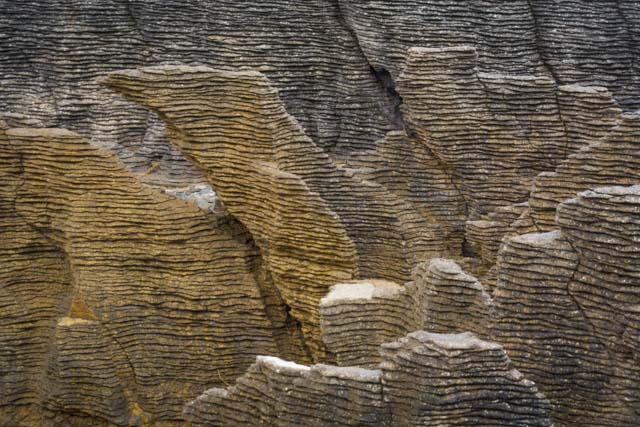
The little drizzle we had all morning turned into rain just as we reached Dolomite Point and the Pancake Rocks and Blowholes. This is a natural sight we’d been looking forward to. The pancake stacks are impressive. We were there at high tide; this greatly improved our chances of seeing the blowholes in action. The rain did not deter us. We stayed just over an hour and we saw maybe three blowholes blowing. The waves were not big enough to see a massive display like the ones we’re used to in Cornwall. Watching the power of the waves crashing into the rocks and colliding with each other was still extremely mesmerising.

It’s only about 1km from the pancakes to the campsite and we stopped at the Punakaiki Tavern for a swift pint. The walk itself took us about three hours – which is not bad for a 10km walk and plenty of photo stops.

After dinner, everyone slowly drifted to the Punakaiki Tavern. Straight bourbon for me to try and cure my sore throat. I teamed up with Dennis (who drives our bus) and we won three out of four table football games.