It’s Getting Hot In Here

Today we’re promised the best day of the trip, at least this two week part of it – a bit of everything around Granada, we’ll see.

Tasty breakfast in the hotel, fruit granola and muesli for me, omelette for Florence who is now 90% recovered from yesterday.

Leave the hotel at 9:00, first stop is the supermarket three minutes later, not sure why so we stay on the bus. Next is the old railway station, this is now a business school but an old steam engine and a couple of carriages remain. Students at the school get most of their fees paid as long as they do community service in the local area for 6 months after graduation.

Granada is on the edge of Lake Nicaragua, the second largest lake in Latin America behind Lake Titikaka. Our next activity is a boat trip on the lake. There are many islands around the edge, some occupied by very poor communities who subsist on what they can catch in the lake and some occupied by luxury houses costing hundreds of thousands. There are many birds and a few monkeys around too.

We stop briefly at the main cemetery – Central America’s oldest and the resting place of six former presidents of Nicaragua. The graves are all mausoleums above ground because of flooding in the area, there is no cremation here. One area is called the boneyard, this is where the remains of people who couldn’t afford a grave were left.

We leave the town behind and head for Laguna de Apoyo, a crater lake in a volcano which last erupted 26,000 years ago. The panoramic view across the crater is spectacular. We move on to a resort on the lake shore, we have over three hours here. This feels too long after we’ve been rushed between sites all morning.

Drink a few cups of coffee, have some lunch, write a few pages of our diaries and watch the comings and goings on the lake and the time passes quickly enough. The resort has a couple of resident green parrots who are very entertaining, they seem to be endlessly bickering like an old married couple.

Stop at a handicraft market, it’s dark inside – we’re told that the whole of Central America is suffering a power cut because of trees falling on some cables in Honduras; this seems entirely plausible.

Final stop, and the highlight by a long way is visit to Masaya Volcano. I’d like to say we hiked for hours to reach the edge of the crater but actually this is one of the few, if not the only active volcano where there’s a road to the edge of the crater. We queue for a while on the main road, there’s a maximum of 60 people allowed at the top at any one time and we’re only allowed fifteen minutes on the crater edge.

Seeing an active volcano has long been on my list of things to do; this was an unexpected surprise here. It’s an incredible site, 70m below us the glowing red lava bubbles and moves around, above it there are clouds of steam and smoke swirling around, lit by the fiery glow from the crater. Fifteen minutes pass in whats feels like seconds – a definite highlight of our trip.

How do you follow that?

When we’re back on the bus our guide Ramon breaks out a gallon container of Macua, the national drink of Nicaragua, a cocktail of rum, guava, lemon and other fruit juices, puts on a party mix from his phone and puts on some flashing lights on the bus. The journey back to the hotel is a surreal mixture of AC\DC, Justin Timberlake and Britney, people are dancing in the aisle. When we pull up outside the hotel there’s still some cocktail left so we convince the driver to drive round a few blocks until it was all gone.

Es Verdad Sandinista

Early night again – we know how to party – so we’re up early. Florence is feeling a bit under the weather so I’m on my own this morning. Go out in search of breakfast but it’s Sunday and nothing is open yet, grab a snack – scrambled eggs, rice and beans – and a coffee in the hotel then meet Henry my guide for a walk around Leon.

Henry starts by telling me that the market next to the hotel is the Mercado Estacion because it’s where the station for train from Managua used to be. The railways became more and more run down during the first half of the last century until the government decided they were too expensive to repair and closed them. Leon streets do have names but nobody uses them, our map has no street names and there are almost no street signs, the locals navigate using churches or other landmarks. One exception is Calle Juan Pablo, named to commemorate the two visits of the former Pope to Leon.

Henry explains that the Nicaraguan diet is generally made up of heavy, starchy food like potatoes, casava and corn – he is a testament to this. We walk through another market, there are tamales – stuffed corn husks or banana leaves – cooking in a vat of dark bubbling liquid, not very appetising to me but he is impressed.

First proper stop is the Heroes and Martyrs monument to those killed by government forces during the revolution. Behind the monument a large mural tells the story of the country from the early meso-americans through the conquistadors, independence from Spain and then Mexico, a letter from the assasin of Anastasio Somoza García, to his mother and the revolution. Every scene shows death, war and destruction. After all this, it finishes with an idealistically upbeat image of two children playing in sylvan surroundings by a lake.

The Sandinista National Liberation Front – FSLN – now a socialist political party took their name from Augusto César Sandino, the leader of the rebellion against the USA backed government of the Somoza dynasty in the early 20th Century. Their red and black flag was adopted after it was used by protestors against the massacre of a number of students; it represented blood and death. The Sandinista played a larger part in the overthrow of the Somoza government in 1979 and assumed power soon afterwards. The stayed in power until 1990 despite the Contras, a right-wing counter revolutionary force backed by Reagan’s USA trying to destabilise them. Daniel Ortega, a former revolutionary leader and prisoner of the Somoza regime was president from 1979 to 1990 and again from 2006 to the present. A fact for the rock-trivia fans – The Clash album Sandinista has the catalogue number FSLN1.

Next stop is Prison 21 – opened in 1921 by the Somoza government and liberated during the revolution. It’s now a museum, there’s a photo in the entrance of a tank on the street outside with a rabble of revolutionaries. The tank is also in the museum – it was second hand from Russia and must have been 30 years old when it arrived. The museum is a strange blend of the horrors of the conditions and the torture prisoners underwent along with a number of almost grotesque figures depicting folkloric tales. The tortures are graphically illustrated on the prison walls, a cell not much bigger than our hotel room held 50 prisoners. The folklore tales include the ‘Headless Priest’, the ‘Pig Witch Woman’ and ‘Grab My Tit Woman’.

Final stop is the art museum. This has grown from the private collection of one of Leon’s wealthiest families, they bought a large house to hold it then had to buy another larger one opposite to hold more. It would take most of a day to do it all justice. There are many highlights from Central American artists I know nothing of along with better known European artists including Braque, Picasso, Sonia Delauney and Henry Moore.

Head back to the hotel to revive Florence and get our bags ready to depart for our next stop, Granada. It’s a two and a half hour drive, the countryside is initially hilly, dry and barren. When we pass the capital, Managua, it becomes flatter and more built up. It seems to be a quirk of this trip that we never visit capital cities, Mexico City is the only one so far.


Breakdown of an eight hour journey

4.10am. The alarm goes off. Cold showers. We finish packing and make our way to our private bus. An extra two people board our bus – a couple travelling ‘independently’ and who clearly haven’t done their research. We voted to decide whether to give them a lift all the way; free ride! We leave at 5:06am. You wouldn’t know how early it is considering the loud chit-chat going on. The journey takes under an hour. Our last moments in El Salvador; a country we knew little about and an unexpected highlight of the trip so far.

6:14am. ‘Technical stop’ at a petrol station. We drive a little further to the immigration office. Dennis goes off with our passports. There is an issue with one of the guys in our group; he has a fairly common name and there is someone with that name working illegally in Guatemala, so he goes in with extra identification papers. Eventually, we’re free to go and continue on to the ferry ‘terminal’.

7.19am. We walk along the pontoon with our bags, board our boat and put on our life jackets. We have a two-hour boat ride ahead of us. It is pretty uneventful until we stop almost half way through to look at some rocks in the distance. This is where El Salvador, Honduras and Nicaragua meet. Fishermen in dug-out canoes. Gulls diving in for fish. Small islands with even smaller communities on them.

9:10am. We land in Potosi. This is a wet landing; it’s less than a metre to land, but the water is full of jellyfish. We collect our bags and await the signal from border control before loading them into the bus. This is a tiny border crossing and until recently, they were left alone. But Intrepid recently changed the trip itinerary, and every two weeks or so, they have a whole bus-load to process. We have to be on our best behaviour, and after an hour or so, we’re in. Welcome to Nicaragua!

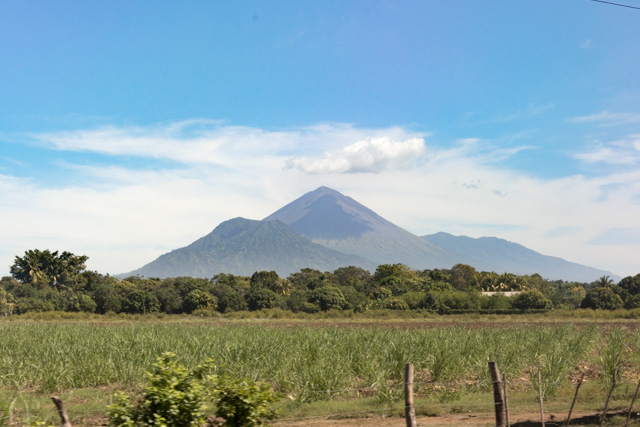
10.19am. We’re on the road. It is extremely rural. The tarmac road is bumpy, and covered in sandy dust. In the distance, we see a smoking volcano. We turn on to NIC-12. The road is instantly much better.

11.14am. We pass small communities. All river beds are more or less dried up. When they’re not, there’s only a small trickle of water which is either full of rubbish or looking contaminated. Later on, we pass communities with signs with a blue and white logo I recognise well.

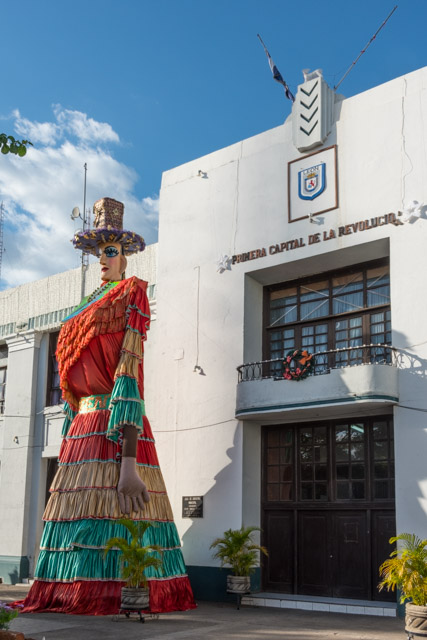
12.27pm. We make a ‘technical’ stop in Chinandega. We get out of the bus and the heat hits us. The final stretch. We’re on the Pan-American Highway. We pass big agricultural fields. With less trees by the side of the road, we have open views for once. The traffic slows us down but we arrive in León in time for lunch. It is 34c. No breeze, no humidity, just pure heat. I have a feeling that the little chap with the moustache above is a celebrity; as a stereotype Central American man, I guess the products he advertises appeal to the masses.

We’re both excited to be in León. The first impressions are good. The town has awe-inspiring churches, is renowned for its culture, has an edgy feel and all this against a background of crumbling colonial buildings.

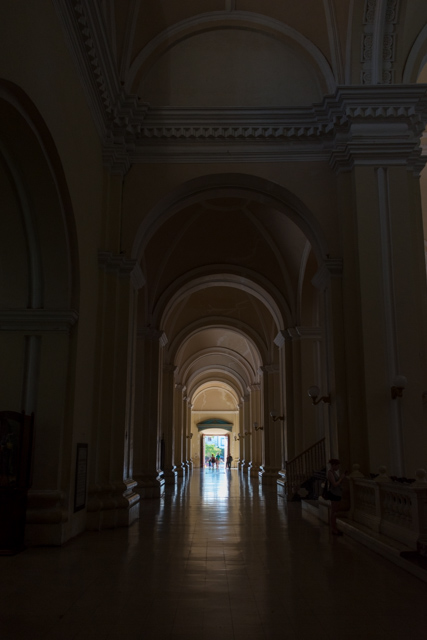
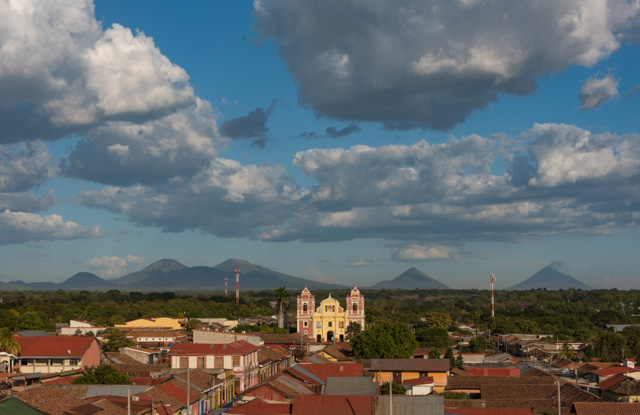
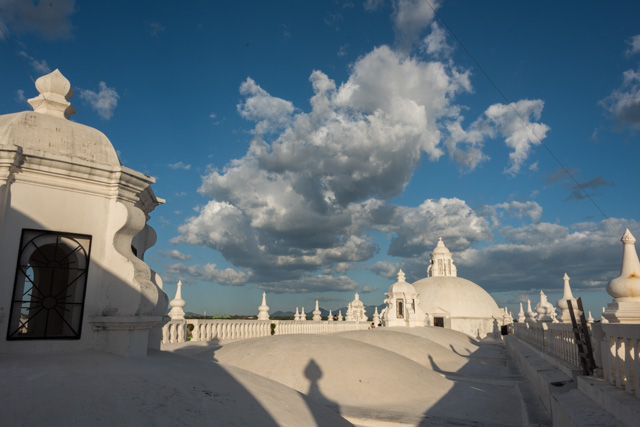
We walk the streets, randomly at first, and then go in the Cathedral. It is the largest cathedral in Central America and is one of Nicaragua’s cultural landmarks. We go round the building until we find the ticket office, pay $3 each and walk all the way round again until we find a small door, and make our way up to the roof. We’re told to take our shoes off, and not to walk on the domes or we’ll go straight through. We’re also told not to climb on the railings. We witnessed a youth doing so, and promptly being escorted out by the guards, along with his mates (they were told off for not stopping him). We’re rewarded with bird’s eye views of the town, and the surrounding countryside.

We come across the martyr monument, the poets’ square and the museum of the revolution – all this we’ll explore in detail tomorrow. We also come across the Church of la Recolección which looks stunning with the late afternoon sun glowing on it.

6pm. Back to our hotel for a rest and to read up about the Sandinista National Liberation Front, as this is what tomorrow morning is all about.

A Pelican’s Life

Early night last night to catch up on sleep so we’re awake about 7:00. Go for a walk on the beach, the sun is already up, there are people surfing and a pair of pelicans are having a paddle.

The pelicans are both recovering from serious injuries and are looked after by the hotel. They have their morning paddle, surf for a bit then retire to a sun shade for the day. One jumped under the poolside shower in the afternoon to cool off, in the evening they go to the kitchen for some fish before retiring for the night.

The hotel also has a project to release turtles to the wild. A lot of the eggs are collected by local fishermen and sold to restaurants for food. The hotel buys a number of them, puts them in the sand on the beach to hatch. They then move them from the beach to the ocean, one of the most hazardous parts of their life. It’s believed that only 1 egg in a 100 develops to an adult turtle, some say far fewer than that. This project aims to improve these odds, they are reseaching and sharing information with other similar projects round the world.

After watching this morning’s batch of turtles being dug up we have a slow breakfast, write diaries for an hour then have a juice. It’s already 10:30 so time for a swim. The water is warm and the waves fun to play in. Strange to think that 1000s of miles across that Ocean are Tahiti and New Zealand where we’ll be in a month or so.

The tough day continues with a coffee and reading in a hammock until it’s time for lunch.

Florence has had enough of doing nothing and goes to a free yoga class. I manage to pass the afternoon lazily until it’s massage time; we were so impressed with yesterday we booked an hour each today.

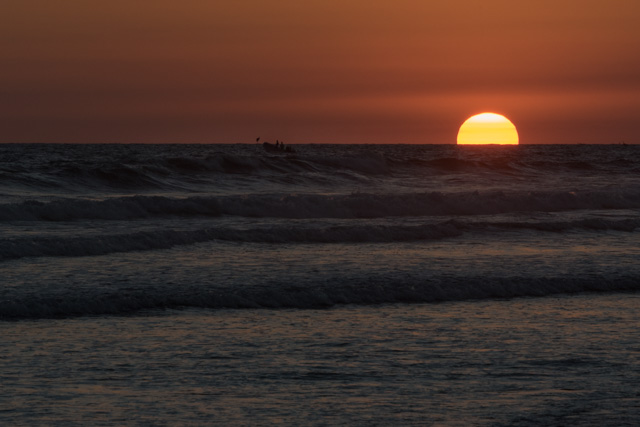
All too soon it’s sunset and the day is almost over; we’re back to reality with a bump tomorrow – 5am start for a long, long drive to Nicaragua.

Enjoy today

At 5.30am this morning, we were in a pick-up truck on our way to Lake Suchitlan for our kayaking adventure.

The water was extremely still. There was no one about, apart from one or two fishermen. The sunrise revealed beautiful scenery. We hugged the coastline, and spotted many birds – most of them birds we’d never seen before or even heard of.

We’re fairly inexperienced kayakers, and although we were having fun, we were constantly having to catch up with the other two kayaks.

On our way back to Suchitoto, we stopped at Agua Caliente. This is when I realised that I’d forgotten my swimming costume. My clothes were soaked from paddling, so I decided to jump into the hot spring fully clothed.

Breakfast at La Casa de la Abuela was rushed. Andy had a drip coffee which he enjoyed. We ate quickly as we were leaving at 10am; we met up with Arnando, who was going to be our driver again today. Still very chirpy.

We’re a little sad to be leaving Suchitoto. This tiny laid-back town’s certainly a discovery. The four hour drive to El Cuco went quite fast, with the hilly landscape giving way to towering volcanoes, and eventually the Pacific Ocean.

As he left us, Arnando gave each of us a hug.

We’re staying at La Tortuga Verde for two nights. When Andy was learning Spanish in preparation for this trip, the word tortuga came up in almost every single lesson. He joked at the time that this wasn’t a very useful word to know. How wrong he was!

We’re given numbered bracelets, which means that everything we order can be charged directly to our room.

We had smoothies on the beach, and signed up to a 30 mins massage each. That was a good move! So relaxing (with the sound of the waves in the background) and a good therapy for those achy kayaking muscles.

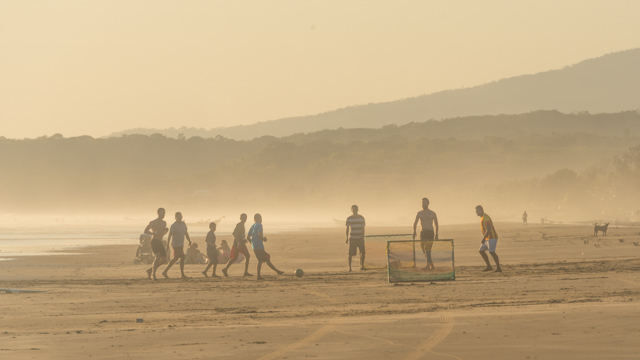
Sunset on the beach. Black sand. Little crabs scurrying along. A few people surfing. Some playing football.

At the bar, we grabbed ocean-facing seats, and happily sipped our cocktails – piña colada (that fresh pineapple again) and margaritas.

We have a whole day here tomorrow.

War and Peace

A leisurely start this morning, no alarm. The shower is cold only but it’s already quite warm so it’s not too bad. Breakfast at Casa da la Abuela; Google Maps tells us its 232 feet away – it’s a small town!

The cafe is very nice, warm yellow outside, dark and cool inside, decorated with coffee sacks. I have granola, yogurt and fruit and a very good cappuccino.

Fortified by our meal, we’re ready for the sites. The church is brilliant white on the outside but inside it’s got lots of dark wood and a tiled floor, unlike anywhere else we’ve seen. It’s also very long for a small town. A number of houses have a stencil on the wall saying ‘In this house we want a life free from violence against women’. Suchitoto is a very attactive town, cobbled streets and colourful single storey buildings. I’ve never been anywhere so friendly, everybody has time for a smile and to say good morning. Just under the surface however you’re never far from the impact of the civil war.

The start of the El Salvador Civil War is hard to pin down exactly but it was fought from around 1979 until a peace treaty was signed in 1992. The origins were in a revolt by the peasantry against land-owners who paid them very little and treated them poorly. The El Salvador armed forces were armed and trained by the USA. The guerillas armed themselves by stealing – or in some cases even buying arms – from the army. UN Reports say that 75,000 people were killed and an unknown number disappeared.

One of the squares in the town has a number of sculptures made from arms remaining after the war and parts of a helicopter shot down by guerillas. Nearby a former school is now the Art Centre for Peace, they teach art and music to local people and have an exhibition by local artists, there’s a large salsa band practising in one of the rooms.

Time for a cooling drink before heading back to the hotel to prepare for our afternoon hike. This is through a forest in a nature reserve about 15 miles from the town. The forest was the site of a lot of guerilla activity during the civil war. We see the remains of trenches, the grave of an unknown soldier and the site of a guerilla camp. A lot of of knowledge was gained from the viet-cong, the trenches and kitchens that disperse their smoke so as not to be visible from the air are all their designs. The medical facilities in the camp remain in place; a small bamboo operating table with a hook above it for drips, blood etc. Operations were carried out at night by oil lamps.

The highest point of the walk takes us to a viewpoint with a wide vista across the forest, Lake Suchitlan, and a number of volcanoes. We end the hike with a swim under a waterfall, a very nice way to cool down.

We’re told some stories about the war by a former guerrilla, Don Rafael, he’s now 58 and although small looks a formidable fighter. He claims to have been the 11th member of the guerilla forces.

We stop in the village of Cinquera on the way back to Suchitoto to see more war remnants, parts of a helicopter downed by a machine gun and the gun itself. Outside the church there are bomb cases standing up on the lawn.

Back in town we start the evening at El Necio, this is run by a more friendly ex-guerilla. He seems to have a crush on Che Guevara, his bar is covered with pictures of El Commandante, one covers almost a whole wall. I have a Cuba Libre – seems appropriate, the former fighter sings along to Cuban music, he has a good voice.

Return to last night’s restaurant for more papusas, just a small one each tonight – this sets us back $1.50, theyre even better than before as well.

One day, three countries

Baleadas for breakfast. Andy opted for the simple one (beans and cheese), and I added eggs to mine. They were good. Baleadas is the local dish of Honduras and you can have it for breakfast, lunch, or dinner.

We walked down to town, as we’d read that Casa Ixchel made excellent coffee. Whether they do or not will remain a mystery. 25 minutes after placing our order, there was still no sign of coffees. Telling the staff that we’re in a hurry made no difference so we left, coffee-less.

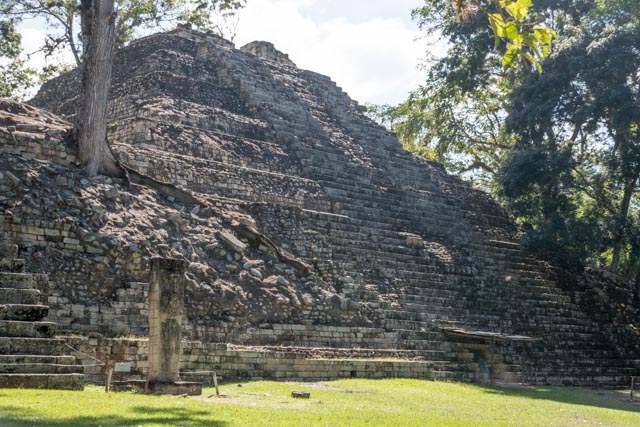
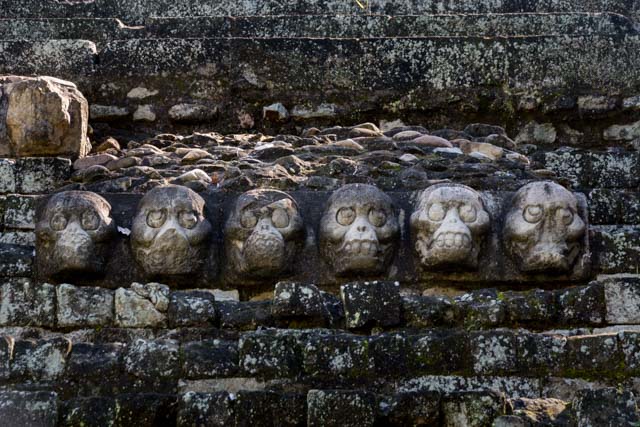
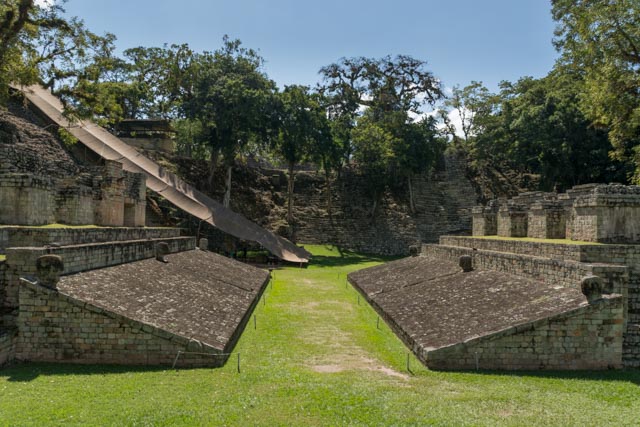
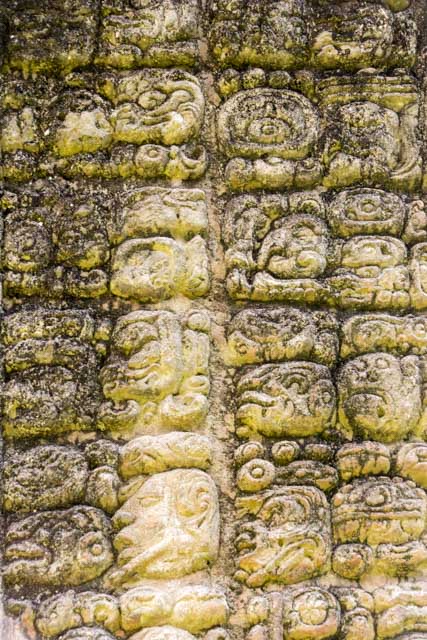
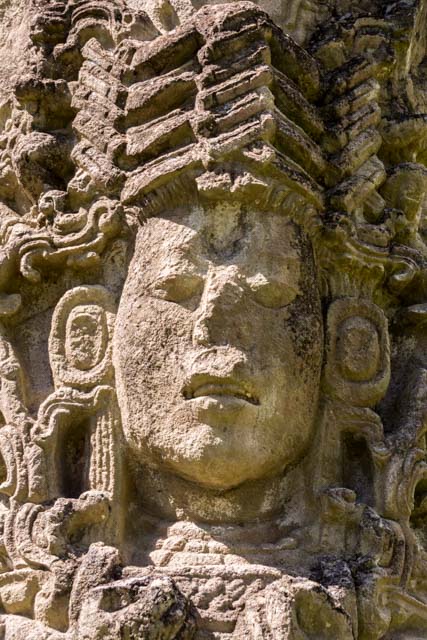
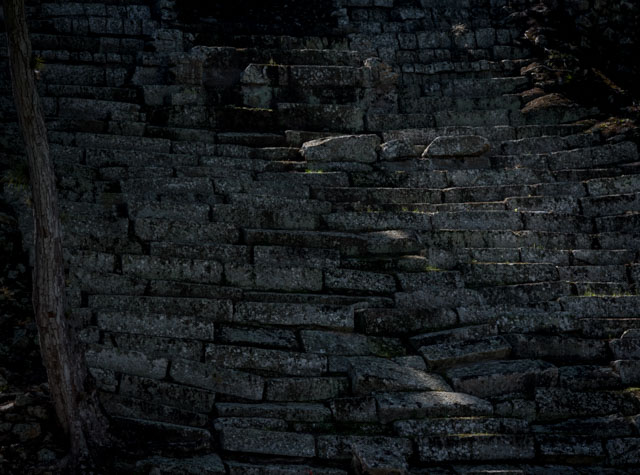
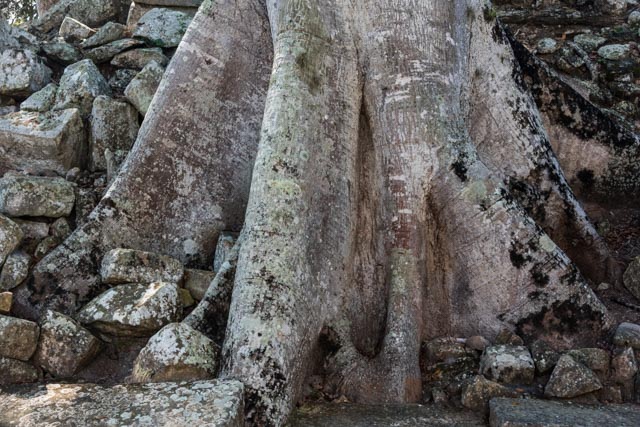
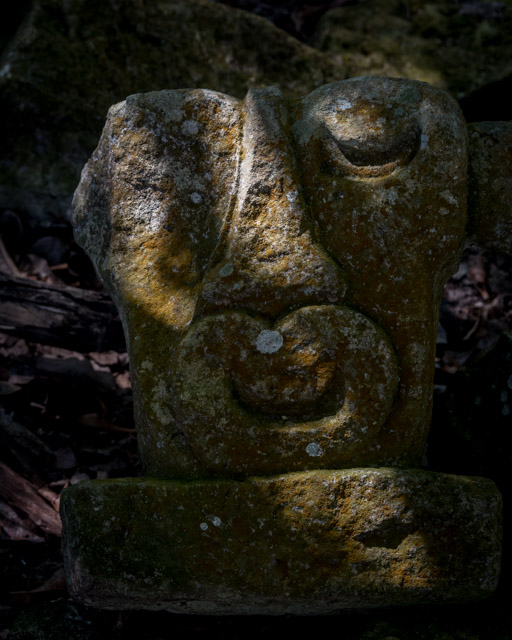
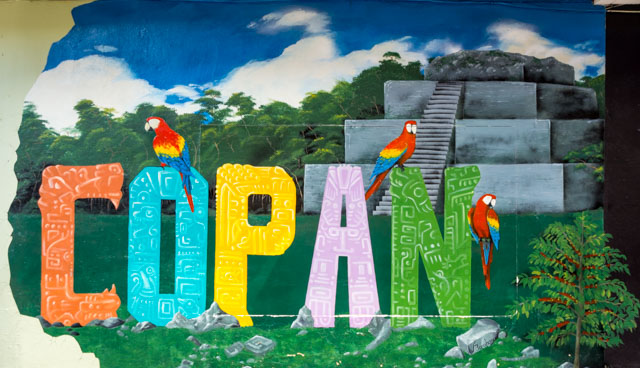
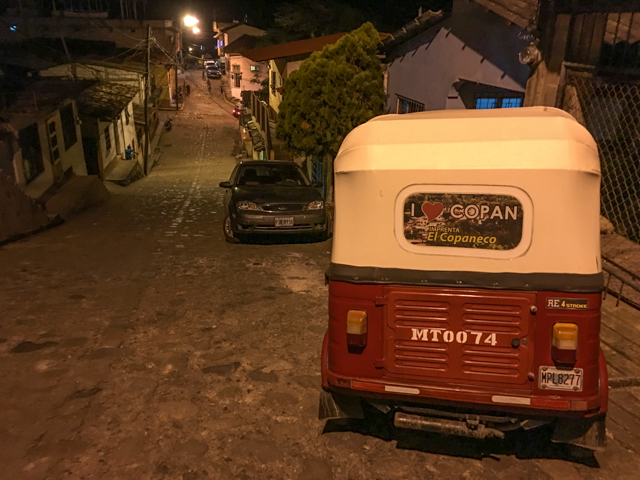
We boarded a tuk tuk for the ten minute journey to the ruins. One of the most important of all Maya civilisations lived, prospered, then mysteriously crumbled around the Copán archaeological site. At its peak, the site covered 24 square kilometers. The layout feels like a modern town, with the royal quarters on one side and secondary temples just off the main plaza. There are remarkable sculptures and hieroglyphics, including the 63-step hieroglyphic stairway. We heard more about Yax Kuk Mo, who came from Tikal and whose dynasty lasted sixteen years.

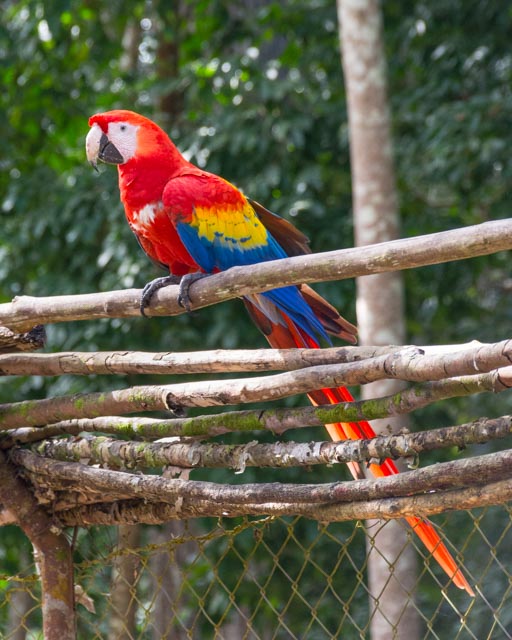
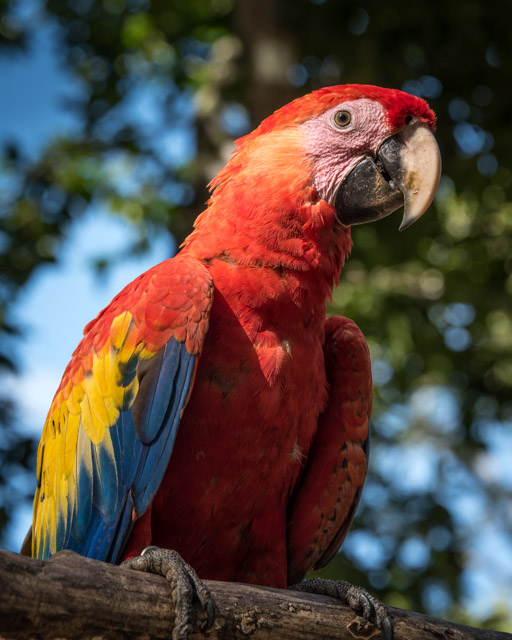
One of the highlights has to be the noisy and colourful macaws.

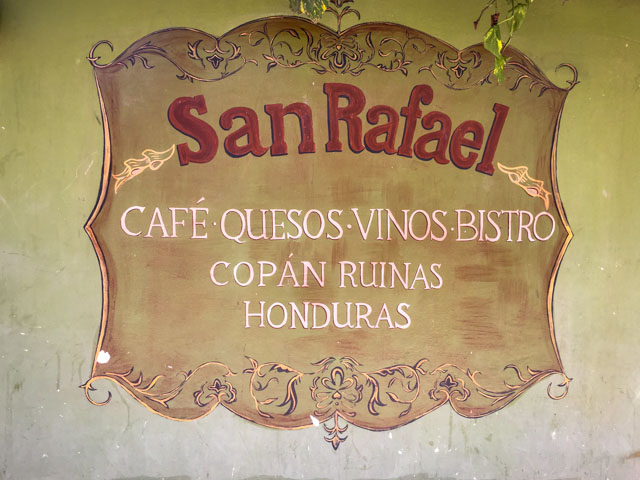
Back in town, we had just over an hour to see the sights, explore new streets, take photos we’d noticed and have lunch. We had yummy cheese sandwiches at Café San Rafael; mine came with the most tasty avocado. Andy finally had his cup of coffee (they serve their own organically coffee grown). The food was excellent, and the service super friendly.

Our stay in Honduras was short, but very enjoyable. Copán Ruinas has a nice feel to it. The food was good. The locals are friendly. It would have been good to see a bit more of the country. It certainly has its problems and we’re not naive enough to think we’ve seen the ‘real’ Honduras.

At 1pm, we left for El Salvador, via Guatemala. Somehow, it’s easier to cross back into Guatemala than to go directly through to El Salvador, and it saves us a number of hours on the road.

Our bus driver, Arnando, is the best. He has a sense of humour, and you can tell that he really enjoys his work. He provided us with cold bottles of water, anti-bacterial gel and Wifi (funny aside, we had better WiFi in our bus today than we currently have in our hotel).

We snack on Zambos, the most popular crisps in Honduras. And probably the most controversial crisps I have ever eaten. Crisps with an ugly history. The name itself is a racist term used to describe mixed race people. Critics of the company have accused it of engaging in violence, theft and corruption.

Crossing back into Guatemala is as easy as it was to leave the country yesterday.

A couple of hours later, we leave Guatemala. Again, the border crossing was dead easy. We remained in our seats. Some guy got in to change our quetzales into dollars (the official currency of El Salvador). Instantly El Salvador feels different. The road is new and smooth. There is minimal litter about. The toilets at the petrol stations are clean. These are details, but important ones when you spend most of your day on the road.

We arrived in Suchitoto just after 6:30pm. We got into our room, unpacked, took the laundry down to reception, had showers and then realised that our room was like an oven. The wall near the bed was boiling so we packed up and decamped to what turns out to be a much nicer room.

After choosing our activities for the next few days, we went to dinner at a local restaurant near the hotel. The owner trained as a chef in the big city but decided to come home to cook local food. It’s a small restaurant, but busy all night. He cooks two types of pupusas – the traditional one with beans and cheese (to which non-vegetarians can add beef or pork), and the other one is more avant-garde in the world of pupupas – with garlic and spinach. They both come with a tomato sauce and curtido. Delicious. We were talking about food at lunchtime and how they can afford to have simple things on the menu in this part of the world as the ingredients are so good.

Here today, gone tomorrow

The 3:20am alarm was brutal.

We drove through Guatemala City nice and early and in doing so avoided the dreaded traffic; we retraced our journey towards Rio Dulce for a while, and then veered off towards Honduras.

We stopped to admire the Sierra Madre. This mountain range was important to the Mayans. Due to the terrain and the daily mini-earthquakes, jade regularly appeared (without having to be mined) and they used the stone for important ceremonies.

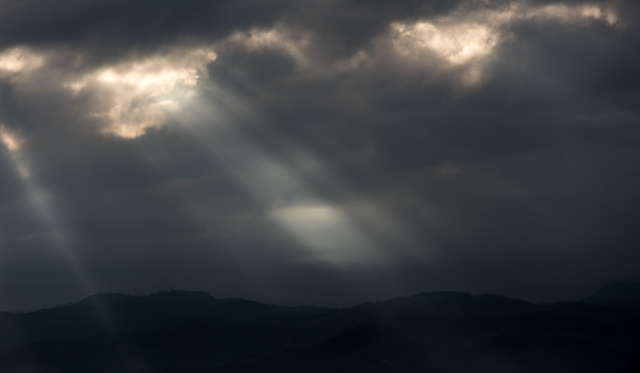
As the sun rose, we were treated to amazing crepuscular rays. The amount of litter by the roadside continued to shock us.

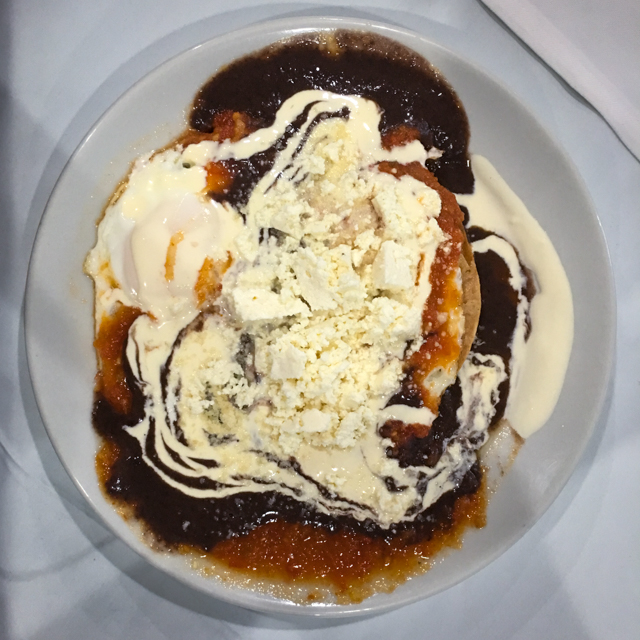
Breakfast tasted a lot better than it looked. A crisp tortilla with eggs, beans, cheese, ranchero sauce and sour cream, with a welcome cup of coffee.

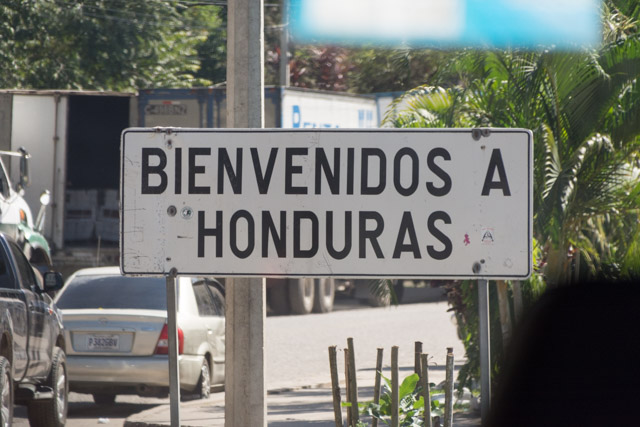
We officially crossed into Honduras without leaving the bus. How easy was that? Pretty easy considering that Dennis (our guide) had warned us that it could be a tricky one; it all depended on who was on duty. Yes, the words bribe and corruption were mentioned.

The landscape is hilly, and more cultivated. The places we passed look more like little villages, with people looking after their front gardens.

We checked into our hotel. We’re told that the local rooster is noisy all day and all night. We had such an early start this morning that hopefully this won’t trouble us too much.

Less than an hour away from Copán Ruinas is Luna Jaguar Aguas Termales. The owners have natural hot springs in their back garden, and they created a series of man-made pools with varying temperatures. After a hearty lunch (which included some grilled hot chilli peppers), we spend a couple of hours trying a fair few of the pools and had a lot of fun rubbing mud all over ourselves (our skins are now super soft and we look ten years younger!).

Back in town, we went out in search of beers and dinner. We’re now in malaria country so the full strength deet came out (horrible stuff).

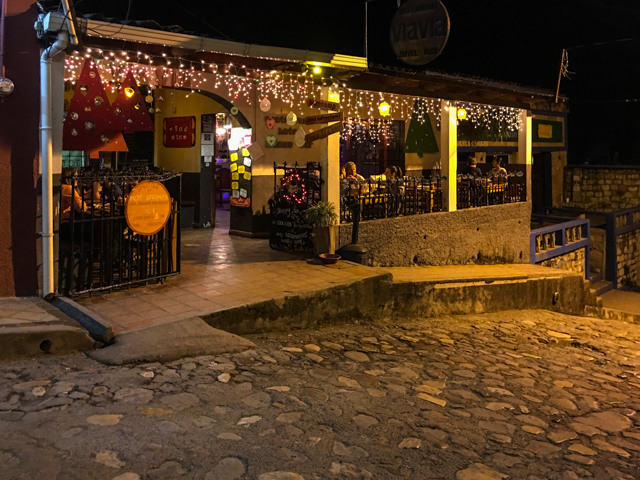
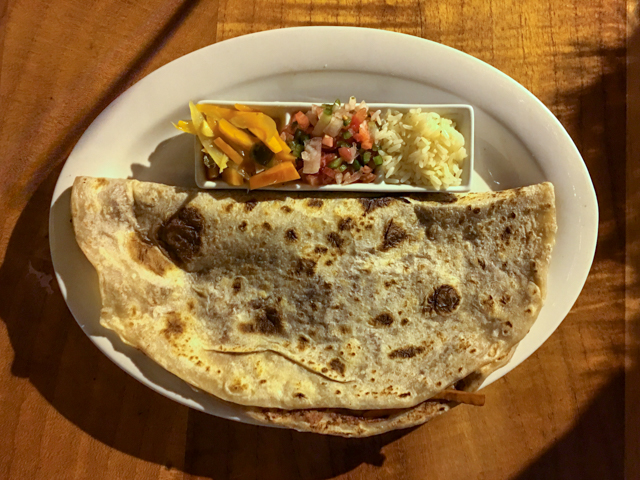
We settle on Restaurant Via Via and try a couple of beers from Honduras and share a baleadas – a combination of eggs, beans, and cheese inside a soft corn tortilla. You can it eat it plain or add salsa picante and pickled vegetables.

The town is very small, and built around the central square, which lies on a flat surface. All the streets around it are ridiculously steep. There are a few restaurants and hotels. It’s a dinky town. Bizarrely, the museums are open until 9pm and don’t open until 1pm so sadly, we won’t be able to check them out as that’s when we’re leaving.

Andy and I had plenty of time to chat during our long bus journey today, and we thought it was time to stir things up a little. With no further ado, we’re introducing the ‘Big Trip Comment Competition’. We’ve really enjoyed the comments we’ve had so far on the blog (thank you guys); and we want more. We know we have a substantial audience but clearly, a number of you are shy little munchkins. So we’re opening the competition to everyone – if you’re new to the site (welcome!); an occasional or regular reader and an avid commenter. Comment away. Tell us what you think. Send us recommendations. You can be as serious or as funny as you want; just tell us your reactions to our stories. The prize? A bottle of Belizean rum. The winner will be announced on 17 April.*

And totally unrelated, did you see that Giroud goal? Oh my.

* Terms and conditions apply.

30 Cacao Seeds for a Rabbit

The firecrackers went on until well after midnight.

Leave the hotel around 8:00 this morning, the streets are deserted, warm on the sunny side but the air is still cool. Retrace our steps from last night looking for a recommended cafe for breakfast but they’re not open until 11:00 today. Make our way back towards the Bagel Barn, fingers crossed. On the way we pass the communal laundry areas, we’ve seen a few of these around Guatemala – even when there is a washing machine at home these are used because they are a place to meet and gossip, no-one has started washing yet today however.

Bagel Barn is open – a grilled cheese bagel, spinach and banana smoothie and a strong coffee are a good antidote to last night’s drinks.

Next stop is the Merced Convent ruins, like most of the ruins here this suffered in the 18th Century earthquakes. It was built to withstand strong tremors but still wasn’t strong enough for those huge quakes. The first floor is still standing but the upper stories are almost all missing.

Buy a few gifts and souvenirs in a big tourist shop, they have their own version of Maximon the Mayan god in a shed in the courtyard; the only worshipper today is a local cat.

Most of the sites in town are closed so we end up gazing at ruins through railings.

Sightseeing isn’t working today so we try a few activities instead. First up is chocolate making. Cacao trees were originally from South America but chocolate itself developed from a drink produced in what is now Guatemala as early as 1900BC, it was a drink of Olmec Kings and Priests. The Aztecs took the idea from the Mayans and had to transport the beans from Guatemala overland manually, the beans were used as a currency; among other things 30 beans would buy you a rabbit. The Aztec word Cacahuatl put off the Spanish who changed the word to Chocolade and started exporting the beans back home. Chocolate was soon popular all over Europe. In 1910, William Cadbury convinced a number of British and American producers to stop using beans from plantations that used slaves.

Our class started with a history lesson and then moved onto more practical demonstrations. The cacao beans have to be roasted, dried and fermented before being used, this was done for us but we then ground up the cacao nibs by hand in a pestle and mortar and used the resulting cacao liquor – it is slightly alcoholic  – to make Mayan style chocolate drink, Spanish hot chocolate and chocolate tea from the bean shells. They’re all very tasty, rich and savoury and a long way from the chocolate bars we’re used to. Finally, we used some ready melted dark chocolate to make our own sweets with a number of fillings to choose from: chilli, orange, mint, cardamom among others.

The chocolates will be ready in two hours, in the meantime it’s time for our Salsa lesson. Our teacher is called Victor Hugo. He is very patient and guides us though some basic steps, he finishes with a short demonstration that we video so we can practice later – maybe.

Just time to collect the chocolates before meeting our new guide and group of travelling companions.

Everywhere is quiet in town, we have craft beers from the Antigua Brewing Company to bid farewell to the town and Guatemala. Tomorrow we leave at 4:00am for Honduras.


Chicken Buses

We appreciated the benefits of a good night’s sleep today; nine hours last night which made up for a few shorter nights. Tasty breakfast of pitta and hummus, smoothie and coffee, watching hummingbirds feeding on the flowers in the restaurant garden.

8:30 departure back to Antigua – it might take 3, or 4 or 5 hours. We’re stuck behind “chicken” buses for the first fifteen minutes. These buses are old American school buses which are now used as public transport. They are everywhere, they pour out clouds of black smoke, they can go quite quickly when they choose and they appear to rule the roads. They also come in many different colours, they have names painted down the side and they are all slightly different.

The traffic is on our side and we get to Antigua before mid-day and hit the streets to see the sites. The town is busy with visitors, Guatemalan and foreigners, all here to party tonight.

We wander a few random streets, grab a coffee and try Ta’Cools for lunch, share a very good vegetarian taco and a couple of hibiscus juices to cool down. Antigua is 2,000m above sea level so the air is quite cool but the sun is strong so it feels hot. We walk round the bus station to have a close look at some more buses.

Back to the hotel for a quick shower before the big night ahead, by 5pm the central square is already filling up, there’s a band playing outside the cathedral and a strange mixture of people on stilts, people with very large heads and an avocado dancing below them.

We try an ice cream, pineapple and chilli, very nice.

The Galeria de Arte is open until 7pm so we have a look round. The paintings and sculptures are mainly from Central America, they are exuberant and colourful and reflect the personality of the people and the landscapes we’ve seen. It feels like art that has developed away from most European influences, we don’t like it all but it’s refreshing to see so many new styles.

The volcanoes around the town out on a good show for New Year’s Eve, throwing out smoke into the sunset.

Enough culture, it’s time to party – Cafe No Se is one of the coolest bars I’ve ever seen, it’s very dark, candle-lit, there are small doors off the main room leading to little corners to sit in – one has a sign over the door, which is about 4 feet high, saying Mescal bar – minimum 2 shots. There are images of Maximon, the Mayan god we saw yesterday, also a poster saying “Trump eres un pendejo” – ‘Trump is an @***hole’. The soundtrack is a mixture of sixties rock and blues. We have a couple of Mescal Mules and toast the New Year that has just turned in London, very tasty.

Back on the street we head back to the hotel to meet the group for our last night meal, distracted by a ruined, floodlit church, it’s slowly being restored, mass is just beginning so it’s clearly active. The Central Square is now much more active, more music and dancing – a few people appear to be dressed in fireworks which makes some of the crowd move rather quickly.

My ears are ringing from a fire cracker that explodes in the street very close to us.

We have a quick drink with the group then head off to try another bar we spotted earlier – Por Que No? – we can just get to the bar to get a drink but have to drink it on the pavement, the bar is tiny and very atmospheric. We get chatting to a brother and sister from Singapore and get some tips for later, much later, in our trip.

Happy New Year!