The ‘excited state of the Mohammedans’

9:30am start today to accommodate last night’s festival goers. This trip is sooooo easy!

We followed the river out of town. It was a gentle 45 mins walk up to the fortress. We were in no hurry, and the path was in the shade the majority of the time.

From the top, we had an incredible view of Prizren and the Shar mountain range. We saw how integrated the town used to be – with the main mosque, the orthodox cathedral and the catholic cathedral all within a short distance of each other. We counted up to 27 mosques; we were challenged by the information board to find 45. We could also see the terracotta tiles of the former hamman. All the roofs in town used to be like this. It would have looked spectacular.

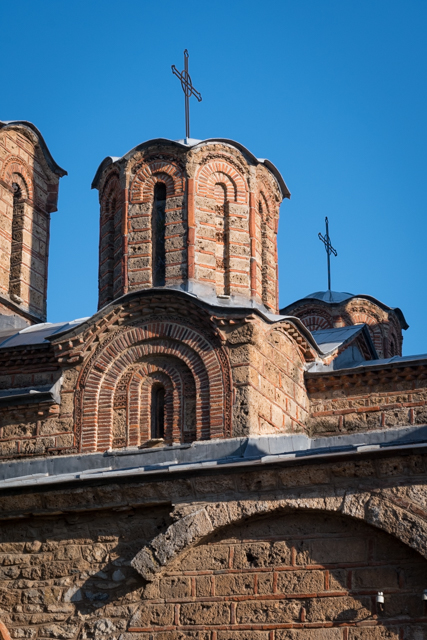
We took a more direct route down – steep. En-route, we stopped to visit the ruins of the Orthodox Church of the Holy Saviour. There used to be 12,000 Serbs living in this corner of Prizren, now there are 12. They came back a few years ago when their houses were rebuilt by the British Embassy and they are financially supported by Serbia. The church was built around 1330, and sadly it was damaged and set on fire during the Kosovo war. The man currently looking after the church had to leave Kosovo along with his family during the peak of the conflict. Serbian homes were often set on fire. He came back a few years ago and told us there were no words to describe that feeling of coming home.

Back in town, we stopped for ice tea at a terrace bar, sitting facing the street – the way we’ve seen locals do it – and people watched.

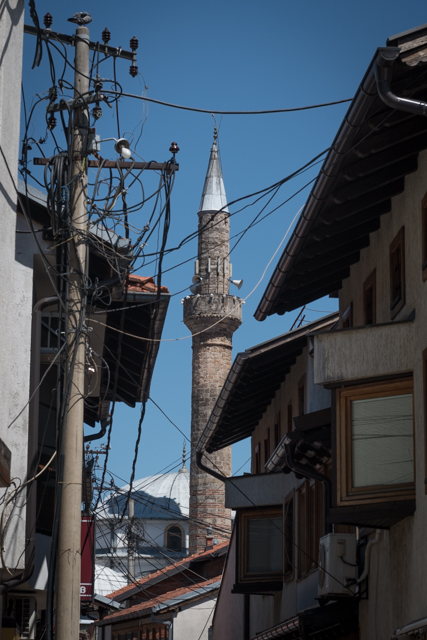
We timed it so that we would be able to visit the Sinan Pasha Mosque between prayers. It was built in 1615 and it’s considered to be one of the most beautiful mosques in Kosovo. It underwent restoration a few years back funded largely by Turkey. I personally preferred the local one we visited yesterday – smaller, intimate and beautifully decorated. But this one also had beautiful calligraphy and details – such as the windows’ intricate pattern wood surround.

For lunch, we opted to go back to Besimi. We ordered a large bottle of water, a small salad to share (potatoes; olives; sweet corn and those red peppers we had yesterday) and some freshly backed round bread. I also ordered fli –also known as flia. This was a typical Kosovo specialty I was keen to try. It consists of multiple crepe-like layers brushed with cream, and traditionally it takes hours to make, as the batter repeatedly needs to be layered and baked. It was tasty.

We treated ourselves to ice cream; it’s at least 36c out there today and boarded the tourist train. We had our doubts but were persuaded to give it a go as other people in the group recommended it. The ride takes no longer than 15 minutes and we got to go down streets we hadn’t yet explored – shops full of those amazing dresses we’d seen in Peja, traditional clothing shops (these are primarily for locals rather then tourists) and shoes. We got to see a totally different side to the town, all for €1.50 each.

After a short comfort break back at the hotel, we met up with the group again as Ivan had made an appointment for us to go inside the church of the Virgin of Ljeviš. But as yesterday, we had to contend ourselves with looking at it from the outside. We completed the necessary paperwork with the police officer in charge of the site but both he and Ivan were unable to get hold of the priest. There was a strong siesta rumour going round 🙂

So three of us retired to a bar and people watched some more. We checked a couple of jewellery shops where we admired filigree (‘ornamental work of fine (typically gold or silver) wire formed into delicate tracery’ – source) and antique bracelets.

And then things got serious.

€1 got us into the League of Prizren museum. This is an extremely important place historically. Ivan started our Balkan history lesson the day we crossed into Kosovo. He carried on last night; he had us all sitting down on benches in a public square. We were absorbing his every words (we may be quizzed on this at the end of the trip). And it basically went something like this: to understand the Balkans today, you have to understand what happened during the Kosovo war. To understand what happened during the Kosovo war, you have to understand what happened during the break up of Yugoslavia. To understand what happened during the break up of Yugoslavia, you have to understand what happened during the Second World War. To understand what happened during the Second World War, you have to understand what happened during the First World War. To understand what happened during the First World War, you have to understand what happened at the Congress of Berlin in 1878. The Congress of Berlin is what got us to this museum today. The Treaty of Prizren in June 1878 basically identified Albania groups of different religions as one nationality.

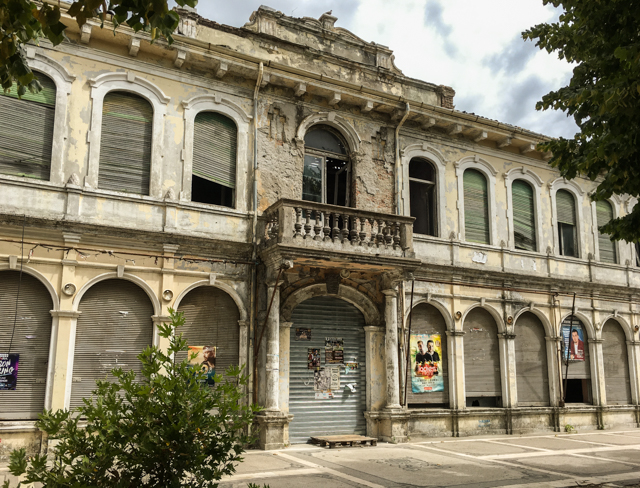
The museum was a little dry and there were copies of letters from diplomats reacting to the Treaty (hence today’s title) but we did feel a sense of history.

The other building contained some old clothing from the various regions, and an art gallery.

Wandering the back streets, we came across local mosques, and older houses with intricate details. A man approached me and in French, started telling me about the state of some of the houses. In the past, seven brothers used to live in one of the houses, now one of them comes back once a year for two to three weeks but he isn’t spending any money of the house, and soon the roof will cave in.

The best t-shirt of the day was this kid wearing a ‘I’m Albanian and I cannot keep calm’ t-shirt. Funny.

At 7pm, we left the hotel. Andy for the fortress to go and have a look at sunset and me for dinner with the group. Let’s be clear on this: I was on social duties. Marashi is local restaurant by the river. We had some great local food – fried cheese; a village salad; rough country bread (crisp outside but moist inside); a yogurt dip and white Albanian wine. It was a very relaxed affair. Good food; great company.

On our walk back to the hotel, we were again surprised by the number of people in the street. All ages are out and about every night – watching and being watched. The obligatory evening constitutional.

One Cloud in the Sky

The day’s sightseeing got off to a bad start; we’d given ourselves time to visit the old railway station – so good the gift shops have fridge magnets of it – and the Ethnographic museum before breakfast. Unfortunately we couldn’t get out of the hotel as the front door was locked and there’s no alternative exit – safe? The breakfast waiter finally arrived and we were released but had to abandon the railway station plan. The museum wasn’t yet open (it’s very secretive about its opening hours). We’d seen mention of 7:00 somewhere; there’s nothing at the museum or on its website; the garage next door thought 8:00 – maybe. It was just after 7:30 so the four of us adjourned to a café next door, very nice coffee. 8:00 came and went with no signs of activity so we returned to the hotel for breakfast and packing.

At 9:30, we left for Prizren, our home for the next two nights.

Our guide added in an unscheduled stop at Gjakova on the way. This town, like many others was badly bombed during the war. Since then however they have been luckier than most – they have a Harvard educated female mayor who has done a huge amount to regenerate the town and restore the tolerance it was historically known for. She regularly wins ‘Mayor of the Year’ awards – based on measures such as transparency and good governance. The town was famous for its Grand Bazaar, some of this has been rebuilt with a lot of wooden single storey shops. The main street is lined with cafes and bars; it’s very pleasant. The town is known for its craftsmen, one street is dedicated to making wooden cradles, another one saddles. The highlight is the Hadumi mosque, built in 1594. We’re allowed in for five minutes only as it’s Friday. Inside is quite plain but with some attractive paintings on the inside of the domed roof. When are five minutes are up, we move on to a café across the street, more very good coffee for me, and some laid back music to go with it – it would be nice to stay here much longer.

It’s another 45 minutes to Prizren. On the way we cross a new bridge adjacent to very old stone construction. The original Terzijski bridge was built at the end of the 15th Century. Unusually the top of the bridge follows the rise and fall of each of the 11 arches.

Prizren is said to be Kosovo’s most attractive town. The compact centre spreads along the banks of the Prizren Bistrica river and has some Ottoman and Byzantine architecture. The town is noticeably more eastern than others we have visited. There are 35 mosques, although not many more women wear headdresses and shawls and there is a stronger Turkish influence.

After checking into out hotel, we walked to the central square to Besimi restaurant, known for traditional dishes. We had a mix of salads, grilled peppers, an immense piece of fresh flat bread and some haloumi like djathë I Sharrit cheese – all very tasty, Florence followed this with a Tullumba – a desert soaked in honey. After lunch, we wandered aimlessly around the square, through some back streets and across the river to see what caught our eye then back to the hotel for a rest – it feels like one of the hottest days of the trip so far.

We left for a guided walk around the town at 6:00. We saw the thank you messages on the town hall to a variety of countries who supported the independence of Kosovo. A few blocks back, we saw the outside of the beautiful 14th Century church of the Virgin of Ljeviš that hasn’t been fully renovated since the war, it’s Serbian orthodox and protected rather incongruously by razor wire. Our guide gave us a brief overview of the significance of Prizren to Albanian history – more tomorrow – beginning with the Congress of Berlin in 1878.

Dinner was a bit disappointing after our lovely lunch – the only options for us were pasta and pizza. The group spilt after dinner, half went to a music festival in the fort above the town, the techno and Balkan didn’t appeal to everybody so the rest of us had a few more drinks before bedtime, sitting on a terrace watching Prizren go by.

A Walk in the Accursed Mountains

We had another leisurely start today. 8:00 breakfast and 9:00 departure, probably a good thing as a fair amount of wine and raki was consumed at dinner last night – not by us you understand.

We started with the Patriachate of Pec convent, best to go early so we were the only visitors there. The convent was originally built in 1233. There are ruins of a couple of old churches on the site but the main building is still well preserved.

From the 13th Century until about one hundred years ago this was the seat of the heads of the Serbian Orthodox church so it has a great historical and political significance. There is still a local police presence here as well. It’s an unusual arrangement of three churches side by side with a long covered entrance along the front of all three.

We were given audio guides to tell us about the history and some details of the frescoes but these were in very dry, quite technical ‘Google Translate’ English and not always easy to follow. The tour first takes you around the outside of the main church – at the back is a graveyard for the nuns, the top of the building has a number of domes. The inside is overwhelming: every section of wall and ceiling is covered in frescoes showing the history of the church, significant figures from the churches’ history, biblical scenes and a large representation of Christ’s family tree. Each of the three churches has its own character having been painted and restored at different times throughout their history, they are all stunning and as always we don’t have nearly enough time to do them justice. After the church there’s time for a brief visit to the gift shop to pick up some souvenirs – walnut liqueur made by the nuns. They also offered a small glass of raki.

After the convent, we headed into the hills for our second activity of the day – a hike in the foothills of the Accursed Mountains. The road follows the Rugovska Klisura gorge, a blue river tumbles down the rocky valley. It’s very narrow, the road has been cut into the side of the sheer cliffs, tunnelling through the rocks in places. At the top of the gorge, we turn off onto a small road to Shqiponja guesthouse which is the starting point of our walk and later our place for lunch.

The walk starts off with a steep climb out of the village, past a small local mosque. All the buildings here look new, most of the old ones were destroyed with napalm grenades by Serbian solders during the fighting for Kosovan independence. The scenery is again very alpine – steep green meadows with low wooden buildings and cows with tinkling cowbells.

There are many explanations of where the mountains got their name from; curses from mothers who lost their sons, malicious fairies or linguistic confusions – who knows? We stopped regularly for shade and drinks, the air temperature was around 30 but the sun was strong making it feel much warmer.

After a couple of hours, we stopped at a farmer’s house for tea and coffee, the view from the garden was huge – a deep green valley to our left, men working on a farm across the valley and above us on the right the 2,800m high ridges that mark the border with Montenegro.

Refreshed we continued, crossing meadows of wild flowers, there were butterflies everywhere. Our guide countered this sylvan mood by telling us stories about when he worked for the UN mine-removal teams. In one village, they were tasked with removing cluster bombs that were known to have been dropped there. They talked to some villagers about them and showed them photos of what they were looking for, one man told them the bombs were located on a particular hillside above the village and he also had about twenty at home. This turned out to be true, it was decided the best solution was to explode them where they were and the UN would build him a new house.

We started to head downhill towards our starting point, the ground is very dry and crumbly and probably harder to walk this way than up. We passed a concrete shell of a hotel; the owner had been obtaining money from a UN development fund – this source had dried up and building had stopped leaving a 4 storey white elephant abandoned in the hills. The location was fantastic; hopefully it will be completed one day.

Back at the guesthouse, we were reunited with Florence who had a relaxing time reading about Kosovo and taking in the beautiful surroundings.

Lunch was served, another wonderful meal of local produce, salads, bread, spinach cakes, soups and for us a very slow-cooked vegetable stew with sticky rice. This late lunch was another slow leisurely affair, nothing to rush for, we eventually left about 5pm and made our way back down the gorge to the hotel.

After a rest and clean up, we went out for a walk as the town was coming alive for the evening. We walked along ‘Tony Blair Street’ then found a Kula – an old house that Florence had read about. It had survived the war but had its ceiling removed by ‘irresponsible persons’.

We went back to the same restaurant as last night, not local food but the pizza was very good and the Stone Castle wine from a nearby vineyard was surprisingly good. We walked back through the town centre, which was now packed. Our guide told us that summer everywhere in the Balkans is like this, people work overseas and bring their money back here for a long summer holiday and they are as rich as kings for a month. Everyone is friendly and having a good time, nobody’s really drunk and no hassle anywhere.

The newest country in Europe


Quite a leisurely start to the day with breakfast at 8am and departure at 9:30am. I’m really getting a taste for cheese and honey!

The drive to the border was short. 45 minutes or so. On the way, we followed the Dragobi river. Ivan told stories of the law of the mountains which still operate in the region. Historically, there was no police force around, so this was how law and order was maintained. But it is very much about blood feud – a perpetual cycle of violence based on revenge.

Crossing into western Kosovo was sleek. The border officer came on board, took our passports and came back within a few minutes.

We are in Kosovo; the newest country in Europe and the second newest in the World – after South Sudan. Newest and youngest, with youth representing a third of the population.

The first thing to hit you is the number of graves everywhere. Most of them from 2008/2009. We all know about the atrocities and the fighting that came with the independence of Kosovo. To date, the country is not recognised by all UN countries.

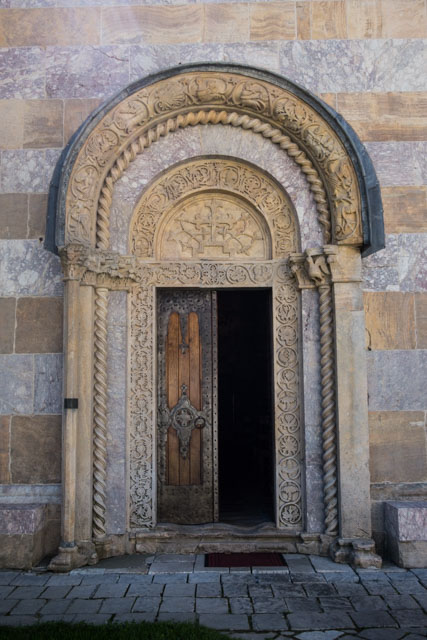
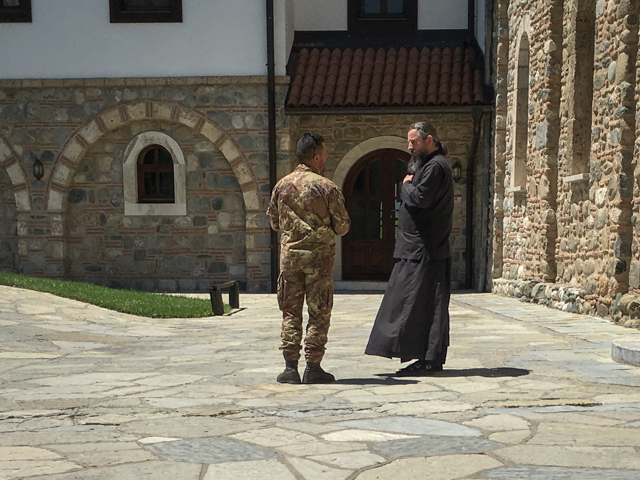
We stopped at the Dečani monastery. This UNESCO World Heritage site is guarded by KFOR, as are many Serbian monasteries in Kosovo. The seriousness of the NATO troops dealing with us (we had to leave our passports with them) give an indication of how raw things still are here.

Despite attacks from ethnic Albanians who’d like to see the Serbs leave, the 25 monks living here, in total isolation from the local community, have stayed and in 2016 even won a legal case reaffirming their right to ownership of the land.” (source: Lonely Planet)

We were promised a treat, and we were not disappointed.

The monastery was founded in the first half of the fourteenth century.

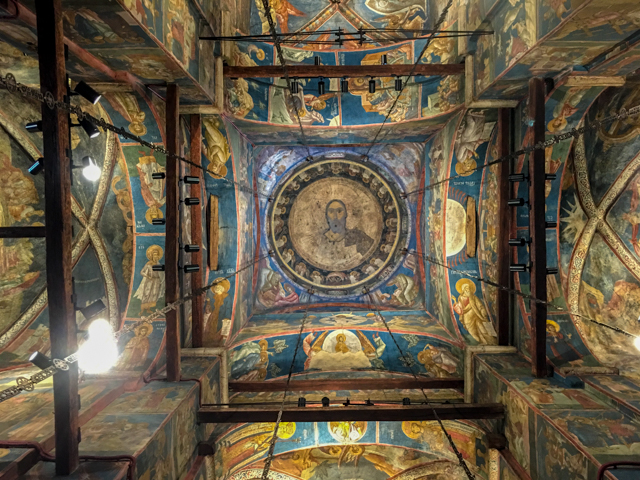
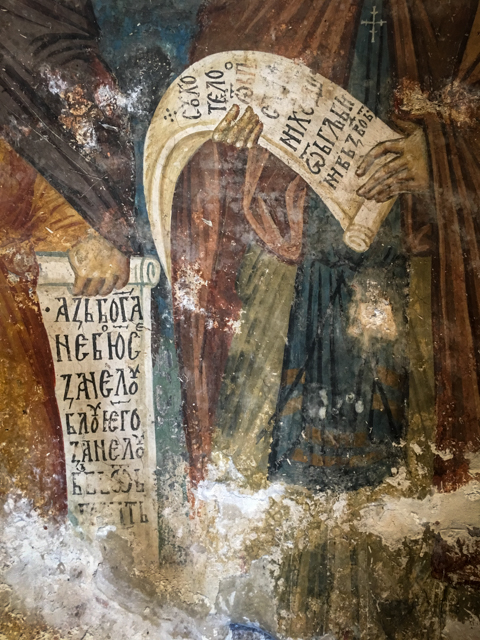
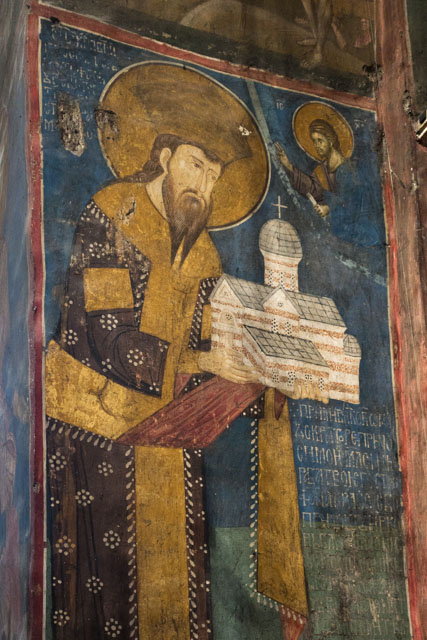
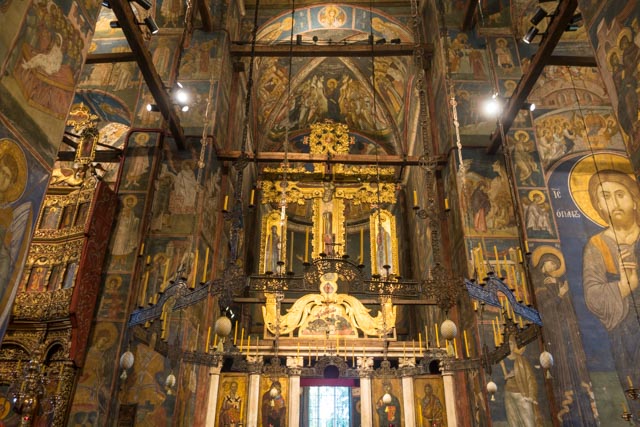
The 700 year-old frescoes are original; they were preserved by the smoke of the candles. They are carefully cleaned once a year. One of them is unique in that it is of Jesus with a sword – and if not unique, then one of the rarest depictions of Jesus. The sword holds a spiritual meaning and does not have any connotation of war. There are over one thousand compositions and a few thousand portraits. Once you enter the church, a sense of tranquility descends upon you. They only allow one group at a time, and we’re a small group.

The vibrancy of the colours; the smell of incense; the diversity of subject matters and a true sense of history make for an incredible site.

Majestical even.

Ivan had told us to stop at the shop to buy a bottle of 2009 red wine. This wine – made by the monks who still live on site – is allegedly one of the best in the Balkans.

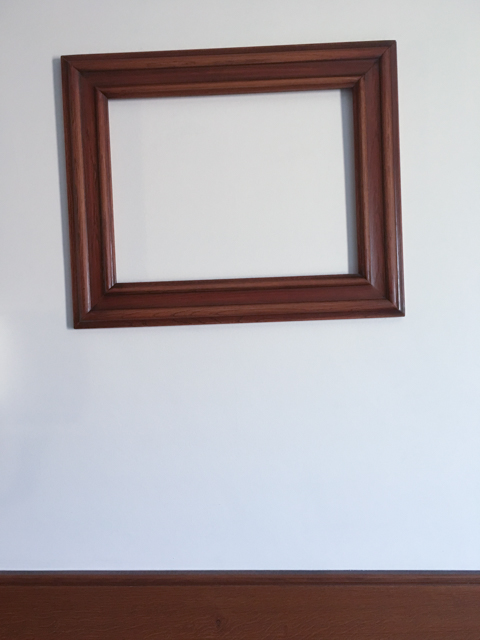
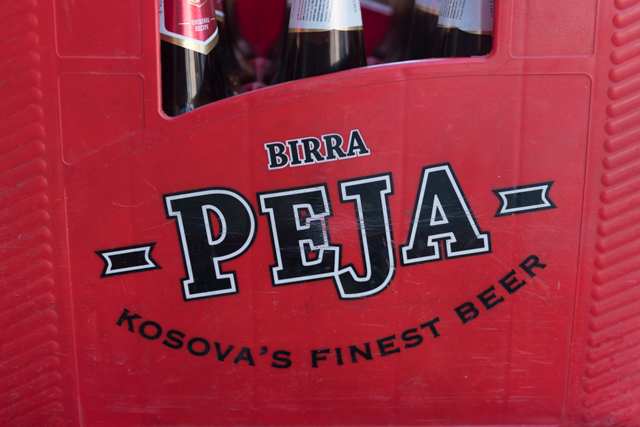
We got to Peja after a short drive; checked into our room (I need to mention the art in our room. We have three frames. They are all empty) and made for lunch as the call to prayer started. We kept it light for lunch – but did try a draft Peja pilsner – and set off for a tour of the town.

Having asked Ivan about safety in town, we opted not to take our camera bags with us and went off with just our cameras. He’d also told us there wasn’t much to see in town and his orientation tour took about twenty minutes. We saw the Bajrakli Mosque; the Ottoman-era bazaar – which was rebuilt after the Kosovo War, and the diaspora monument.

Kosovo was one of the countries on my list. From the moment it became a country. And it is a difficult reality to be here and see that there is still much work to be done before people can be comfortable here. Politicians are corrupt; youth unemployment is between 50%-60%; it is one of the poorest countries in Europe with the average salary being €300… and allegedly, this is one of so called ISIS most successful recruitment grounds.

Interestingly enough, on our walk yesterday, Adenis told us that the UK was no longer a popular country to move to – as it now costs £12,000 to enter illegally. The stories we’re hearing here – and in the Valbona valley yesterday – are that the people who do move abroad – and now it is likely to be Germany or Switzerland – pour money back into the local economies. And these are the people who are responsible for moving their country forward and giving their families a decent lifestyle. A consequence of this is that the younger generation doesn’t now need to move abroad, and Adenis is making his own luck in Albania, guiding local and international tourists, aged 19.

We left the centre of town and walked through the suburbs to walk along the riverside. It was only 3pm and we were not ready to go back to our hotel. So we explored. The walk wasn’t scenic, but it was good to stretch our legs. We noticed some abandoned houses. Ivan told us Serbian families lived there, and the houses were set on fire. The street signs are in Albanian and Serbian; I noticed one where the Serbian name was crossed out.

We got into a semi-wooded area, and a bit further along a clearing with a few cafés. The place was incredibly busy; mostly older men sitting, chatting, playing cards. All topless.

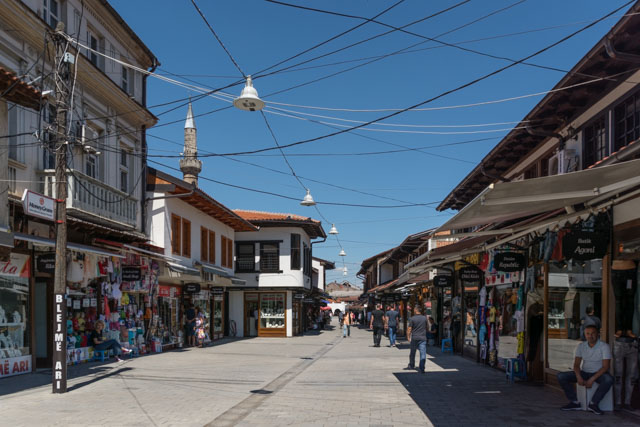
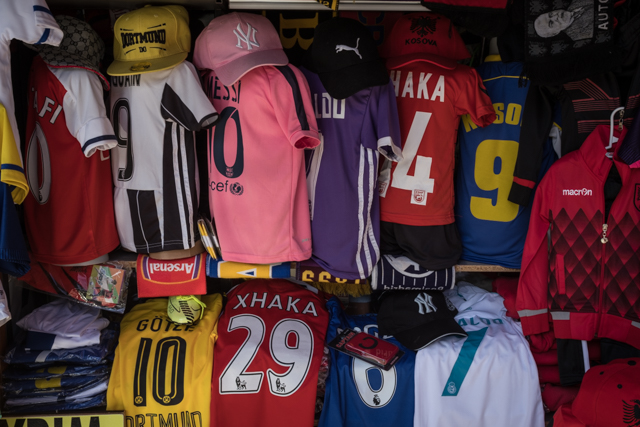
We crossed the river – the banks full of rubbish – and walked back to town. We had a cool drink in one of the terraced bars and refreshed continued to explore the centre of town. It was only 4:30pm but the only museum in town was now closed so we wandered around. There are many shops selling incredibly detailed wedding dresses – colourful, fashionable or traditional. A young woman was trying a dress on and we found out it costs €380. And alongside, sport shops selling football shirts – Mustafi and Xhaka in particular.

The excitement of realising that dinner was at a restaurant our Dutch friends in Tirana recommended to us died down quickly as I read the menu and saw that it was Italian. This is the best restaurant in town; I would have liked to try Kosovan food. The walk back to the hotel took us down a pedestrian street – with restaurants and bars packed.

We got back to our room and immediately, it became apparent that we wouldn’t sleep much tonight. There is a wedding party in the hotel restaurant and the band has just got going. Wish us luck!

It’s the raki talking

Things we learnt from our first night in the Valbona Valley. The silence at night is eerie, and it gets really dark.

Not surprisingly, we slept well and slept in too as breakfast was at 8am. Sheep cheese, local honey, fig and plum jam, freshly baked bread and pancakes.

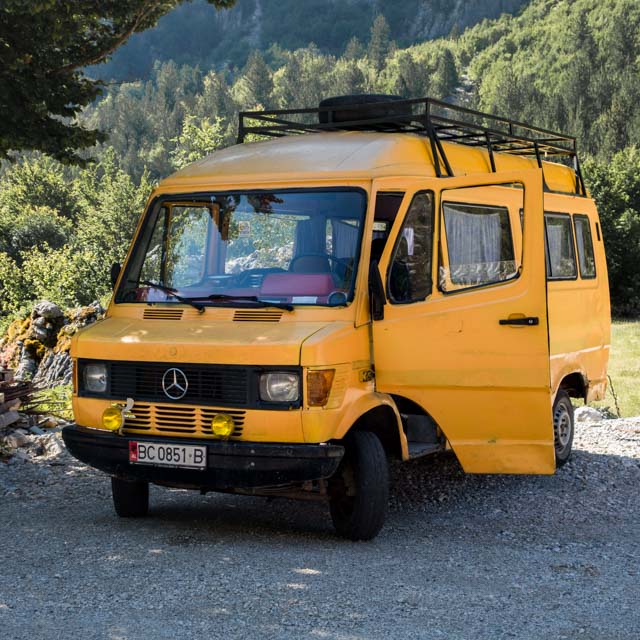
Our transport this morning was this awesome yellow thing, which somehow still works. We all loved it!

The drive was a short one. Which was a shame. I think we would all have liked to spend more time in our yellow van… but maybe it’s a good thing we didn’t.

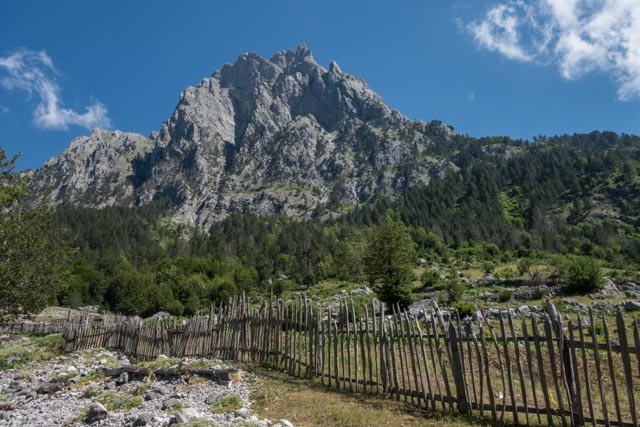
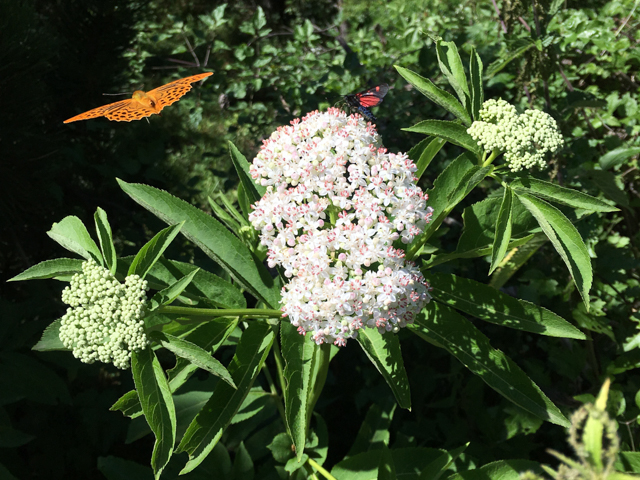
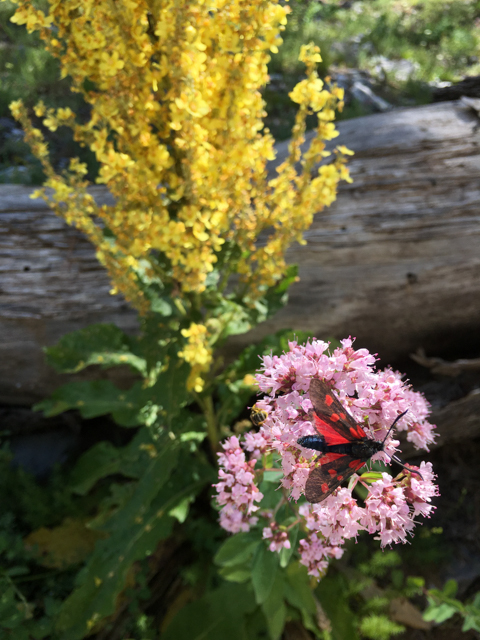
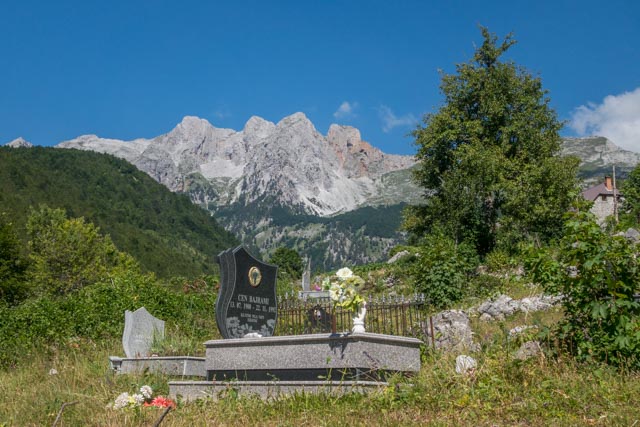
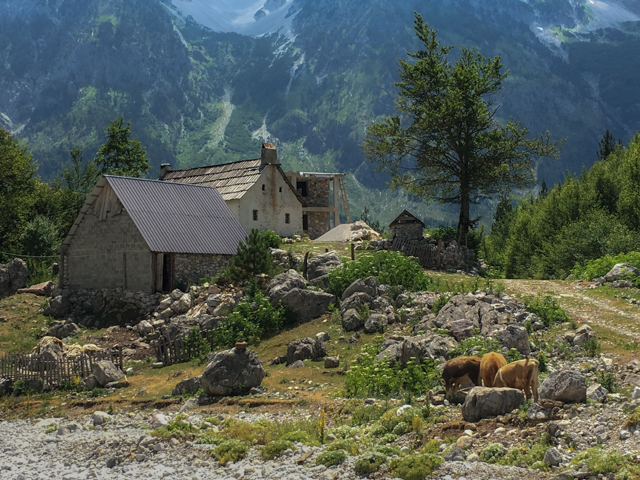
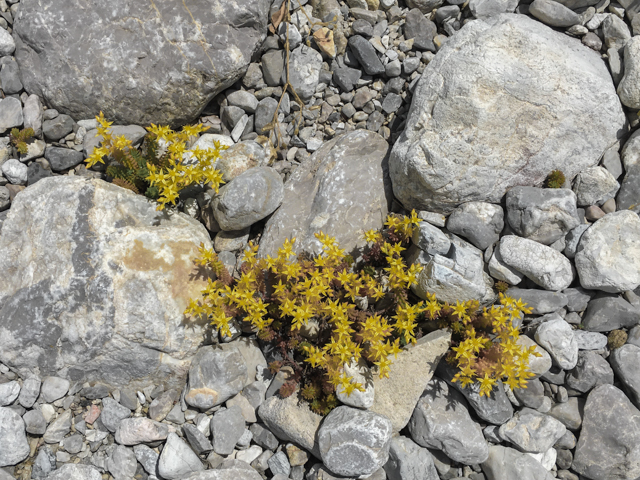
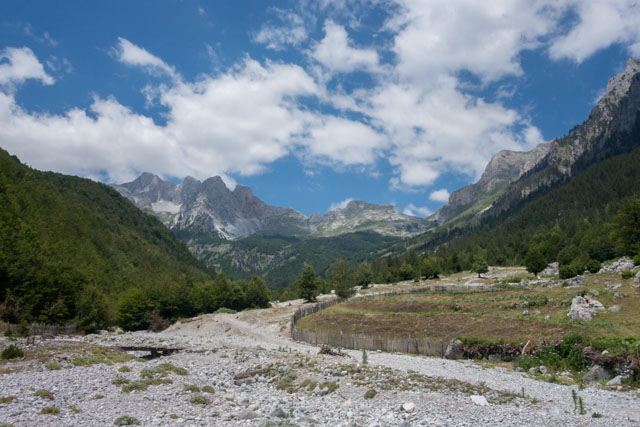
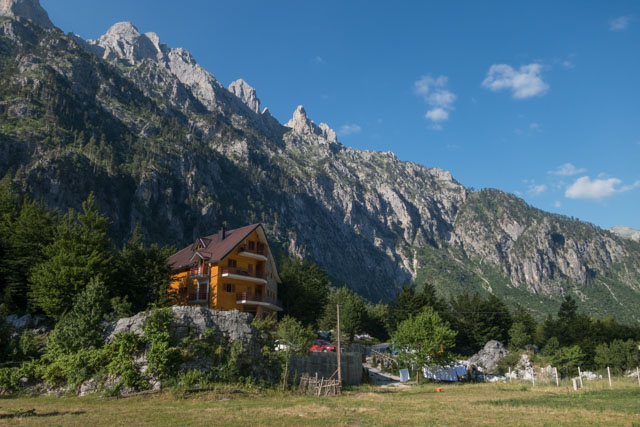
We crossed a dry riverbed, and started to climb. Our three-hour walk took us deep into the remote valley of the Valbona Valley national park. The climb was slow, but we made good progress. Surrounded by high mountain peaks, the landscape is alpine. Green meadows, wild flowers, traditional homes and farmlands. Most houses around here have their own plot where all family members are buried. We had bird song for company, as well as butterflies, beetles, lizards and someone spotted a snake.

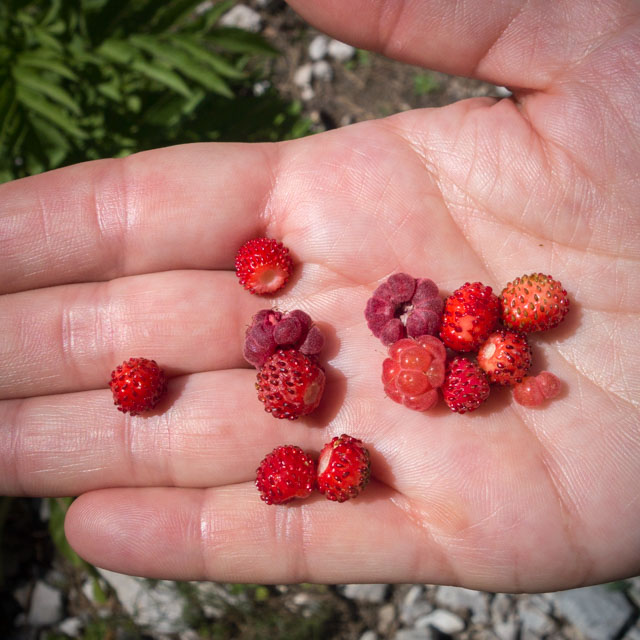
We foraged tiny wild strawberries and raspberries, which tasted heavenly.

It was a gentle walk – both the ankle and the knee held up so that was good news.

On the way back, we stopped in someone’s house for drinks. Andy had a Turkish coffee (strong and thick) and I had mountain tea. The tea is made with a natural plant we’d seen on our walk – a kind of chamomile.

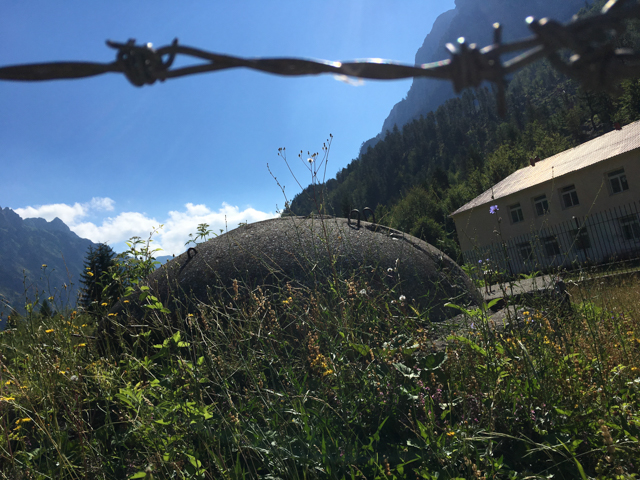
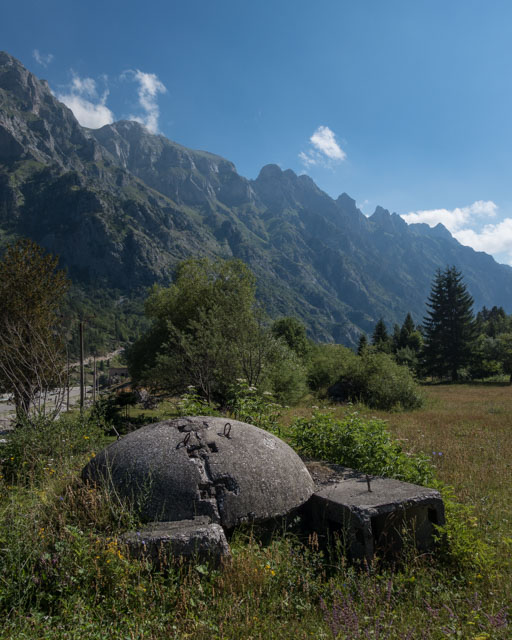
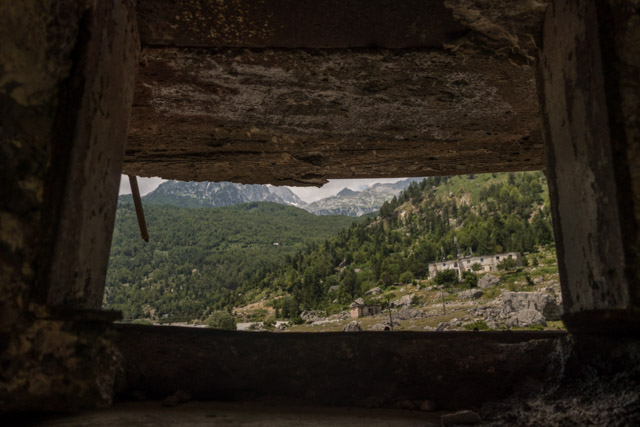
Continuing down, we came across the abandoned post office, which in recent years was used by the mountain police – the high peaks are the border with Montenegro. In the village, we saw a few other abandoned houses and a couple of bunkers. I make it that I’ve now seen four bunkers, maybe five… so… only another 699,995 to go. Yep, Albania has a lot of bunkers.

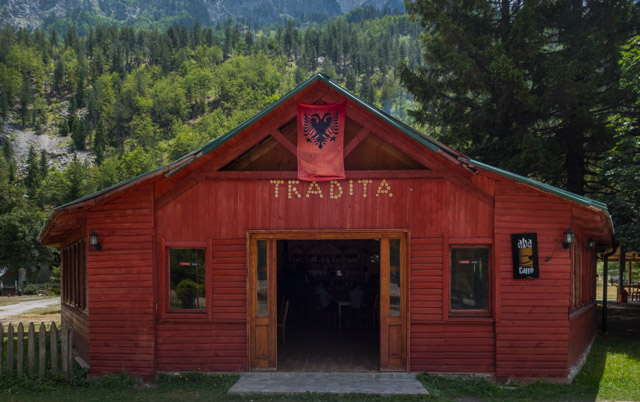
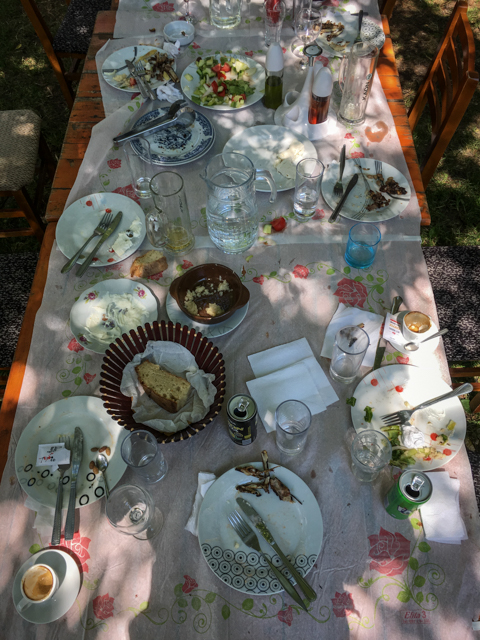
Lunch was a relaxed affair at Tradita restaurant. One of those long stretched out meals in the shade. We were there for over two hours I’d say. And we tried a lot of things. The usual salad (cucumber, tomatoes, salad and olives); bread; grilled corn bread; chips; locally made yogurt (slightly sour); cheese; polenta and cheese; spinach byrek… So tasty. Lager for me, and local white wine for Andy (he will learn… eventually).

Back at Villa Dini for a rest.

At 5:30pm, we went to the house of a village elder. We sat under a tree, and we asked questions, many questions, about life in the village and the changes he’s seen over the last twenty years. His wife joined us. They’ve been married 64 years and they seemed very happy together, sneaking smiles every so often. They were very welcoming. And the raki came out. Homemade plum raki. Strong rough stuff. And fresh cheese. So good.

Dinner was a lengthy affair. We all got a little giggly.

Lakes and Mountains

Our alarm over the last three days has been set to 9:30, 7:30 and today 5:30 – not a good trend!

It would have been good to have a bit more time to explore Shkodër and our lovely old hotel but it’s not to be. We need to leave at 6:30 to meet a ferry, which only goes once a day. The hotel provided us with packed breakfasts and staff were on hand at 6:15 to provide coffee. Macchiato is the flat white of Albania – it’s available everywhere and is generally good. This morning’s was no exception. It seemed like most of the hotel’s guests were leaving at the same time as us to catch the same ferry. There is a standard circuit in Albania that lots of tour groups do and this is definitely part of it.

We’re soon out of the city and climbing into the surrounding hills, the road winds around the valleys with long drops on one side or the other. At one point we can see a few miles ahead and there is a strung out convoy of minibuses heading the same way as us. We turned off the ‘main’ road and on to a smaller unmade road –the signpost pointed towards a small town – we’re going to Puke! Despite its size the town seems to have a large budget for regeneration, all of the centre is being rebuilt, repaved or renovated. The road surface improves too as we head onwards into the hills.

There are lots of hydroelectric schemes in the area so many of the lakes are higher than you would expect. We stopped at a viewpoint to look at one, the surface is mirror smooth, the mountains still towering over us are reflected in its surface, it’s quite rugged and austere but still beautiful. After about 30 minutes more, the road plunges into a tunnel through a hillside, as the light appears at the end of the tunnel there appears to be a traffic jam, this turns out to be a car park! There is so little space on the dock that once a minibus has unloaded its passengers it goes back into the tunnel where one lane is used for parking until the return ferry later in the day. As we board we come across some people we shared a table with on our first night on Tirana, again confirming this a part of the tourist circuit.
The ferry crosses Lake Koman, which is really a flooded valley, and feels much more like a river. The journey takes about 3 hours. For most of that we are in a steep valley of grey rocks with sparse vegetation, the tops of the highest mountains are in the clouds, small patches of snow remain around the peaks. 28 years ago, I travelled around the north of the Balkans, then Yugoslavia, this scenery is very similar – the mountains provide a backbone to the whole region.

Towards the end of the journey, there are a few signs of habitation – loose clusters of farmhouses and occasional chapels on the hillsides. There’s a small ferry, which appears to criss-cross the river linking these remote communities together. We spot an old man walking back to his boat with two large bags of vegetables.

The jetty at the end is a large flat area of gravel; there is a group of minibuses and drivers waiting for us. Our ride is organised already so we don’t need to haggle with this crowd. The driver treats us to some loud Balkan pop music. It seems to have influences from Europop, the Balkans and further East. Shazzam is able to identify most of the tracks and offer us a purchase on iTunes, should we wish to recreate the experience – which we do!

The drive takes us further into the hills into Valbona Valley, an area known for its natural beauty. We follow a river, which runs down the valley over rocks and small waterfalls. It’s a beautiful turquoise blue colour, which is set off by the pale limestone.

Our hotel is on the edge of a small village. It feels very rural and homely. The valley sides tower above us. We have a little while to settle in then lunch is served – it’s all vegetarian, mostly produced in the fields outside. The highlight is the green salad – no really it’s the baked sheep’s cheese, lovely with chunks of bread dunked in it.

After lunch we had a leisurely few hours to relax, read, make a start on the blog, etc. At 5:00, we joined Adonis, a local villager, for a walk around the immediate surroundings of the hotel. We saw the oldest building in the village; it looked like it had been there for hundreds of years, and an old water mill. We continued to James Lake, created by a villager who died five years ago, he dammed a small area, redirected a spring to fill it and filled it with fish. Unfortunately since his death, Albanian tourists from the cities have littered it, taken all the fish and left it looking quite sorry for itself.

Dinner was another hefty feast of local dishes, we had a glass of local red wine with it – probably a mistake, they came out of a 5l flagon. At least they were cheap.

Café society


We’d set the alarm for 7:30am in a bid to do quite a bit this morning as we were leaving Tirana at 1pm.

Bags packed, we got breakfast out of the way quickly and set off.

We headed for the square, which this morning had large patches of water running from the top down (the square is not flat). This – a man told us – is to keep the place cool. And as we looked around, we saw more irrigation gaps which we guessed can be turned on or off as needed. We crossed the square and headed for the Resurrection Cathedral – a modern Orthodox structure consecrated in 2014. A mass was in progress so the Cathedral was packed, we could only just have a look inside the main door; it has a large bright dome shape inside with lots of glittering gold tiles on the walls.

We’d planned to spend the morning at the National Art Gallery. For most of our time there, we were the only two visitors. On the ground floor, the art is traditional – people in traditional costumes, manual workers, peasants and so on. And then it got interesting. Artists were encouraged to paint historical and political scenes. Big scale art. Colourful scenes. Happy workers proudly working for the country. The industrialisation. Some even went further and painted scenes of Skanderberg fighting the Ottomans in the fifteenth century. One painting caught our eye. Edison Gjergo’s “The Epic of the morning’s stars”. There are a few figures in the background, and people took offence to this. They’re in the dark, surely that means they’re plotting against the regime. And so Gjergo was sent to prison (where he died) and his art was blacklisted.

At the back of the museum, a small garden – out of bounds unfortunately – holds a collection of bronze statues. These, we found out later, depict Socialist workers and two are of Stalin. Sadly, they were covered up. Apparently they were uncovered last week…. So maybe it’s to protect them from the sun? We must remember to check these out in two weeks time… who knows?

We stopped for coffee at Noor. Andy was happy with his macchiato. We reflected on the art we’d seen. We felt almost like locals. Sitting at a café, chatting. No matter what time of the day it is, you’ll find people chatting over an espresso. Making time for each other, catching up. No mobile phones in sight.

Our next destination was the Et’hem Bey Mosque. Visitors are welcome to look inside (and photographs are allowed). We took our shoes off and went in. The mosque was built in 1791. Closed under Communist rule but active again since 1991, it is seen as a monument to religious tolerance in the country. Trying not to disturb the men praying, we admired the frescoes inside, and those in the portico, which depict trees and waterfalls – motifs rarely seen in Islamic art.

We just had time to pop into the corner bakery for a couple of byrek (flaky pastry pies with cheese or courgette). Cheap, and tasty.

We left Tirana for Shkodër. We drove north-east along a main thoroughfare, with mountains as background and vast glass buildings on either side of the road initially, and then more residential properties. The sky clouded over and then it rained. Our guide, Ivan, set us a challenge (that’s the ex-teacher in him). A kind of Albania photography bingo. We have ten things to photographs. I already know that I won’t win as the last challenge is to get an Albanian Facebook friend. Oh well, it’s the taking part that counts, right?

We drove through various towns. Colourful high rises at the foot of mountains.

We arrived in Shkodër around 2.30pm. It’s the fourth largest city in Albania. I meant to check how many people live here. Can’t be many. There are three million people in Albania, of which one million lives in Tirana and all have a car. The traffic in town is non-stop. This is because no-one was allowed to have a car when the country was closed and so when things opened up… yep, they went car-crazy. (There’s a rumour going around that most of them can’t officially drive.)

Our hotel – Tradita Geg & Tosk – is super cute. It’s over 300 years old. Our room achieves both comfort and tradition. We left our bags in our room and made our way to the centre of town.

The short walk was pleasant enough with the temperature a gentle 28c. The town is one of the oldest and most historic places in the Balkan peninsula.

Passing the Ebu Beker Mosque, we walked down the main pedestrian street, lined up with cafés and bars.

Our guide suggested we visit the Marubi National Museum of Photography. The museum is in an old building on the main street, the interior is very modern with white walls and a glass staircase. It traces the history of photography in Albania – with photographic plates, gelatin silver prints, etc. And it had an interactive photo studio. The original studio was set up by Pietro Marubi. in the 1850s. Marubi was Italian and no-one really knows why he settled in Albania. At some point, all the works were donated to the country and so historical images were preserved. The wealth of images is staggering – from the history of Albania to its varied regional cultures. We had just over 45 minutes there and we could have done with another 30 minutes.

We joined the rest of the group outside one of the terrace bars and had a cheeky half. My. If the beers in Tirana were cheap, they’re almost giving these away. 80 lek for a half. That’s £0.52.

We got back to the hotel for a quick refresh before getting taxis to the Rozafa castle. A stone road leads all the way up to the fortress – 130 metres above sea level. Perched on top of a rocky hill, it has wide views of the countryside on one side; an old mosque on another side (we were wondering whether it was still an active mosque when we heard the call to prayer); a lake with mountains on another (which turned out to be Montenegro) and Shkodër on the final side. There was hardly anybody there so we could play castle to our heart’s content. We didn’t. There isn’t a lot left to see but exploring the ruins was fun. There are three courtyards, and the fortifications are still intact. We had seen photos of it in the photography museum just a few hours before and it is still as imposing as it was then. And the views were pretty spectacular with special added cloud effects.

For dinner, Ivan recommended the hotel’s restaurant. The setting is truly special and homely. The food was great – a fresh salad of tomatoes, olives and cucumber; salty goat cheese; corn bread; cheese pies; dolmades and then grilled cheese. Andy had a glass of white wine, and I had a glass of red. Both Albanian, but we don’t know what they were as we never saw the labels. They were both good.

As the rest of the group moved to the courtyard for more drinks, we retired to our room to get ready for the morning. We have an early start. That, and the fact that we have a few smokers in the group.

Further Tales of Tirana

A combination of an early start and the heat yesterday wore us out. We had a late alarm just to make sure we didn’t miss breakfast and almost needed it.

Breakfast was included with the room, adequate but not exciting. We took a while to get going and left for the town centre about 11:30am. First stop was Mon Cheri Café. Florence had a strawberry smoothie and I had a coffee. It’s supposed to be the best in town – hmmm. We took a back street route to our lunch stop, this was a bit hard to find but well worth it. Luga e Argjendtë is an organic vegetarian restaurant and deli, their philosophy is that food should be fresh, seasonal and travel as short a distance as possible. We had four small dishes, spinach, chickpeas, cheese and courgette balls.

After lunch, we couldn’t put the sightseeing off any longer. The temperature was in the higher 30s so we decided a museum was a good plan. On the way, I stopped to photograph an interesting looking building. It has an Albanian flag so was presumably a government office. A man approached us and muttered something and pointed at the camera. We assume he didn’t like us photographing there so we moved on.

The National History Museum is a large marble building on the main town square. It has rooms covering most aspects of the country’s history from the stone age to the end of Communism in 1991 – sadly, no photos were allowed inside the building. Both the Romans and Ancient Greeks were here in the period before Christ; the Italians returned in 1939 as an invading force. They were followed by the Germans who were kicked out by Enver Hoxha’s communist forces in 1944. In the early years of his rule, he did a lot to improve the country – eradicating Malaria, increasing literacy rates and developing the countries infrastructure. He initially based his rule on Stalin, later moving onto Mao’s Cultural Revolution model. He died in 1985 and his successor carried on the communist model until its final collapse in 1991. Albania had become the poorest and most isolated county in Europe by then; it’s still recovering from those times.

The museum has many, many exhibits from stone age pottery, through Greek and Roman statues to possessions of victims of the Communist regime. The first section has good captions in English but they seemed to get bored of translating after a while and these become fewer and fewer. The stand out exhibit for me was a paving stone from Hiroshima, a few hundred meters from the centre of the atomic bomb explosion. 188 of these stones were engraved with a figure of a Japanese god and sent to all the countries of the world in the hope that this event would mean that nations could in future live in peace and a similar thing might never happen again.

There were a few fans scattered around the museum and a couple of air-condition units but they were fighting a losing battle and it was probably warmer than outside. By the time we reached the pavilion of the Communist Terror, we were both flagging.

We walked back to the hotel and had half an hour to cool down before meeting our guide and companions for the rest of the trip. They seem like a nice bunch. They’d decided to eat in the hotel’s restaurant. We left them as we wanted to try more dishes from last night’s restaurant. It was just as good as the first time. Again, the waiter warned us off ordering too much – he’s very helpful but not much of a salesman. I had a local beer, Florence was more adventurous and had Raki – a home brewed brandy.