
We had breakfast on our roof terrace this morning. I dipped my toes in the pool. Many birds – including a bird of prey – flew by, some stopping to drink from the water.
With our bags packed, we checked ourselves out of our AirBnB place and waited for Guillermo (the taxi driver who took us to our dinner place on our first night here, and to Miraflores the following day). He was prompt, and the journey back to the CentroAmericano hotel was easy enough. We dropped our overnight bags and Guillermo took us to Hard Rock Hotel Panama Megapolis.
The plan was to do some location scouting for this evening, and then walk back to the hotel. We explored the complex, and the shopping mall nearby (Andy’s still trying to buy shoes).
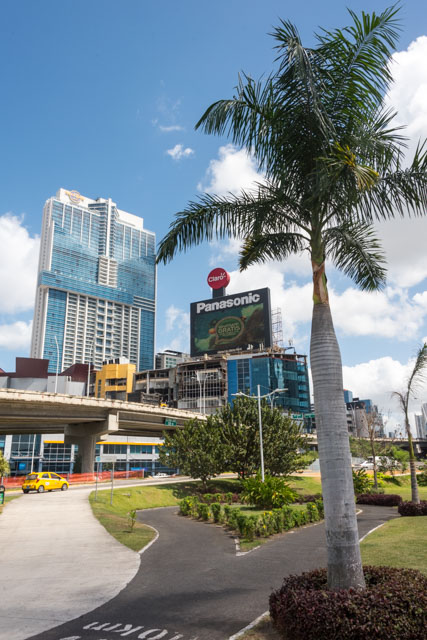
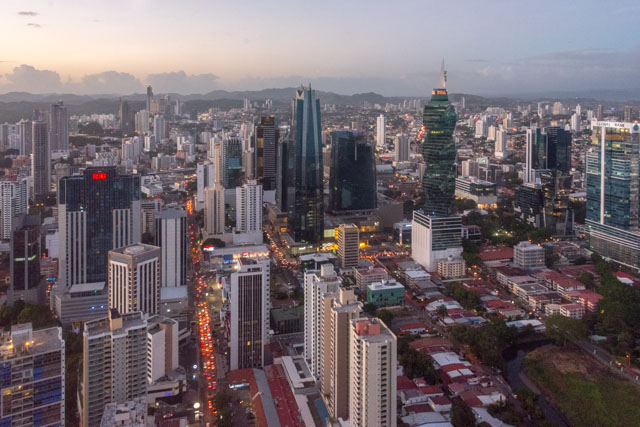
We walked along Avenida Balboa – the ocean on one side and the high rises on the other. Many of the buildings are residential, which I wasn’t expecting. But then again, that pretty much sums up Panama City. I’m not quite sure what to make of the place.
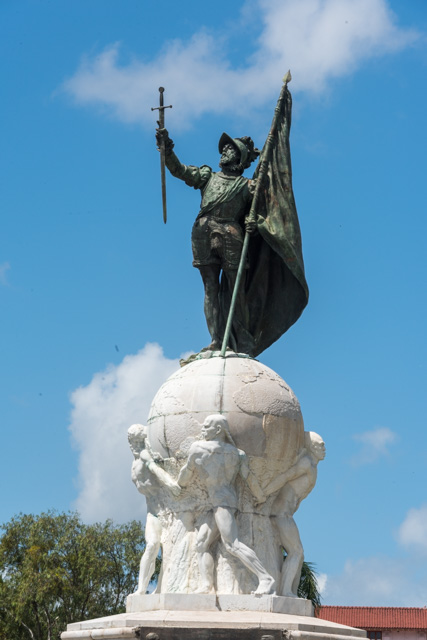
It was fitting to come across the monument to Vasco Núñez de Balboa. His claim to fame is to be the first European to cross the isthmus of Panama to the Pacific Ocean, having heard of “the other sea”. And yes, the idea for a Panama canal dates back to then, as this would greatly shorten the route for the transport of gold and silver to Spain.
The man is a bit of a hero in Panama. Several parks and avenues bear his name. The Panamanian currency is called the Balboa, and his likeness appears on the reverse of most Panamanian coins. The Pacific entrance to the Panama Canal is the port of Balboa. And the national beer is… Balboa.
The walk back was hard. Too much sun. Too little breeze. Very little water. I overheated – and drunk a lot of water when we got back to our room.
We had planned to spend a couple of hours in Panama Viejo, but thought it wise to retreat to our room. This gave us the chance to sort our bags ready for tomorrow morning. Funny fact: there are five floors to this hotel, not many people are staying here today and yet we’re in the same room we were in last time we were here. What are the odds?
What is now Panama Viejo was the first capital of Panama. It was established in 1519 and suffered a number of fires and pirate attacks, the last of which by Welsh pirate Henry Morgan totally destroyed the city. The devastated town – in the eastern side of the city – is still in ruins and is now a popular tourist attraction.
This led to Casco Viejo to establish itself as the second capital city of Panama. We loved our stay in Casco Viejo – slowly exploring the narrow streets, restored and ruined buildings.
When the canal took off, it brought great benefits to the infrastructure and economy. There were also improvements in health and sanitation, Yellow fever was eradicated in 1905 and the malaria rate dropped off significantly. And so it was thought that Panama needed a smarter capital city – businesses moved to the high rises.
Today, it’s not a big city with an urban population of only 430,299.
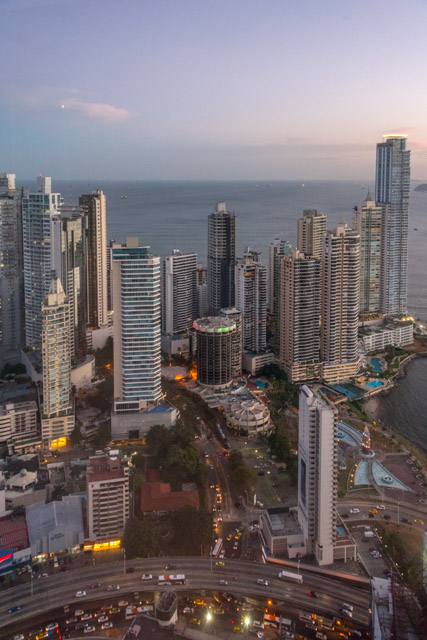
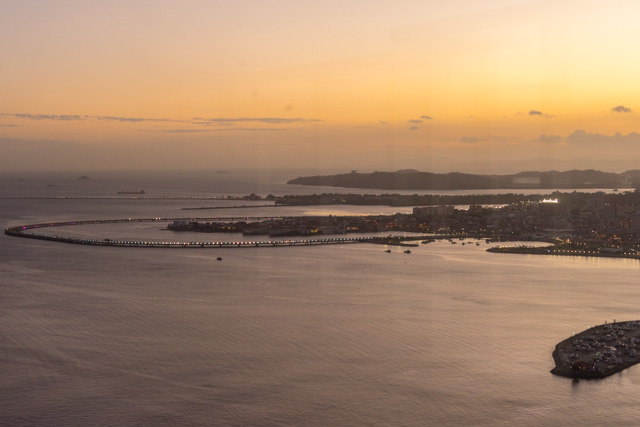
We walked back to Hard Rock Hotel Panama Megapolis and made our way to BITS (Bar in the Sky). Located on the 62nd floor, it offers great views of the canal, Casco Viejo and much of Panama City. The perfect place for sunset we thought… We figured we’d have a couple of drinks to celebrate our time in Central America. We’d even brought our diaries. That was the plan.
The reality is that we missed the sunset by a few minutes (how did that happen???). By the light in the sky, it doesn’t look like we missed much. We still walked around and took in the view. As for the drinks, the bar doesn’t open until 8pm, and that’s when Guillermo was due to pick us up.
Hey ho.
My ignorant question is where was the Spain-bound gold and silver being transported from (somewhere west of Panama)? Sorry you missed the sunset and the beer. But I think you’ve done brilliantly on this first leg of your trip. Bring on Tahiti!
Most of the Americas were part of the Spanish Empire – a mixture of mining (e.g. silver from Potosi in Bolivia) and looting (gold from the mesoamerican societies).
Peru had lots of gold and silver but cross country was almost impossible so it had to go up to Panama as the shortest land route across. A canal would avoid the need to deal with the land crossing. I’m not sure how much precious metal was being transported at the beginning of last century after the canal was built.