A Pelican’s Life

Early night last night to catch up on sleep so we’re awake about 7:00. Go for a walk on the beach, the sun is already up, there are people surfing and a pair of pelicans are having a paddle.

The pelicans are both recovering from serious injuries and are looked after by the hotel. They have their morning paddle, surf for a bit then retire to a sun shade for the day. One jumped under the poolside shower in the afternoon to cool off, in the evening they go to the kitchen for some fish before retiring for the night.

The hotel also has a project to release turtles to the wild. A lot of the eggs are collected by local fishermen and sold to restaurants for food. The hotel buys a number of them, puts them in the sand on the beach to hatch. They then move them from the beach to the ocean, one of the most hazardous parts of their life. It’s believed that only 1 egg in a 100 develops to an adult turtle, some say far fewer than that. This project aims to improve these odds, they are reseaching and sharing information with other similar projects round the world.

After watching this morning’s batch of turtles being dug up we have a slow breakfast, write diaries for an hour then have a juice. It’s already 10:30 so time for a swim. The water is warm and the waves fun to play in. Strange to think that 1000s of miles across that Ocean are Tahiti and New Zealand where we’ll be in a month or so.

The tough day continues with a coffee and reading in a hammock until it’s time for lunch.

Florence has had enough of doing nothing and goes to a free yoga class. I manage to pass the afternoon lazily until it’s massage time; we were so impressed with yesterday we booked an hour each today.

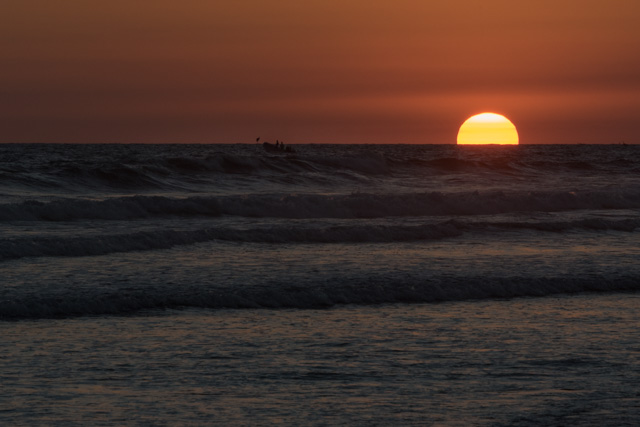
All too soon it’s sunset and the day is almost over; we’re back to reality with a bump tomorrow – 5am start for a long, long drive to Nicaragua.

Enjoy today

At 5.30am this morning, we were in a pick-up truck on our way to Lake Suchitlan for our kayaking adventure.

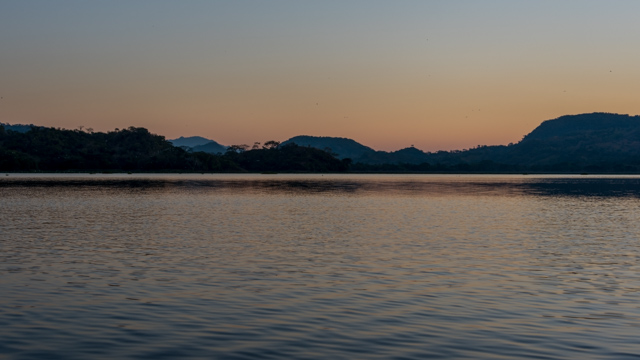
The water was extremely still. There was no one about, apart from one or two fishermen. The sunrise revealed beautiful scenery. We hugged the coastline, and spotted many birds – most of them birds we’d never seen before or even heard of.

We’re fairly inexperienced kayakers, and although we were having fun, we were constantly having to catch up with the other two kayaks.

On our way back to Suchitoto, we stopped at Agua Caliente. This is when I realised that I’d forgotten my swimming costume. My clothes were soaked from paddling, so I decided to jump into the hot spring fully clothed.

Breakfast at La Casa de la Abuela was rushed. Andy had a drip coffee which he enjoyed. We ate quickly as we were leaving at 10am; we met up with Arnando, who was going to be our driver again today. Still very chirpy.

We’re a little sad to be leaving Suchitoto. This tiny laid-back town’s certainly a discovery. The four hour drive to El Cuco went quite fast, with the hilly landscape giving way to towering volcanoes, and eventually the Pacific Ocean.

As he left us, Arnando gave each of us a hug.

We’re staying at La Tortuga Verde for two nights. When Andy was learning Spanish in preparation for this trip, the word tortuga came up in almost every single lesson. He joked at the time that this wasn’t a very useful word to know. How wrong he was!

We’re given numbered bracelets, which means that everything we order can be charged directly to our room.

We had smoothies on the beach, and signed up to a 30 mins massage each. That was a good move! So relaxing (with the sound of the waves in the background) and a good therapy for those achy kayaking muscles.

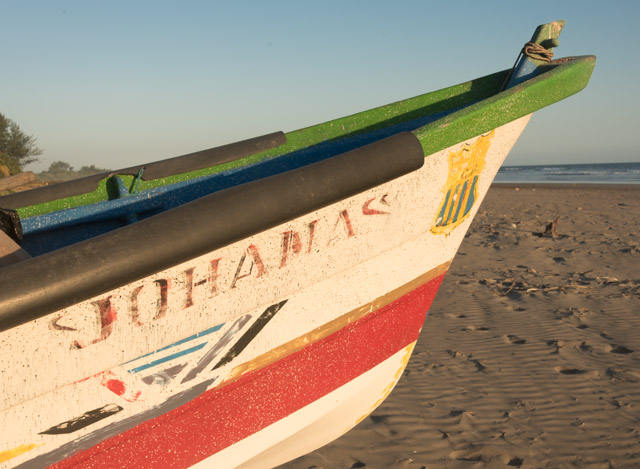
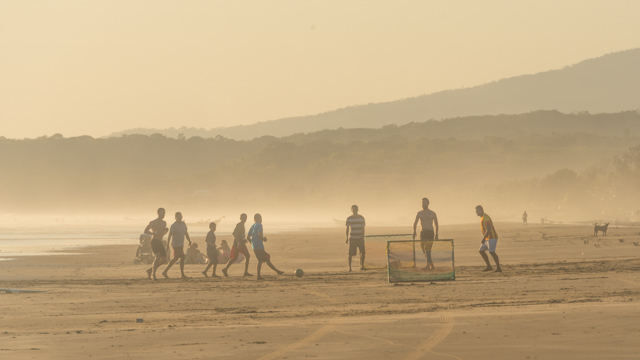
Sunset on the beach. Black sand. Little crabs scurrying along. A few people surfing. Some playing football.

At the bar, we grabbed ocean-facing seats, and happily sipped our cocktails – piña colada (that fresh pineapple again) and margaritas.

We have a whole day here tomorrow.

War and Peace

A leisurely start this morning, no alarm. The shower is cold only but it’s already quite warm so it’s not too bad. Breakfast at Casa da la Abuela; Google Maps tells us its 232 feet away – it’s a small town!

The cafe is very nice, warm yellow outside, dark and cool inside, decorated with coffee sacks. I have granola, yogurt and fruit and a very good cappuccino.

Fortified by our meal, we’re ready for the sites. The church is brilliant white on the outside but inside it’s got lots of dark wood and a tiled floor, unlike anywhere else we’ve seen. It’s also very long for a small town. A number of houses have a stencil on the wall saying ‘In this house we want a life free from violence against women’. Suchitoto is a very attactive town, cobbled streets and colourful single storey buildings. I’ve never been anywhere so friendly, everybody has time for a smile and to say good morning. Just under the surface however you’re never far from the impact of the civil war.

The start of the El Salvador Civil War is hard to pin down exactly but it was fought from around 1979 until a peace treaty was signed in 1992. The origins were in a revolt by the peasantry against land-owners who paid them very little and treated them poorly. The El Salvador armed forces were armed and trained by the USA. The guerillas armed themselves by stealing – or in some cases even buying arms – from the army. UN Reports say that 75,000 people were killed and an unknown number disappeared.

One of the squares in the town has a number of sculptures made from arms remaining after the war and parts of a helicopter shot down by guerillas. Nearby a former school is now the Art Centre for Peace, they teach art and music to local people and have an exhibition by local artists, there’s a large salsa band practising in one of the rooms.

Time for a cooling drink before heading back to the hotel to prepare for our afternoon hike. This is through a forest in a nature reserve about 15 miles from the town. The forest was the site of a lot of guerilla activity during the civil war. We see the remains of trenches, the grave of an unknown soldier and the site of a guerilla camp. A lot of of knowledge was gained from the viet-cong, the trenches and kitchens that disperse their smoke so as not to be visible from the air are all their designs. The medical facilities in the camp remain in place; a small bamboo operating table with a hook above it for drips, blood etc. Operations were carried out at night by oil lamps.

The highest point of the walk takes us to a viewpoint with a wide vista across the forest, Lake Suchitlan, and a number of volcanoes. We end the hike with a swim under a waterfall, a very nice way to cool down.

We’re told some stories about the war by a former guerrilla, Don Rafael, he’s now 58 and although small looks a formidable fighter. He claims to have been the 11th member of the guerilla forces.

We stop in the village of Cinquera on the way back to Suchitoto to see more war remnants, parts of a helicopter downed by a machine gun and the gun itself. Outside the church there are bomb cases standing up on the lawn.

Back in town we start the evening at El Necio, this is run by a more friendly ex-guerilla. He seems to have a crush on Che Guevara, his bar is covered with pictures of El Commandante, one covers almost a whole wall. I have a Cuba Libre – seems appropriate, the former fighter sings along to Cuban music, he has a good voice.

Return to last night’s restaurant for more papusas, just a small one each tonight – this sets us back $1.50, theyre even better than before as well.

One day, three countries

Baleadas for breakfast. Andy opted for the simple one (beans and cheese), and I added eggs to mine. They were good. Baleadas is the local dish of Honduras and you can have it for breakfast, lunch, or dinner.

We walked down to town, as we’d read that Casa Ixchel made excellent coffee. Whether they do or not will remain a mystery. 25 minutes after placing our order, there was still no sign of coffees. Telling the staff that we’re in a hurry made no difference so we left, coffee-less.

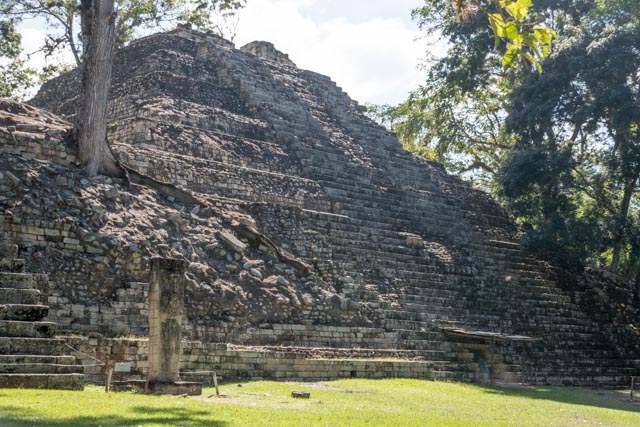
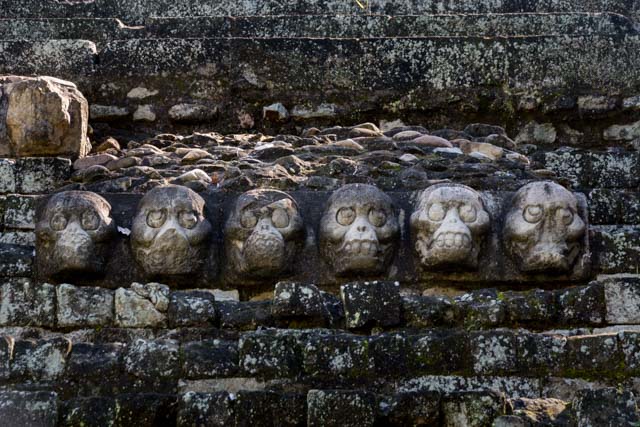
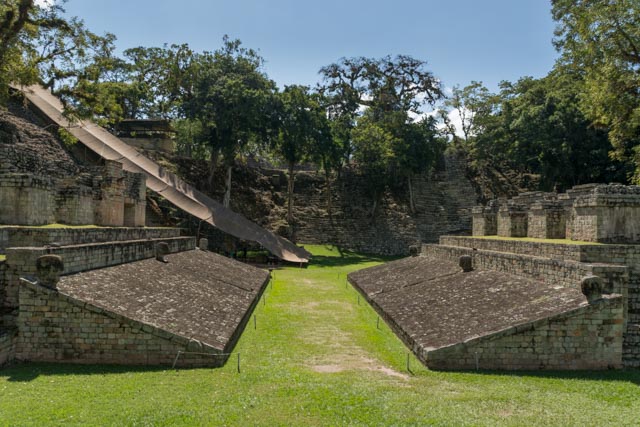
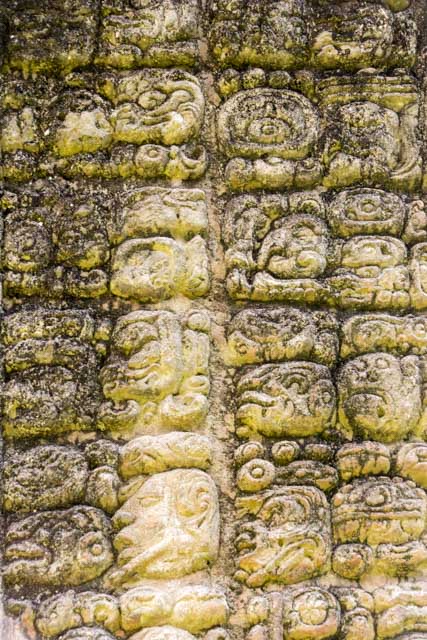
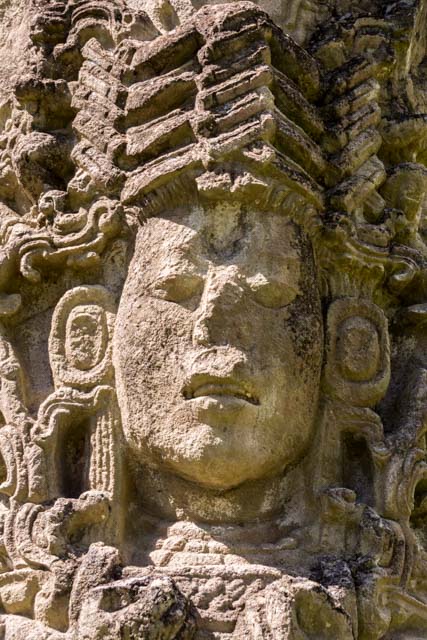
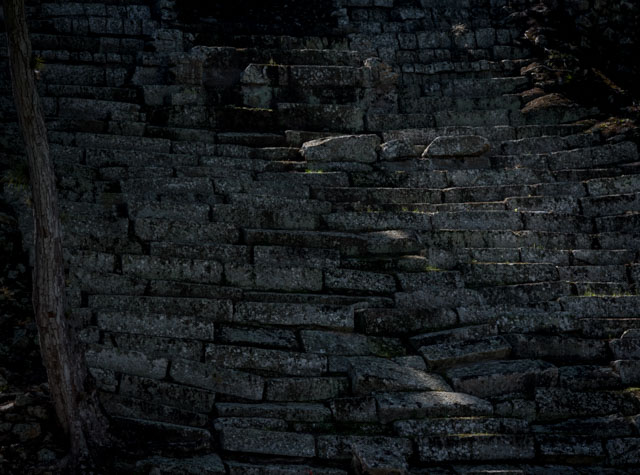
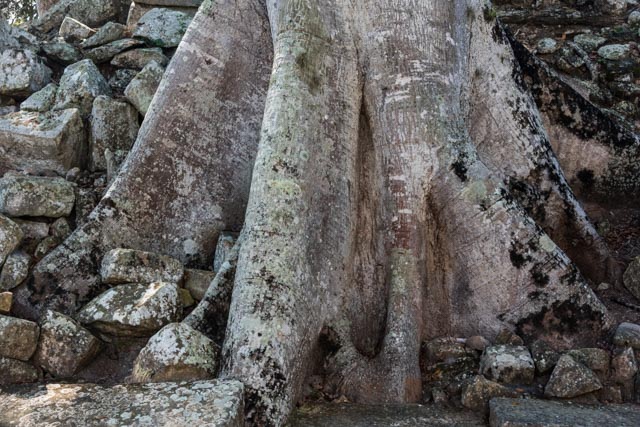
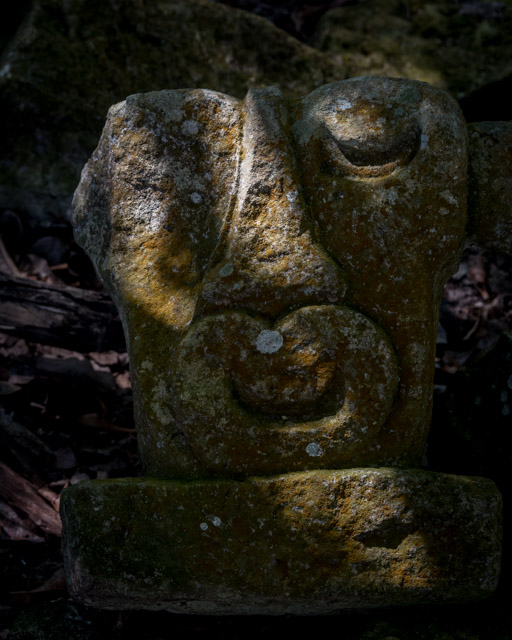
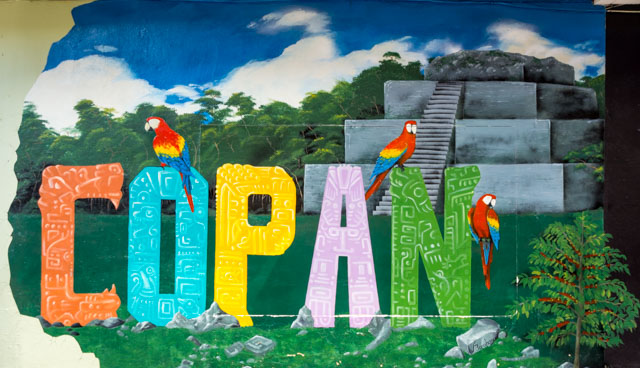
We boarded a tuk tuk for the ten minute journey to the ruins. One of the most important of all Maya civilisations lived, prospered, then mysteriously crumbled around the Copán archaeological site. At its peak, the site covered 24 square kilometers. The layout feels like a modern town, with the royal quarters on one side and secondary temples just off the main plaza. There are remarkable sculptures and hieroglyphics, including the 63-step hieroglyphic stairway. We heard more about Yax Kuk Mo, who came from Tikal and whose dynasty lasted sixteen years.

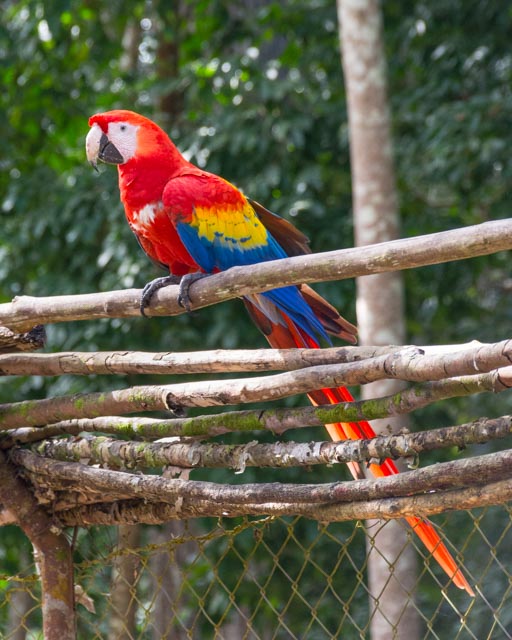
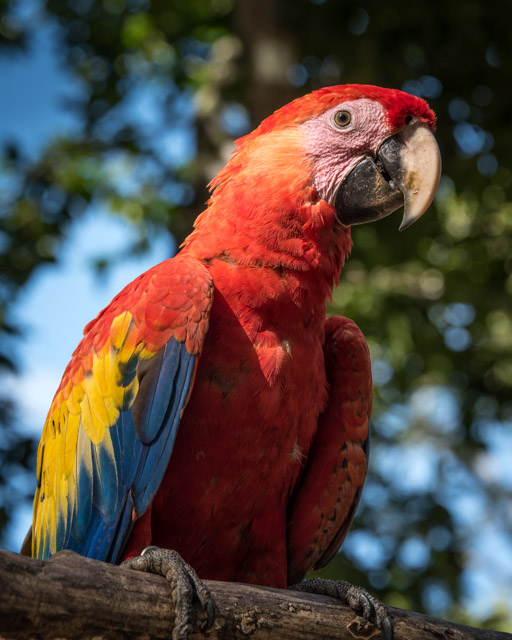
One of the highlights has to be the noisy and colourful macaws.

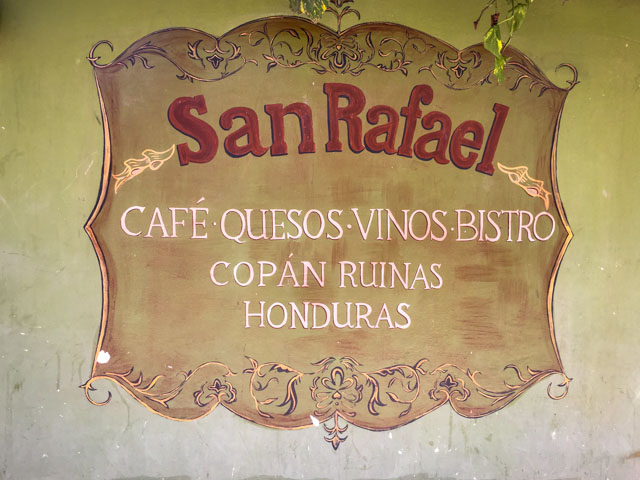
Back in town, we had just over an hour to see the sights, explore new streets, take photos we’d noticed and have lunch. We had yummy cheese sandwiches at Café San Rafael; mine came with the most tasty avocado. Andy finally had his cup of coffee (they serve their own organically coffee grown). The food was excellent, and the service super friendly.

Our stay in Honduras was short, but very enjoyable. Copán Ruinas has a nice feel to it. The food was good. The locals are friendly. It would have been good to see a bit more of the country. It certainly has its problems and we’re not naive enough to think we’ve seen the ‘real’ Honduras.

At 1pm, we left for El Salvador, via Guatemala. Somehow, it’s easier to cross back into Guatemala than to go directly through to El Salvador, and it saves us a number of hours on the road.

Our bus driver, Arnando, is the best. He has a sense of humour, and you can tell that he really enjoys his work. He provided us with cold bottles of water, anti-bacterial gel and Wifi (funny aside, we had better WiFi in our bus today than we currently have in our hotel).

We snack on Zambos, the most popular crisps in Honduras. And probably the most controversial crisps I have ever eaten. Crisps with an ugly history. The name itself is a racist term used to describe mixed race people. Critics of the company have accused it of engaging in violence, theft and corruption.

Crossing back into Guatemala is as easy as it was to leave the country yesterday.

A couple of hours later, we leave Guatemala. Again, the border crossing was dead easy. We remained in our seats. Some guy got in to change our quetzales into dollars (the official currency of El Salvador). Instantly El Salvador feels different. The road is new and smooth. There is minimal litter about. The toilets at the petrol stations are clean. These are details, but important ones when you spend most of your day on the road.

We arrived in Suchitoto just after 6:30pm. We got into our room, unpacked, took the laundry down to reception, had showers and then realised that our room was like an oven. The wall near the bed was boiling so we packed up and decamped to what turns out to be a much nicer room.

After choosing our activities for the next few days, we went to dinner at a local restaurant near the hotel. The owner trained as a chef in the big city but decided to come home to cook local food. It’s a small restaurant, but busy all night. He cooks two types of pupusas – the traditional one with beans and cheese (to which non-vegetarians can add beef or pork), and the other one is more avant-garde in the world of pupupas – with garlic and spinach. They both come with a tomato sauce and curtido. Delicious. We were talking about food at lunchtime and how they can afford to have simple things on the menu in this part of the world as the ingredients are so good.