Here today, gone tomorrow

The 3:20am alarm was brutal.

We drove through Guatemala City nice and early and in doing so avoided the dreaded traffic; we retraced our journey towards Rio Dulce for a while, and then veered off towards Honduras.

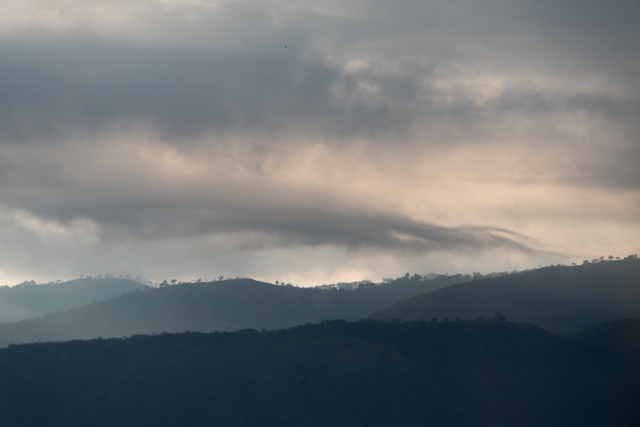
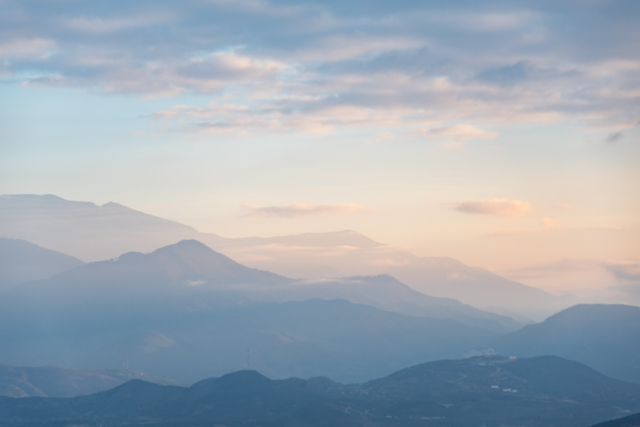
We stopped to admire the Sierra Madre. This mountain range was important to the Mayans. Due to the terrain and the daily mini-earthquakes, jade regularly appeared (without having to be mined) and they used the stone for important ceremonies.

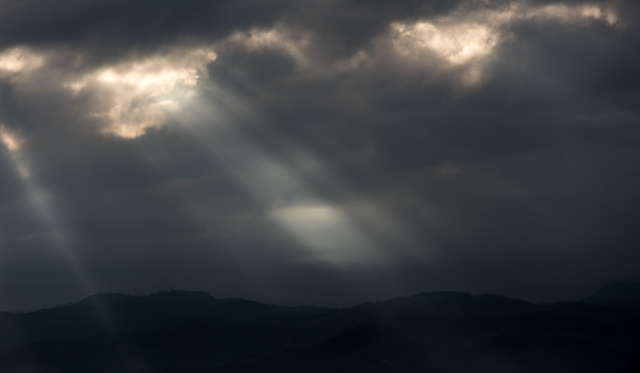
As the sun rose, we were treated to amazing crepuscular rays. The amount of litter by the roadside continued to shock us.

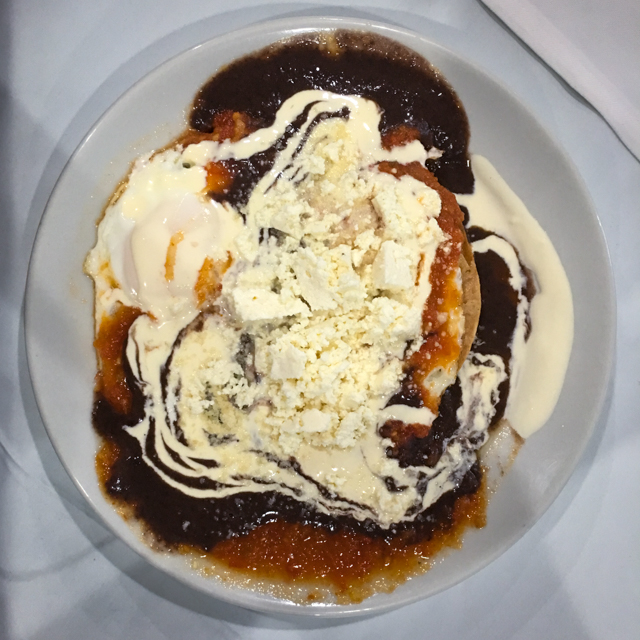
Breakfast tasted a lot better than it looked. A crisp tortilla with eggs, beans, cheese, ranchero sauce and sour cream, with a welcome cup of coffee.

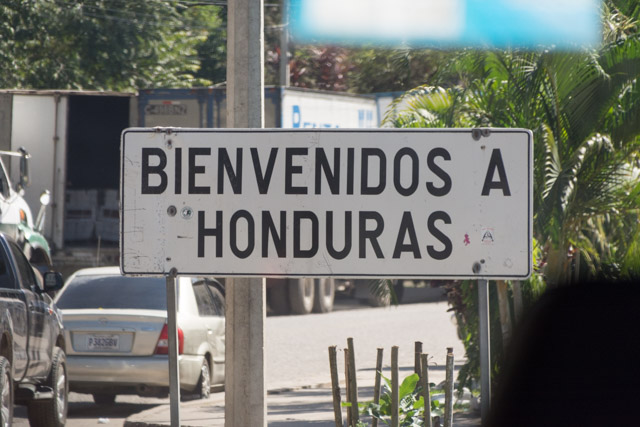
We officially crossed into Honduras without leaving the bus. How easy was that? Pretty easy considering that Dennis (our guide) had warned us that it could be a tricky one; it all depended on who was on duty. Yes, the words bribe and corruption were mentioned.

The landscape is hilly, and more cultivated. The places we passed look more like little villages, with people looking after their front gardens.

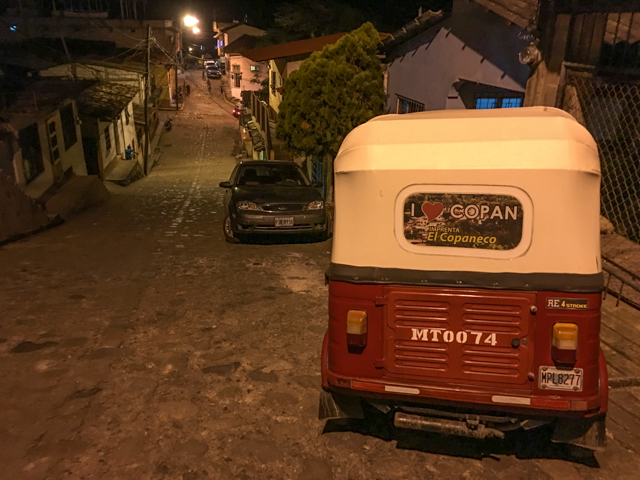
We checked into our hotel. We’re told that the local rooster is noisy all day and all night. We had such an early start this morning that hopefully this won’t trouble us too much.

Less than an hour away from Copán Ruinas is Luna Jaguar Aguas Termales. The owners have natural hot springs in their back garden, and they created a series of man-made pools with varying temperatures. After a hearty lunch (which included some grilled hot chilli peppers), we spend a couple of hours trying a fair few of the pools and had a lot of fun rubbing mud all over ourselves (our skins are now super soft and we look ten years younger!).

Back in town, we went out in search of beers and dinner. We’re now in malaria country so the full strength deet came out (horrible stuff).

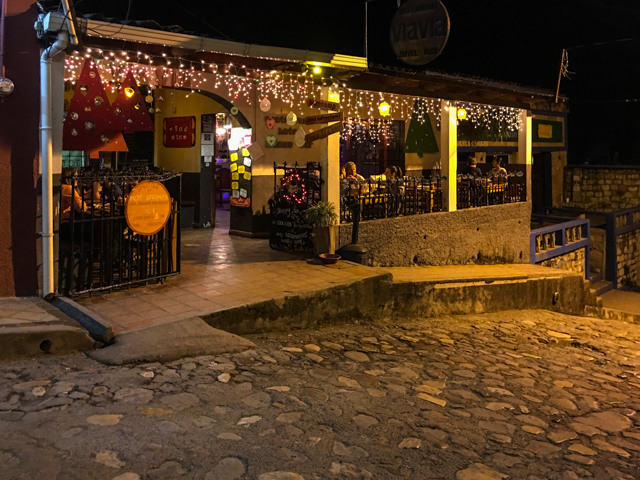
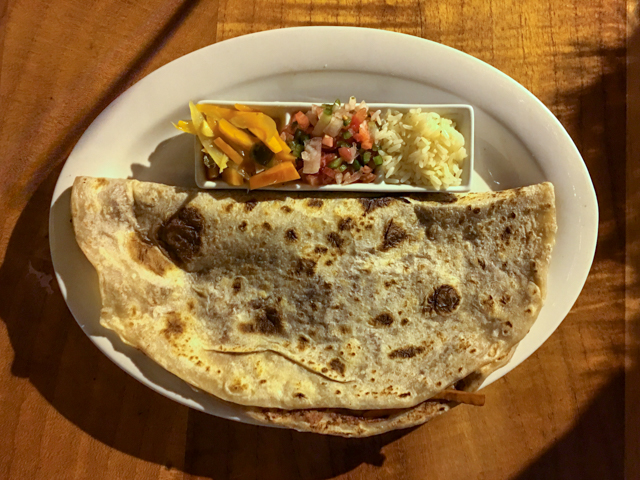
We settle on Restaurant Via Via and try a couple of beers from Honduras and share a baleadas – a combination of eggs, beans, and cheese inside a soft corn tortilla. You can it eat it plain or add salsa picante and pickled vegetables.

The town is very small, and built around the central square, which lies on a flat surface. All the streets around it are ridiculously steep. There are a few restaurants and hotels. It’s a dinky town. Bizarrely, the museums are open until 9pm and don’t open until 1pm so sadly, we won’t be able to check them out as that’s when we’re leaving.

Andy and I had plenty of time to chat during our long bus journey today, and we thought it was time to stir things up a little. With no further ado, we’re introducing the ‘Big Trip Comment Competition’. We’ve really enjoyed the comments we’ve had so far on the blog (thank you guys); and we want more. We know we have a substantial audience but clearly, a number of you are shy little munchkins. So we’re opening the competition to everyone – if you’re new to the site (welcome!); an occasional or regular reader and an avid commenter. Comment away. Tell us what you think. Send us recommendations. You can be as serious or as funny as you want; just tell us your reactions to our stories. The prize? A bottle of Belizean rum. The winner will be announced on 17 April.*

And totally unrelated, did you see that Giroud goal? Oh my.

* Terms and conditions apply.

“It’s too windy, we’re not going there today”

I still can’t decide whether Andy was having me on or not. He got up and had a shower, and told me I should have one, I’d feel better, and the water was hot. The water wasn’t hot.

Being high up in the village means that we were at the mercy of the high winds. Dogs barked continuously during the night, and cockerels crowed incessantly. Despite all this, we slept fairly well.

At 7am, we went up to the kitchen. Christiana was busy preparing our breakfast: omelettes, frijoles (black beans) and tortillas. Very welcome. All washed down with a cup of very sweet black coffee. Felipe, her husband, joined us. He is a fireman and starting at 8am, he was starting a 24 hour shift. We talked about the news (a lot of bad stuff happened in Guatemala City overnight). At 7.30am, we thanked them for their hospitality and got back to our meeting point.

Homestays are a good thing. How else can you genuinely experience another culture? We got to have dinner and breakfast with a Mayan family. And we talked a little about what is being done to preserve the culture. But my they’re awkward affairs!

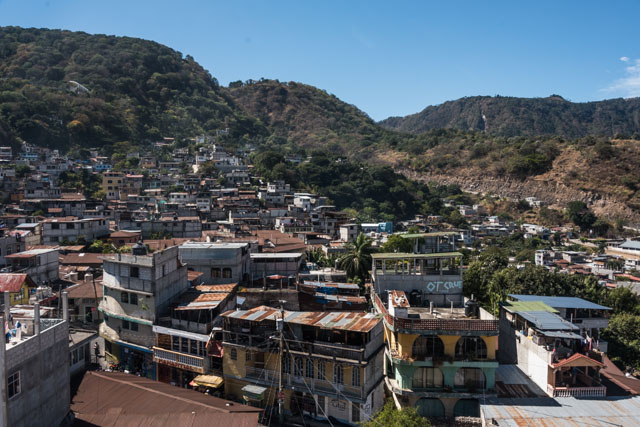
On our way to Panajachel, we stopped at a viewpoint. The three volcanoes over the Atitlán lake are stunning.

After leaving our bags at the hotel (our room wasn’t yet ready), we walked to a recommended travel agent and asked for a tour of the three most important towns across the lake. He told us that today he could take us to three different towns, as there was too much wind over the lake which would make for a bumpy ride. Although we really wanted to go to ‘our’ three towns, we had no other options for the day so we said yes. Down at the jetty, he directed us to a boat and told us that it will take us to the towns we’re interested in. What happened there?

The ride over to the first town is indeed a little bumpy.

San Juan La Laguna is a very pretty town, with smart coffee shops and a women’s cooperative which sadly we didn’t have time to visit (we were only ashore for 40 mins). The town is renowned for its weaving.

I didn’t like our next town (San Pedro La Laguna) so much. It felt a little more trashy with many hostels and cheap looking restaurants (and not in a good way). Not surprisingly, there are many backpackers about. We climbed to the top of a church for an overview of the town and the lake. In another church, we witnessed a woman praying and kneeling her way to the altar, with another woman making her way back to the church entrance, praying and kneeling backwards.

Our third stop is where things got very interesting. Santiago Atitlán is the largest of the lake communities and here, the people are Tz’utujil Mayans (which means different colour outfits and a different language).

Upon landing, we got into a tuk tuk and followed Maja and her partner, a couple from San Francisco we got chatting to on the boat, as we were planning to visit the same places.

Our first stop was the Catholic Church, where we visited the shrine of the Roman Catholic Priest Stanley Rother who was assassinated by right-wing death squads on 28 July 1981. His crime was to fight for the rights of the indigenous population. He translated the New Testament into and held mass in Tz’utujil.

Santiago Atitlán is also the home to Maximón (mah-shee-mohn). To find him, our tuk tuk went deeper into narrow alleyways and stopped outside an even smaller pathway, which led us to someone’s house.

Maximón is believed to be a form of the pre-Columbian Maya god Mam, blended with influences from Spanish Catholicism. He moves home every year on 8 May (after Semana Santa) and we are told that his care is rotated amongst ten houses in town (he is looked after 24 hours a day).

From Wikipedia: “his shrine is always attended by two or more people, called Cofrades, who serve for a full year to care for him in the Cofradia and keep the altar and sacred items in order. Shamans come daily to do rituals on behalf of their clients.

The Cofrades also receive visitors, accept offerings which are used to maintain and enact the ancient customs, celebrations, and rituals. Worshipers offer money, spirits and cigars or cigarettes, candles, incense, and prayers to gain his favor in exchange for good health, good crops, and marriage counseling, amongst other favors. Maximon almost always has a lit cigarette or cigar in its mouth, and in some places, his mouth is formed to allow the attendants to give him spirits to drink. These offerings are a way of “feeding,” giving life, and gratitude to Mam.”

Yes, he smokes and drinks rum.

Our last stop was the Posada de Santiago where we had lunch. A recommendation from Maja’s partner as he had a connection with the owner. The food was very good and it’s a shame we were rushed but we needed to be back at the jetty for 2.15pm.

The ride back to Panajachel was indeed a bumpy one. Back in town, we checked out an art gallery and a photography museum. And I indulge in a spot of shopping.

Back in our rooms with a couple of beers. We need a good night sleep tonight.

Genuine Ray Ban, 45 Quetzales

There was heavy thunder throughout the night, but apart from the one that shook our bungalow, it didn’t stop us from sleeping well.

We grabbed mugs of coffee and watched the sunrise over the lake. Back in the bungalow, we observed our colony of bats, nesting in the eves.

Breakfast of champions. Cazuela Ko Bán – eggs poached in ranchero sauce, topped with cheese and chopped cilantro over tortillas with more cheese in a casserole, with fresh fruit on the side. Andy had the Fruta de la Ruta Maya – an assortment of fresh fruit with lime, honey, yogurt and granola.

We’d chartered a boat for the day amongst eleven of us, and departed at 9am for Livingston.

Our first stop was the San Felipe fort on Lake Izabal. The small Spanish colonial fort was built as a defence against British pirates when the area was an important shipping route, and later served as a prison.

The Rio Dulce (‘Sweet River’) flows out of Lake Izabal to the Caribbean Coast. There are many posh yachts – it’s a popular place to moor your boat during the hurricane season.

Next, we toured bird island – many cormorants, pelicans, egrets, and other flying things. On the lake, men were fishing in dugout canoes.

We went down a narrow channel, and saw water lilies, mangroves, and a few houses. Local woman and children in dugout canoes rush to our boat to sell their wares.

We stopped at a natural hot spring. Opting out of this one, we sat with coffees and ginger biscuits.

We sped through a canyon, dense vegetation on each side and orangey iguanas sunbathing at the top of trees.

Livingston is a Garifuna town at the mouth of the Rio Dulce. It is the only Garifuna community in Guatemala, with Belize having a larger population. There are no roads to Livingston, the town can only be reached by boat.

The town has a great vibe and we spend a couple of hours wandering the streets. There is great street art, street food stalls, pigs roaming the streets, fish drying in the sun and the Caribbean sea at the end of the streets on the east side of town, as well as a few shops and restaurants catering for tourists.

We tried the tapado Garifuna at Happy Fish Restaurant and it’s delicious.The ‘real’ version has a coconut cream base with fish, crab and shrimp; ours was made with banana, plantain and vegetables.

There is just enough time to shop. I broke my sunglasses on Christmas Day and patched them up with sellotape, but with the humidity and the sweat, this was always going to be a short-term fix. I tried various pairs of ‘Ray Ban’ sunglasses in a shop and the price of the ones which fitted me best drop by 5 quetzales for no reason. I probably could have haggled them down further, but these people are trying to make a living. After all, I can’t complain; £4 for ‘genuine’ Ray Ban is a bargain.

The return journey goes quickly. With hills in the background, and low vegetation on the foreground, there is so much sky and the clouds are spectacular.
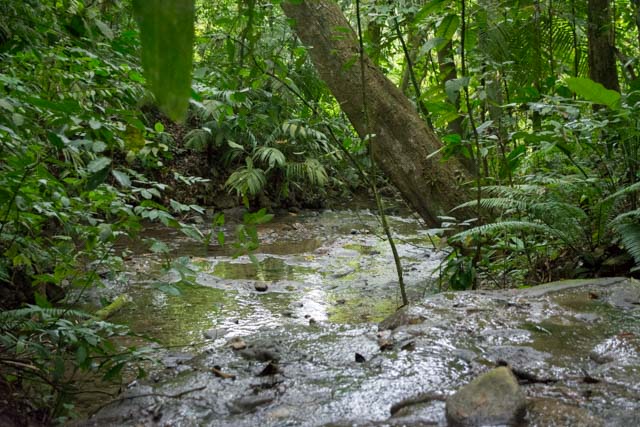
There is time to catch up with our journals with a beer before dinner.

Early start tomorrow, with a seven to nine hour journey by private bus to Antigua.

Hot showers!

We had a surprisingly decent night in our tent after all with exotic animal noises from the jungle lulling us to sleep.

Up at 6am for a quick cold shower to wash off the sweat and bug spray.
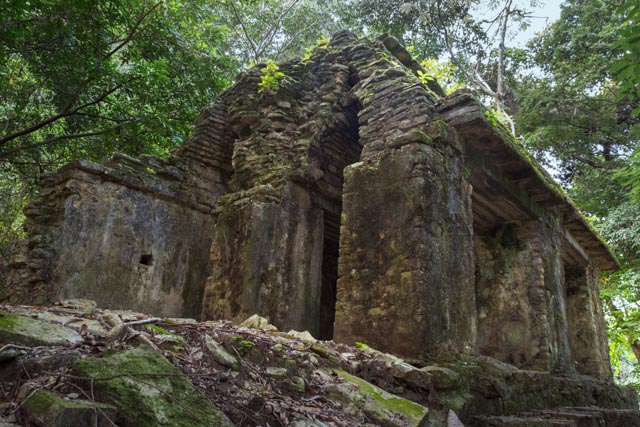
We had been tempted to do the Tikal sunrise tour, but woke up to heavy mist and felt justified in our decision to give it a miss. Heavy clouds accompanied us all day, which surprised us a little. We had such a clear sky last night, the stars were truly amazing.
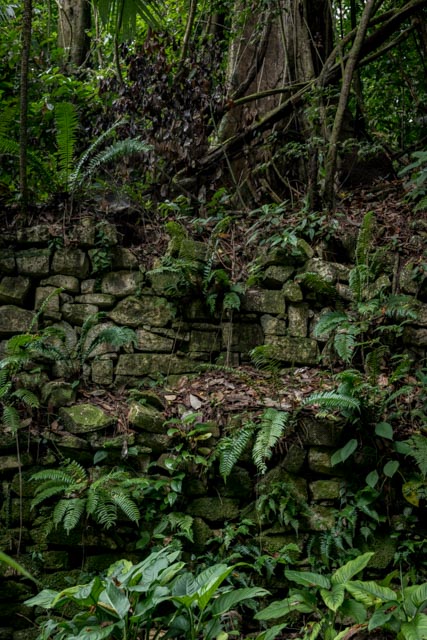
We left Tikal at 7am and drove back to El Renate for a hearty breakfast, and then on to Flores. The town is on an island and although it’s quite touristic, it has genuine charm. Sadly, we both realised too late that we didn’t take a broad view of it.

A long day in the bus allowed us to try local snacks and another type of chilli crisps.

All day, the sun played hide and seek with us. It would be sunny when we got out of the bus to stretch our legs and there would be a heavy downpour whenever we got back on the bus to continue with our journey. Mostly, these were short showers, but the rain set in early evening and is now steady.

The landscape was pretty much lush hills in the distance, and agricultural fields in the foreground. Palm tree and banana plantations mostly. It was sad to see men spraying fields with pesticides. All the farm work is manual, with men carrying machetes everywhere.

It is visibly poorer here, and I’m guessing that most people rely on subsistence farming for a living. There is quite a bit of rubbish along the road, and in the communities.

Along the way, we passed men on horseback, wearing cowboy hats. We passed shops selling saddles and all things horse related.

We stopped in Rio Dulce to pick up a picnic for lunch and felt like queen and king of the castle with our tortillas, avocado and cheese (a type of salty halloumi made in Guatemala). And after a short drive, we arrived at the Agua Caliente.

The waterfalls come over limestone formations. To get to the waterfall, you enter a natural pool. At that end, the water is cool; under the waterfall, the water is hot as it would be if you turned the hot tap on to medium to high. I ventured in and kept going from cold to hot. Great fun.

Back in Rio Dulce, we took a boat taxi for the short journey to our hotel. We have a nice bungalow; very spacious and the bathroom has a great hot shower. We’re happy and clean for five minutes, and then it’s bug spray time.

Caracol – the most amazing Mayan site you’ve never heard of

We had a free day ahead of us and at least five options to pick from, all options you’d want to do.

We settled on a day trip to Caracol, and set off at 7am. It was just the two of us, our guide Erhard and Mario, our guide/driver for the day.

Here’s the checklist we were given when we booked the trip:

  • Good footwear
  • Water
  • Snacks
  • Bug spray
  • Towel
  • Swimwear
  • Sunscreen
  • Cameras
  • Change of clothes

Caracol is 40 kms away from San Ignacio, and after 40 mins or so, we left the road and travelled on a potholed dirt track for about 1.5 hours, through nature reserves. Initially, the vegetation was dense, a direct result of the limestone in the ground and then sparse pine trees as the ground changed to clay.

Our first stop was the picturesque Rio Frio Cave. A river runs through the cave, and once inside, you can see both ends as well as great limestone formations.

We registered at the army checkpoint before we were able to proceed to Caracol, still a good hour away. The army patrol the site daily; we’re very close to the border and it seems that this is not a happy border and that the relationship between the two countries is strained. In fact, only yesterday a local paper reported that Guatemala was encroaching on Belize’s territorial waters.

Caracol covered approximately 200 square kilometers. It is now thought that it was one of the most important regional political centres of the Maya Lowlands during the Classic Period.

Only 10% is excavated so far, but the Caracol Archaeological Project (ongoing every year since 1985) spends three months at the site, digging in, collating their research and then refilling the site so nature can take over once again (the best way to protect the buildings).

We climbed the Caana (“sky-palace”), and were surrounded by lush vegetation. We’re truly in the middle of nowhere. Fun fact: the Caana is still to this day the highest man-made structure in the whole of Belize. The second highest building is… El Castillo at Xunantunich. Yes, that’s right. In the last two days we’ve climbed both highest buildings in the country.

The feeling is that of coming across a lost city.

Walking about, we stumbled across pieces of pottery. Some of the un-excavated buildings are grassy mounds with trees growing on top of them. In some cases, you can just about see building foundations.

We saw a massive spider in one of the burial chambers; tasted wild coriander; touched some sticky sap from a glue tree and it smelled like incense and came across beautiful butterflies and two aracari toucans.

And the best bit? Apart from the two of us, and our two guides, there were nine other tourists at the site. It’s not an easy place to get to.

We wandered happily for just over three hours, and too soon, it was time to return to our car for lunch. The rum punch flowed freely.

After all that exploration, our short stay at Rio On Pools was most welcome. We just had time to cool off in the various pools; with the most beautiful background of pine forests and waterfalls.

The most perfect day.

** I really wish you could all be here… right now, on the town square outside our window we’re being treated to a local Christmas Eve party. Someone’s got hold of the microphone and is singing to his heart’s content. It’s so atrocious we can’t stop laughing. **

Merry Christmas.

A Day of Extremes

We set the alarm early so we would have time to get fry jacks for breakfast. I love them! They’re cheap, filling and very tasty. My light beignet was filled with eggs and cheese this morning. We ate them by the sea, with the sound of the wind in the palm trees above us.

We got the 8am ferry to Belize City. Thankfully, we had cover today to protect us from the wind and the sun.

The taxi to the bus station took us through the town. We’ve haven’t really had a chance to explore it, but I think we’ve seen enough. It’s not very attractive, and it has a reputation for being dangerous.

Belize has its fair share of issues. The unemployment rate is high (10.1%), the prevalence of HIV/AIDS is the highest in Central America (2.1%), and in recent years, it has become a major transit route for illegal drugs.

Belize is quite a melting pot. From the Garifuna (responsible for the distinctly Afro-Caribbean vibe of Caye Caulker), Mayans, Creoles to the Mestizos and Mennonites.

Andy did get a glimpse of the swing bridge and got giddily excited. The bridge was build in Liverpool in 1922 and was installed in 1923. It is the oldest swing bridge in Central America and the one of the few manually operated swing bridges in the world still in use.

Our journey to San Ignacio took about two hours, stopping briefly in Belmopan – the capital. We travelled in one of those old American school bus. There was plenty to look at along the way, and the driver treated us to a great playlist. We passed Mennonite farms. The Mennonites speak German and form 4% of the population; they are mostly farmers and crafstmen and were described to us as living a life similar to the Amish).

I didn’t know what to expect of San Ignacio. It turns out to be an ugly town, built principally around tourism; there are many activities to do around here.

We made our way to the market for lunch. We ate pupusas, a thick handmade corn tortilla with beans and cheese and served with curtido (a lightly fermented cabbage slaw with red chillies and vinegar). Delicious!

Back to the bus station, we got a bus towards Benque and got off after twenty minutes. We crossed the Mopan river via a hand-cranked ferry, and then walked up a hill for about a mile.

Our hard work was rewarded when we got to the Xunantunich ruins. The site peaked around AD 600 to AD 650 and was abandoned due to an unknown violent event in approximately AD 750.

The climb to El Castillo rewarded us with gorgeous views over lush green distant hills and into neighbouring Guatemala (our next destination). In fact, the views were that good that we climbed up to the very top twice, without too much effort (are we getting fitter?).

Very little of the site is excavated. The usual story sadly. There is money for excavation, but not for restoration and maintenance.

It’s a stunning site. Compact yet extremely attractive.


Welcome to Belize

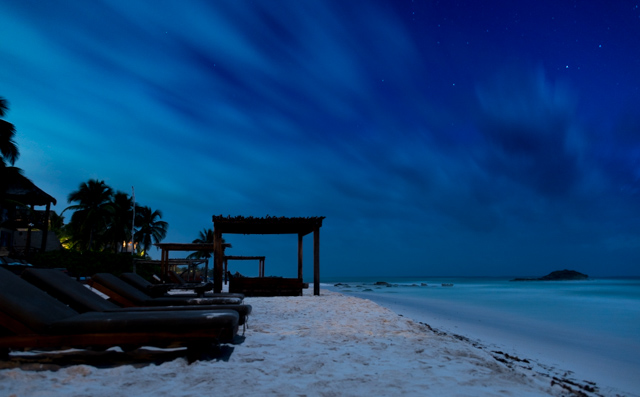
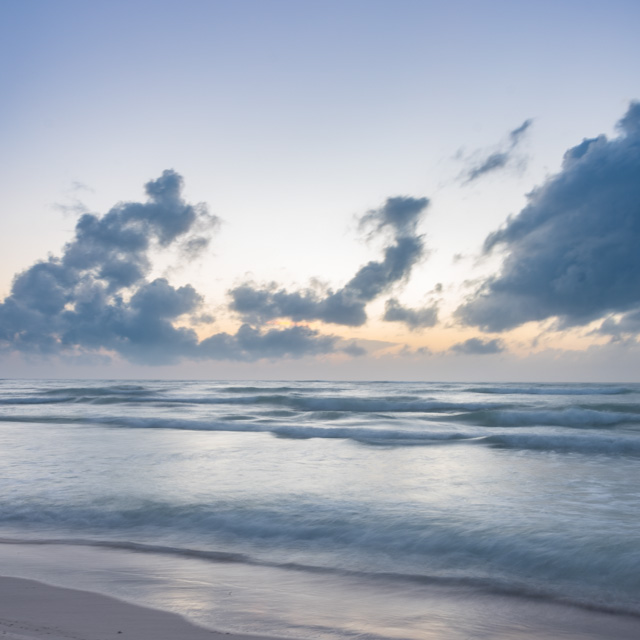
The alarm went off at 6am today, a full two hours before our scheduled departure. We had the beach to ourselves, and the sunrise was beautiful. Slowly going from moon light to sunshine; all in very delicate colours.

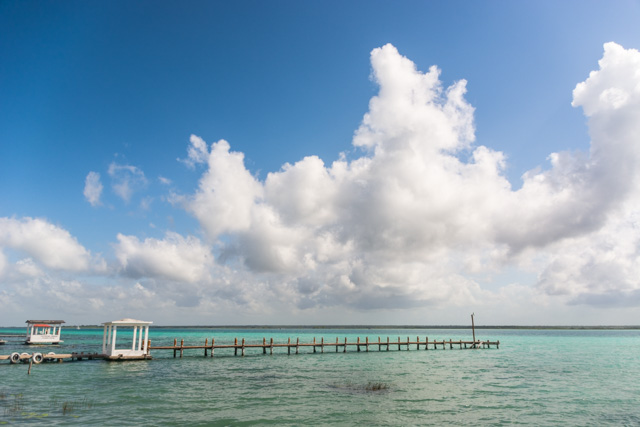
We drove to Bacalar, about 2.5 hours away from Tulum, where we had breakfast and where I dipped my toes into the Laguna Azul – so named because you can see up to seven shades of blue; we saw four.

We’ve thoroughly enjoyed our time in Mexico. It’s been a revelation to Andy who can’t wait to come back. The colours, the people, the music, the sights… and the food. Oh… the food.

There is obviously another side to Mexico. Everyone’s is an entrepreneur. If you want it; someone is selling it. There’s also a lot of child labour; and we’ve been approached by very young children.

We drove on to Chetumal. Our border crossing saw me scoring a small victory. There is an exit tax of $30 per person. I had read up that this is normally included in your flight tickets and got Andy to print a detailed copy of our tickets. It worked. We saved $60 (note to self: researching the trip ahead of time pays off).

Time to go.

Hasta luego Mexico! You have fed us well.

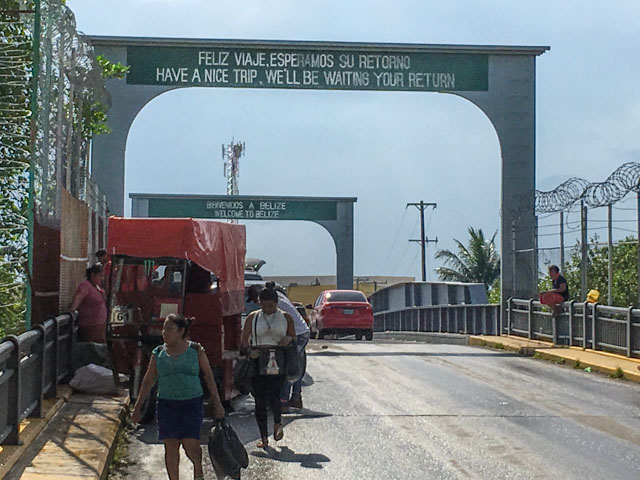
We crossed into Belize by foot.

Straight away, it felt very different. The buildings are lower and more spaced out. Most of them are ramshackle; the poverty seems more apparent. Our driver, Henry, told us that the country gets many grants from the E.U. It used to be a British colony, so they speak English here and patois. The Queen’s on the bank notes.

We raced two thirds of the country in just over two hours. We got to Belize City just too late to get the 5pm ferry to Caye Caulker. On the way, we saw lorries full of sugar cane, and many of those old fashioned yellow schoolbuses from the USA.

Our forty minute journey on the Belize Express ferry was breezy and speedy. Unfortunately, it got dark very quickly so we weren’t able to appreciate the scenery. That will be a suprise for tomorrow.

As soon as we landed on Caye Caulker, we could tell we were somewhere special. The place has a real laid-back Caribbean feel. A little breeze in the air; no motorised vehicles; colour everywhere… and extremely friendly people. And in Marie Sharp’s red habenero pepper sauce, I think I have finally met my match.

Vamos a la Playa

Playa del Carmen is what it is.

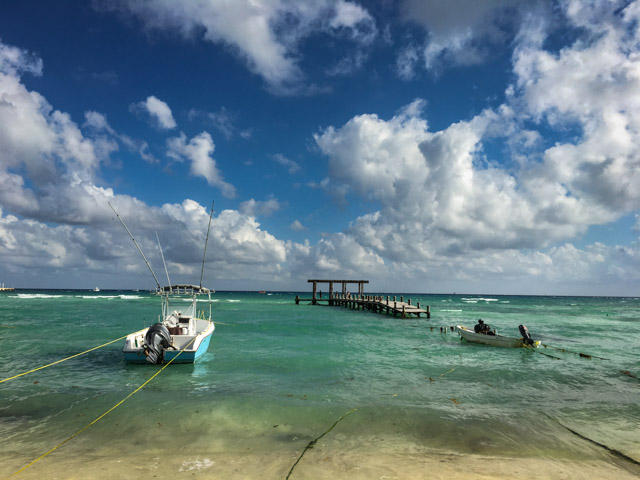
The main thoroughfare, the fifth avenue, is packed with souvenir shops; the usual suspects (H&M, Nike and Starbucks), bars and restaurants. All this against a backdrop of the turquoise water of the Caribbean and soft white sand.

It is usually packed with tourists, but relatively quiet when we walked along it this morning at 8.30am.

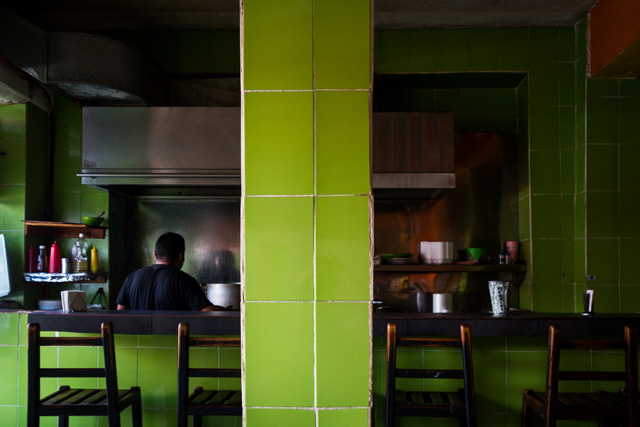
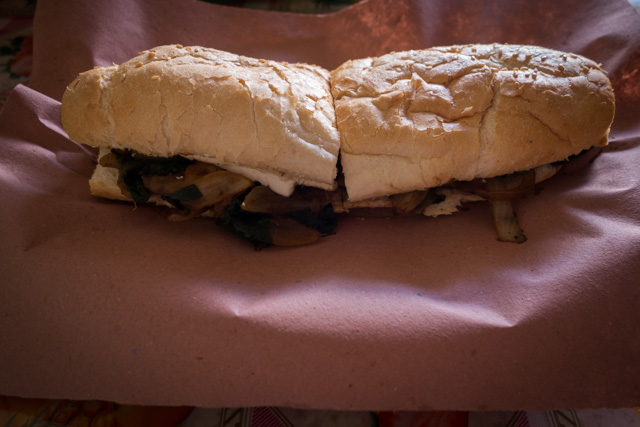
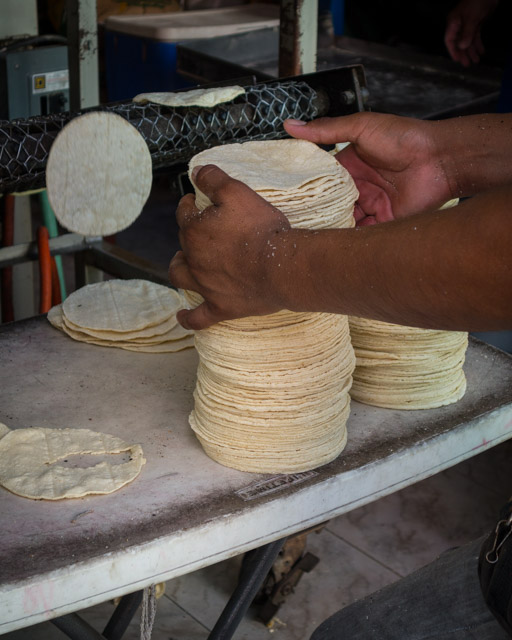
We then retreated to the more Mexican side of the town, where we had tortas (huge Mexican style sandwiches) and great smoothies at Kiwi.

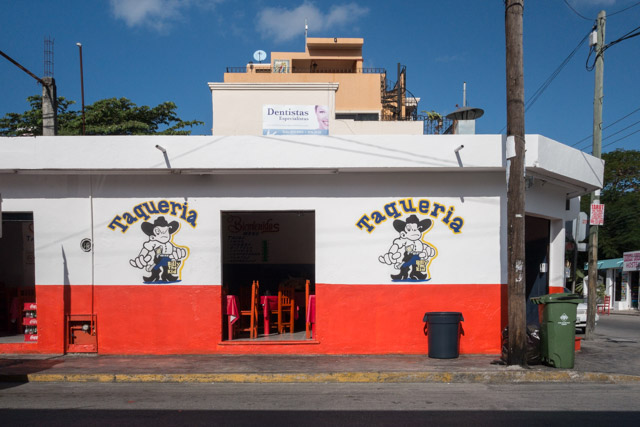
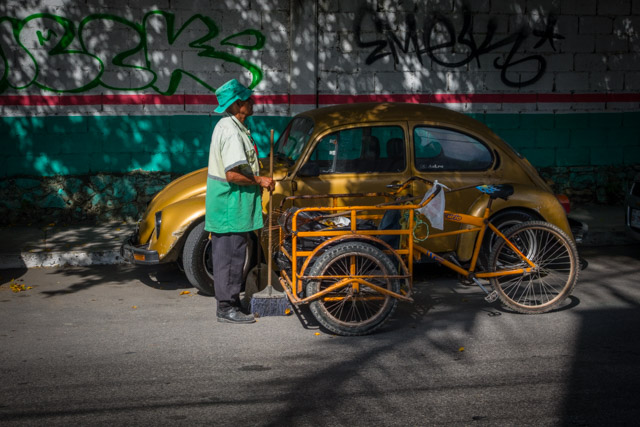
We spent the day slowly exploring the back streets and came across some great street scenes.

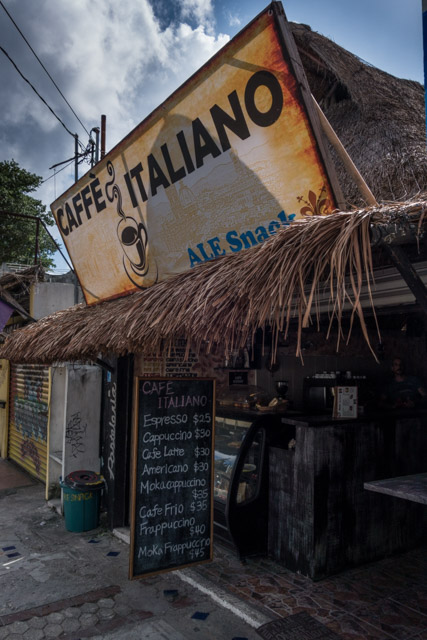
We caught up with paperwork, laundry and various other bits and pieces. We stopped for coffees at a small Italian place round the corner. I made a list of the number of beers consumed so far (nine each).

Today was always going to be a slow day. The configuration of the group is changing. Last night, we said good bye to our guide Valeria, and one of our travelling companions. This evening, we met our new guide, Erhard, and twelve new group members.

For dinner, we ordered a take away pizza and got a bottle of Mexican wine from Walmart. Don’t judge us, we’re on holiday.

“Almost free”

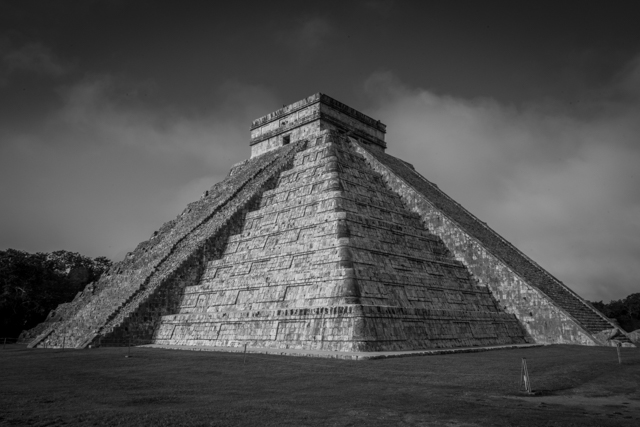
We were outside the hotel waiting for our private mini bus at 6:30am this morning. And two hours later, we were at Chichen Itza. The early start paid off as there was only an handful of people about and the sellers were only themselves arriving at the gates.

Due to its proximity to Cancun, thousands of people visit daily (an estimated 1.4 million tourists visit the site annually) and with only just under 3.5 hours to explore the sight, we opted to start with the most famous structures first whilst the place was ‘empty’.

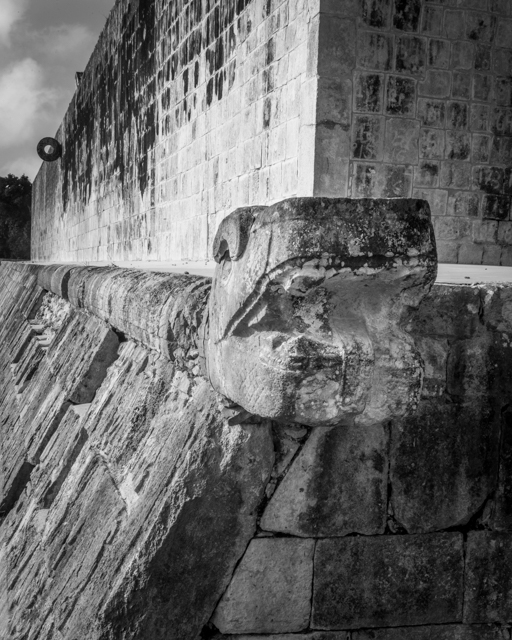
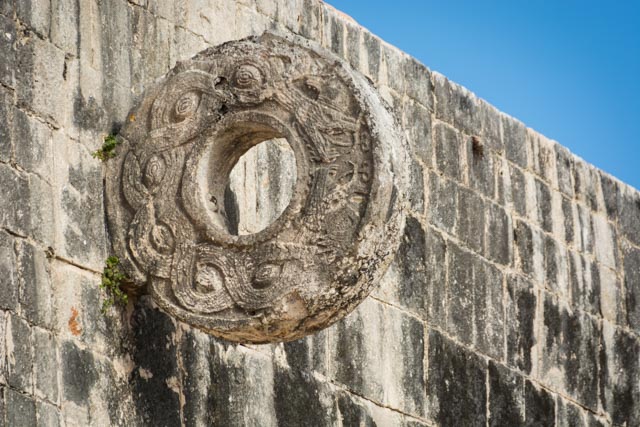
The Juego de Pelota court is the biggest we’ve seen so far. There were more players per team and here, the captain of the winning team was decapitated as an offering, which was an honour as this bypassed the usual thirteen steps to heaven.

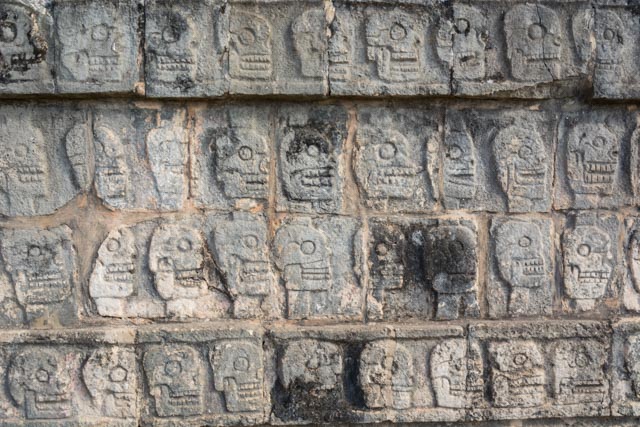
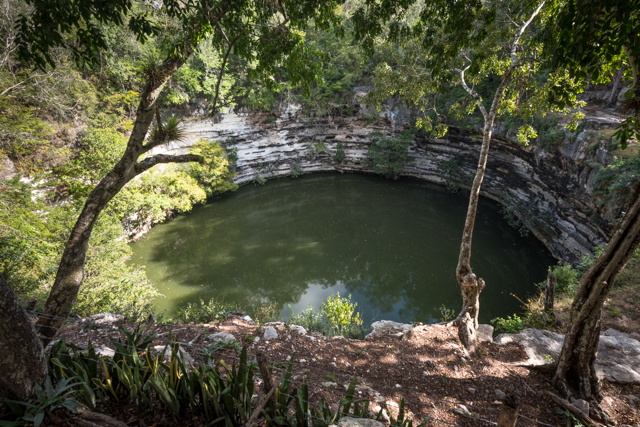
Offerings of shells, wood, gold, copper, rubber, textiles and skeletal remains (mainly of children and adult males) were found in the Cenote Sagrado. The natural well was an important ceremonial and pilgrimage destination.

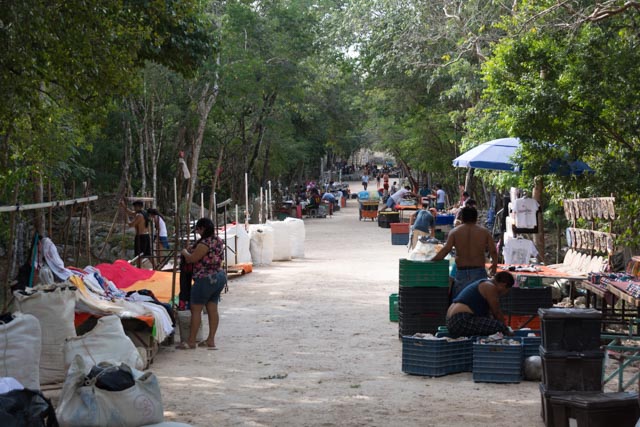
Since 2006, you can no longer climb the main pyramid or many of the other ruins. The site is vast and there is a lot of ground to cover. There are helpful maps dotted around, so we were able to navigate the many vendors to our chosen destination – most of whom were selling tourist tat, with only a handful carving wooden masks and statues whilst waiting for a sale. “Almost free”, is the sale pitch you hear everywhere. “Only one dollar”.

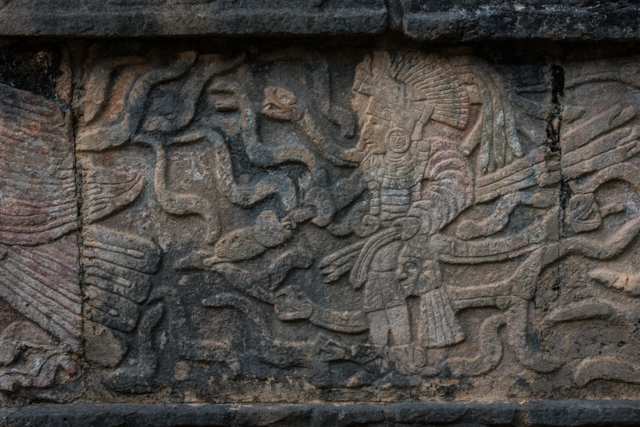
I sat a moment and tried to imagine what it would have been like to live here when Chichen Itza was at its height. What we see now are just ruins; the buildings would have been painted brightly. You can see how they dressed from some of the reliefs. And some of the food we have come across is pre-Hispanic… and yet I struggled to picture the sights, smells and sounds.

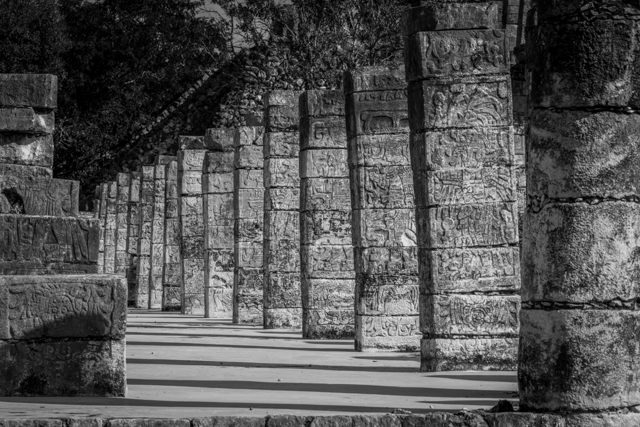
We continued and took in the Templo de los Guerreros – which has reliefs of warriors on the pillars; the Plaza de las Mil Columnas, which was used for civic and religious functions just as the Palacio de las Columnas Esculpidas was. There are Sacbeoob (roads), canals, a Mercado (which strangely was’t actually a market and its original use cannot be identified). We came across further structures: the Templo de los Tableros Esculpidos (the reliefs on the north and south walls depict people, plants and animals both real and imaginary); the Temple of Xtoloc (a container of offerings with human remains was found underneath the floor) and the Cenote Xtoloc nearby. There are many many others.

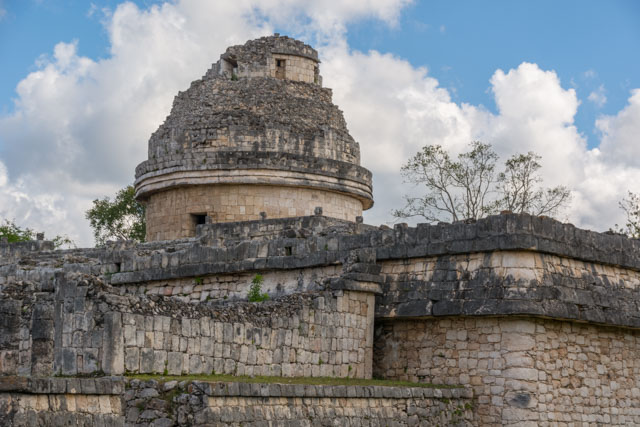
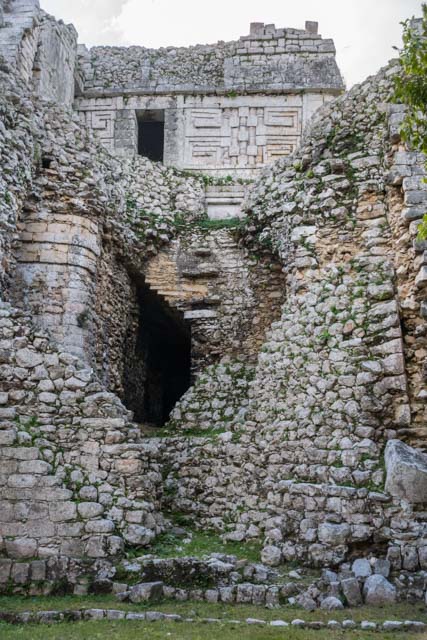
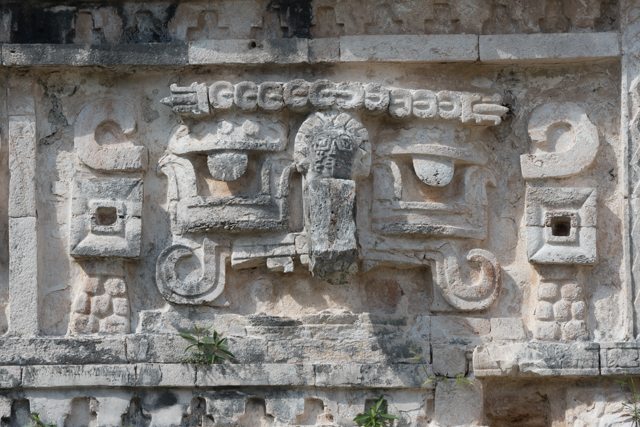
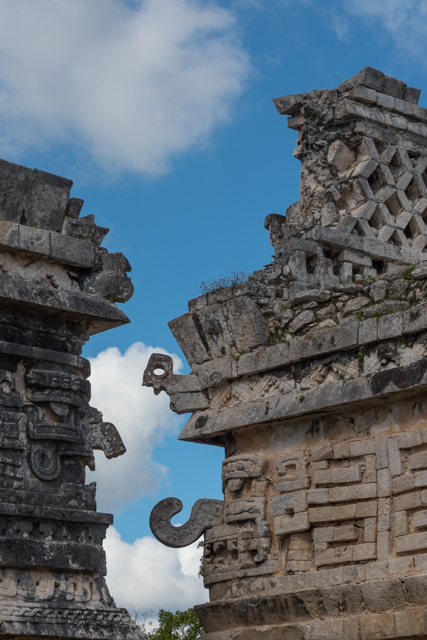
But what really took our breath away was el Caracol (the Observatory), La Iglesia (the church) and nunnery complex – again, their original purposes are unknown. The windows and doors of the Observatory were aligned to astronomical events, specifically around Venus and the two equinoxes. Nearby, the Platform of Venus is dedicated to the planet.

A couple of hours later, we were sipping margaritas by the beach in Playa del Carmen.

Palenque

Palenque sits in the jungle. It is hot here, and humid. The main reason to come here (well, the only reason really) is the ruins. Our first Mayan site.

After a very tasty breakfast, huevos Mayan and fresh juice, we got a taxi to the ruins. At 8:30am, you have the place pretty much to yourself.

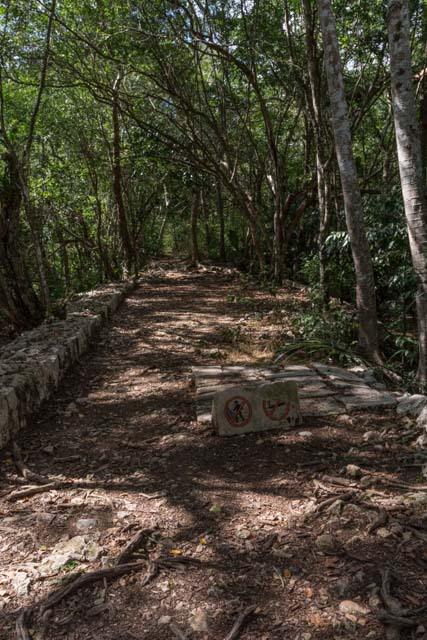
We started with a walk in the jungle. The vast majority of the ruins are covered by a jungle of cedar, mahogany, and sapodilla trees. Only about 10% of the site is excavated, leaving many thousands of buildings buried under the jungle. There is money available for excavation we learnt, but not for restoration and maintenance.

As the walk progressed, we spotted signs of the ancient civilisation – walls, a pool, a temple and an aqueduct. We were given the chance to walk through the aqueduct; a narrow passageway with water underneath our feet, and a bat on the ceiling probably as perturbed by our presence as we were by its presence there. The pool is the only one of its kind discovered so far. The heat and the humidity rose rapidly and we were glad to have done the jungle walk first thing.

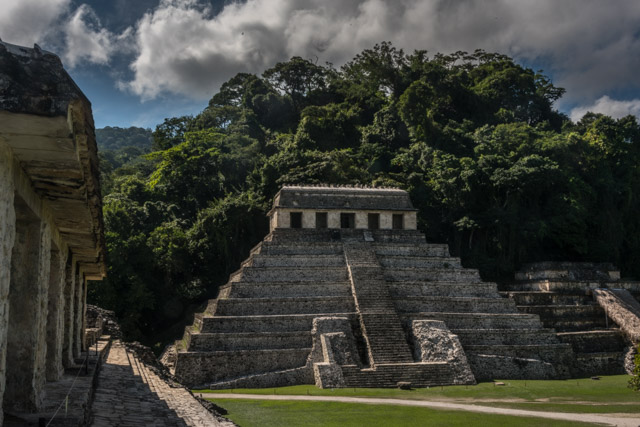
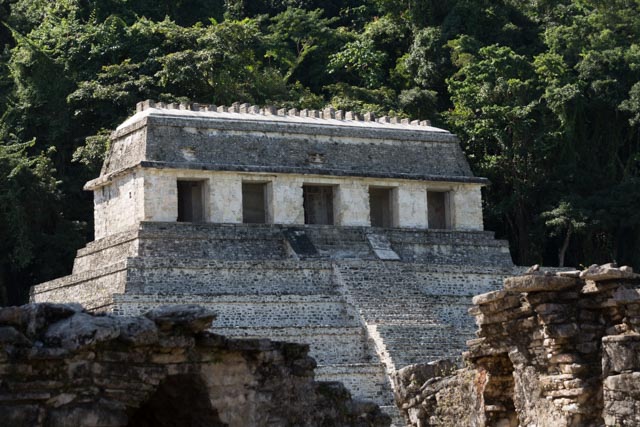
The most famous ruler of Palenque was Pakal, who got to power when he was 12 and ruled until his death in his eighties. His tomb was found and excavated in the Temple of the Inscriptions. We saw a reproduction of his tomb in the Anthropology museum in Mexico City; the jewels we saw there however were real – a jade mask and necklaces.

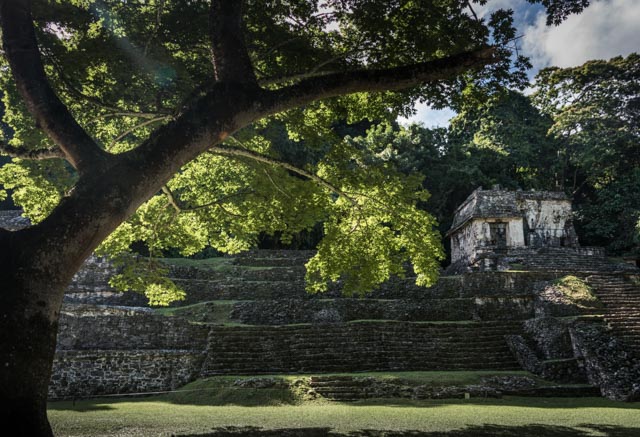
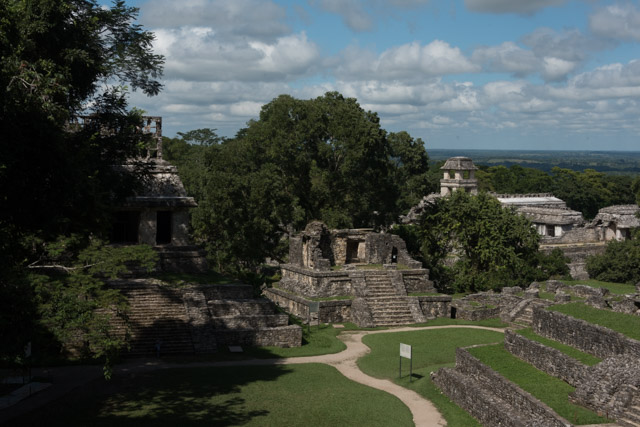
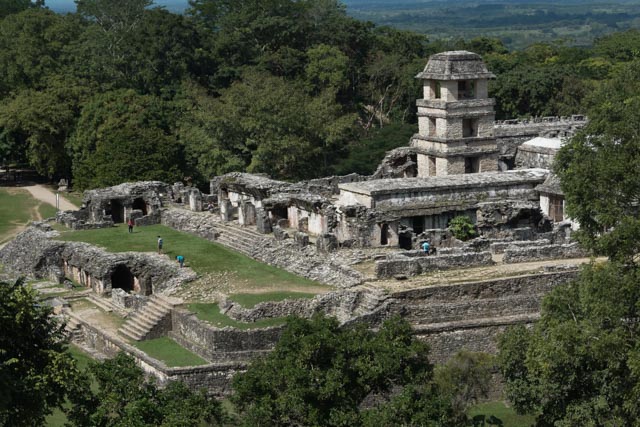
We took in the Temple of the Skull, Temple XIII (commonly known as the Tomb of the Red Queen) and the Palace, which was used by the rulers for administrative duties, entertainment and ritualistic ceremonies and it comes complete with its own observation tower (the Mayan were keen astronomers).

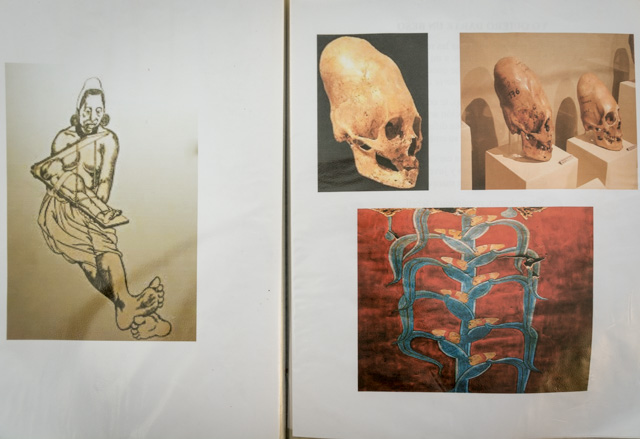
Interesting fact of the day: the Mayan rulers elongated their skulls. This was done by binding the head of infants between two pieces of wood for about six months. The idea was to emulate corn, which was believed to be where people came from.

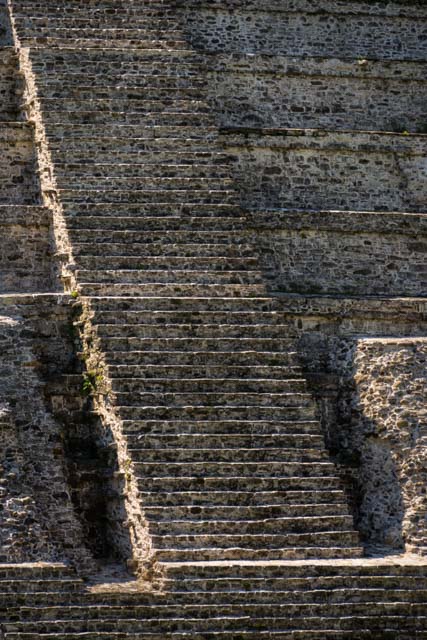
K’inich Kan B’alam took power at his father’s death, and added three important structures to the site: the Temple of the Cross, the Temple of the Sun, and the Temple of the Foliated Cross. Each has many steps which we wearily climbed. In the jungle behind, the sound of howler monkeys echoed around the trees.

From next year, you won’t be able to do the jungle walk anymore, or climb some of the palaces and temples. I think it’s a good thing; at the same time I think it’s a shame. The jungle walk, for example, gave us such an alternative perspective on the ruins.

We jumped into a local bus and back in town, we picked the first bar we came across for refreshing beers. With nothing planned for the afternoon, we had a late lunch, and caught up with our diaries and had a snooze.

We have an overnight bus to Mérida this evening, leaving at 11pm.