Not Normally a Threat to Humans

11 Hours sleep for me, things looked a bit better after that. Florence had already been up for an hour or so and been for a walk. Start the day with a buffet breakfast, lots of choice of fruit, bread, cheese, juice, etc. Our plan was to stock up on breakfast and miss lunch – didn’t look like that would be a problem. Local wildlife also helps itself to breakfast – a bird steals some rice form a neighbouring table, a couple of other birds try their luck on the cheese plate.

Stopped at the excursion desk after breakfast to book our activities for the next few days – we’re going to be busy!

Wandered back to our rooms and changed for our morning swim, read a bit while we dry off. Surprised to see people eating lunch already – where did the morning go? I think this is what they mean by island time.

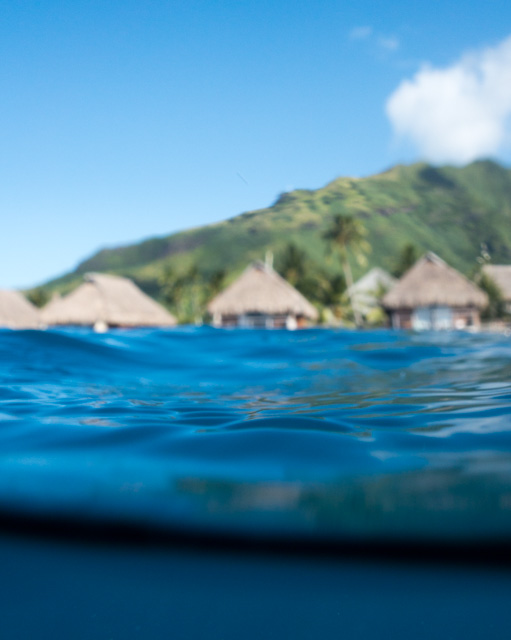
Our first activity was a snorkelling trip. Moorea, like many of the French Polynesian Islands, is surrounded by a coral reef. We were driven round to the eastern end of the island which looks out towards Tahiti to meet our boat. On the way we have the sea to the left and the jagged green volcanic hill-tops to the right. Its incredibly beautiful, the colours of the flowers, the sky and the water seem to be turned up to 11. Florence described it as walking through a technicolour film.

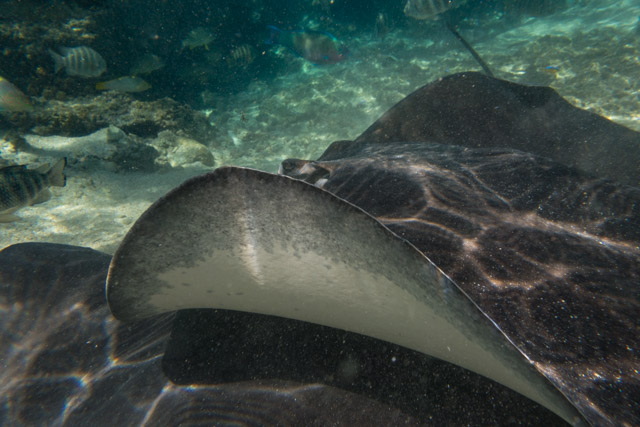
It was a short cruise to the snorkelling point, there was already a boat moored when we arrived. This was a snorkel with a difference, we stayed in one place, hanging onto to ropes slung between buoys while scraps of fish were thrown into the water to attract sharks and stingrays. This dubious practice was worsened by the encouragement to ‘ride’ the rays by grabbing their mouths from above and holding on while they swim off.

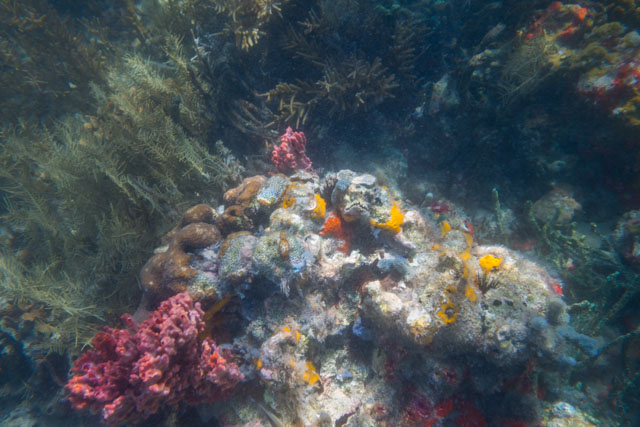
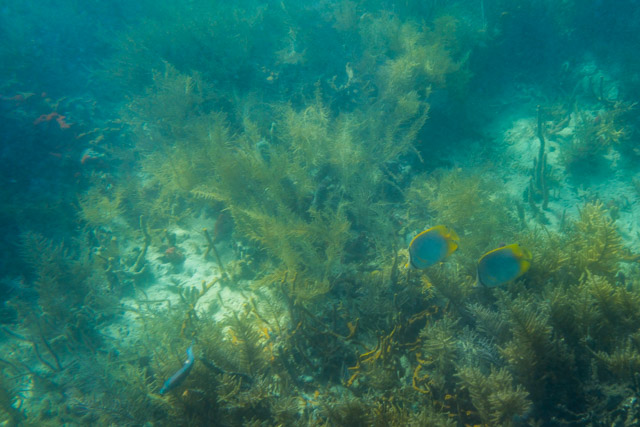
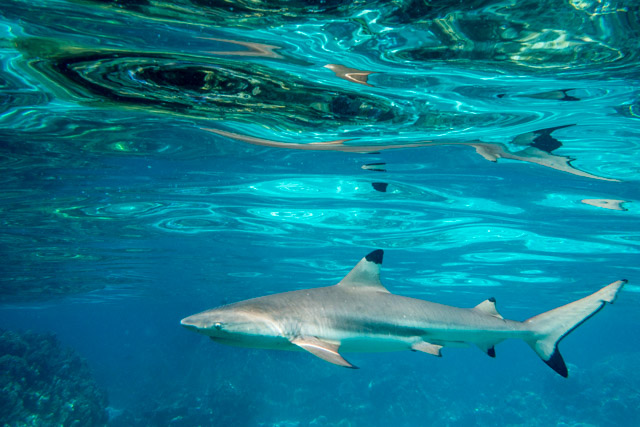
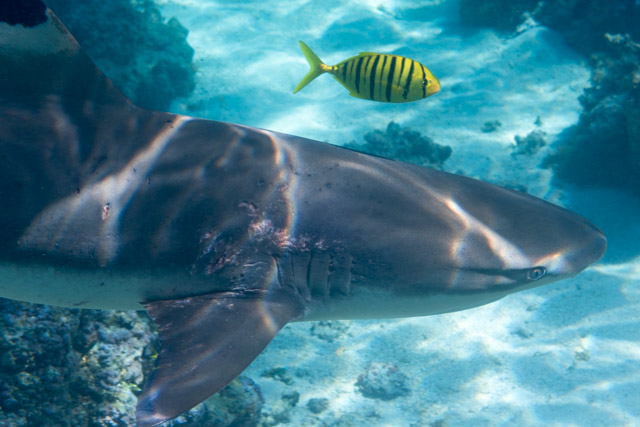
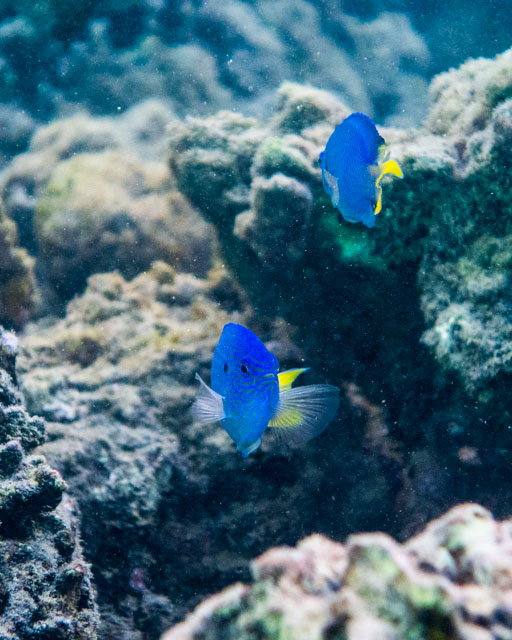
Once the feeding finished the majority of people lef, leaving us in peace to enjoy many many varieties of fish. The sharks and rays still hung around, it’s fascinating to see them close up – very close up. The sharks are blacktip reef sharks, about 1.6m long, they pose little threat to people. They are one of the commonest sharks in the Pacific, they mainly eat small fish and crustaceans as well as occasional birds.

The stingrays are nearly 2m across, their eyes and gills are on the dark grey tops of their bodies, their mouths are on their white underside. They are a very impressive site as they gently wave their wings to move along.

Back to the hotel, we decided to carry on with our watery afternoon and went for quick snorkel off the beach. There were no sharks and rays to be seen but still a lot of many-coloured fish to entertain us.

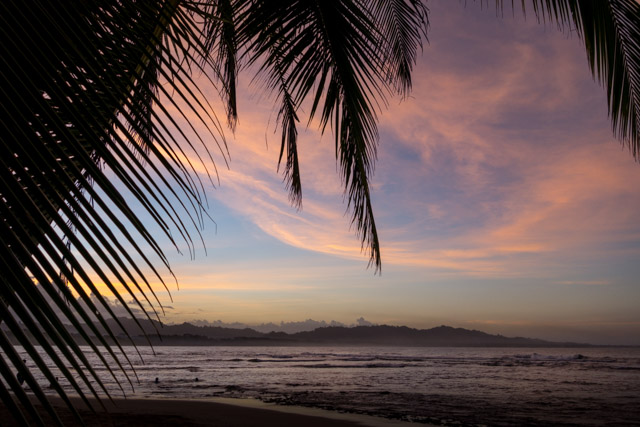
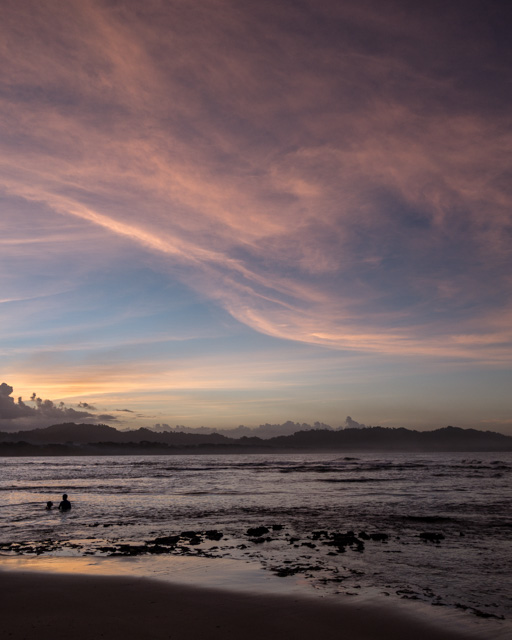
Last night, the clouds built up in late afternoon removing any chance of a sunset but tonight we were luckier, not a huge flaming red sky but some beautiful pastel colours as the sun disappeared behind the mountains.

We celebrated our first full day here with happy hour cocktails, fruity rum concoctions that would be very out of place in London but went down very well here.
Un Triunfo de Omar

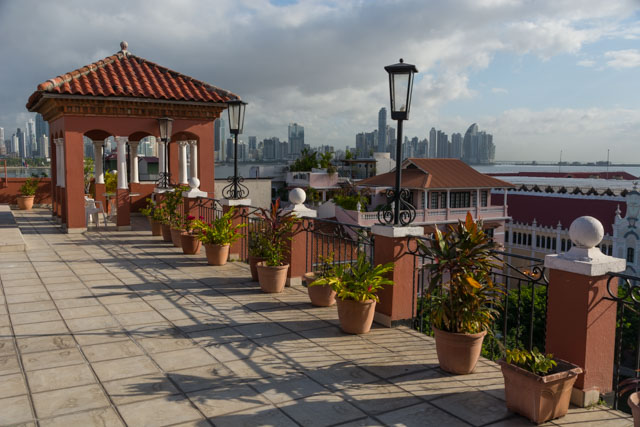
No alarm this morning. Florence sneaked out and sat on the roof terrace, I woke up about 9:00 and found her note – ‘On The Roof’. Homemade breakfast is bagels and cheese, we’re a bit limited in our apartment. The American Trade Hotel can make coffee far better than we can so went to their cafe. On the way, we dropped off the laundry, oh the excitement of travel.

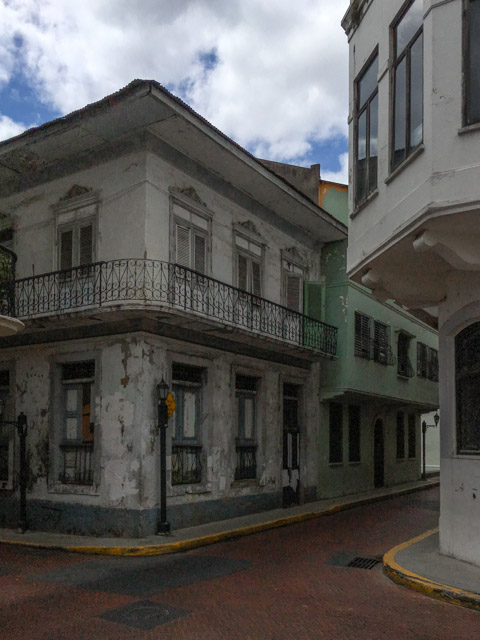
We had a good look round the old town yesterday so today we retraced our steps and had a closer look at a few buildings and museums. A substantial part of the area is out of bounds because the president lives here, he isn’t in residence today so a few more streets are open.

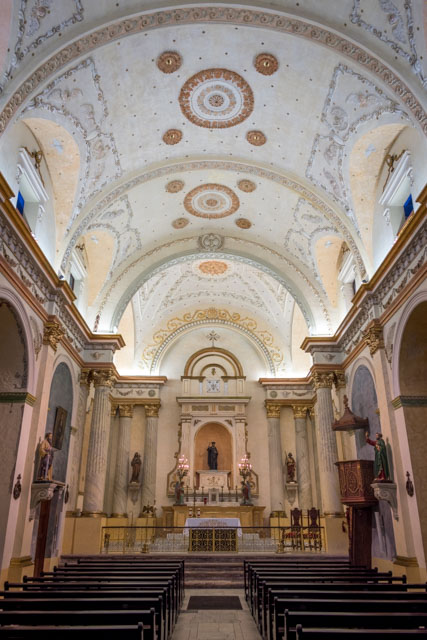
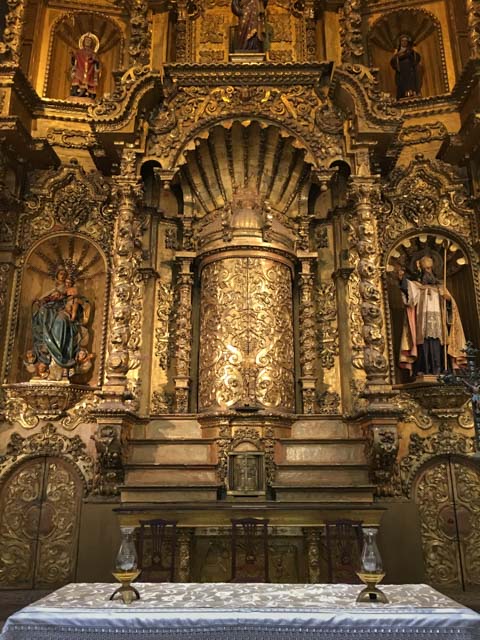
The Merced Church has a number of saints around the walls, one in particular stands out, we also saw her yesterday in San Jose church – St Hedwig. She is always portrayed carrying a church; people leave model houses as an offering in the hope that she will help them to get their own home.

The ruined church of St Dominic has an arch that allegedly played a huge part in the destiny of Panama. Although the church was destroyed by fire and abandoned in 1767, this unusually shaped arch survived. This convinced the French and subsequently the American engineers planning the canal that the area must be free from serious earthquakes and was therefore a good place to build. The arch actually collapsed in 2003 but has been rebuilt using as much of the original bricks as possible.

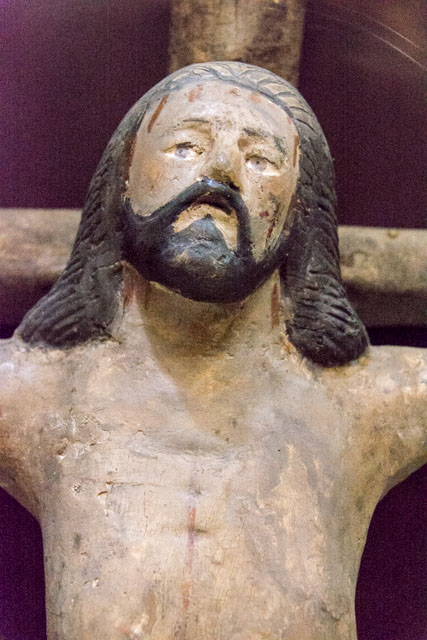
Next door to St Dominic is a small chapel that was used after the collapse of 1767, and is now a (free) museum of religous art. The captions are all in Spanish but the exhibits are interesting; much better than those we saw in Nicaragua.

Quick stop for lunch. I had a mango salad, Florence was happy with a very green and healthy juice – honestly!

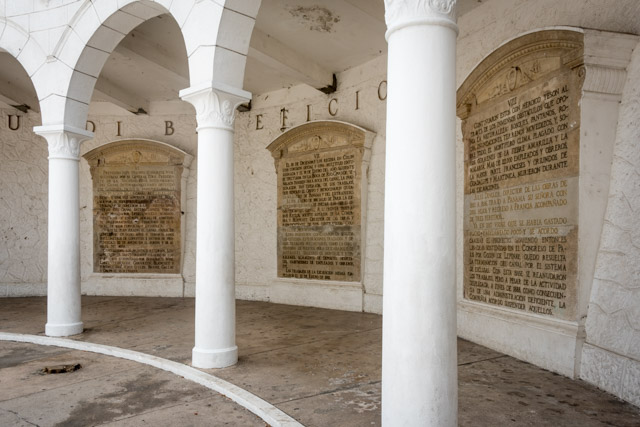
Opposite the French embassy, there’s an area with 12 large stone inscriptions telling the story of the canal as well as a memorial to the French who died in its construction.

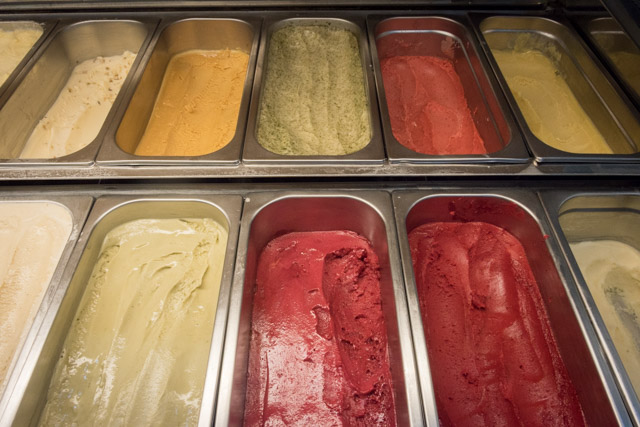
After wandering a few more streets, the lack of lunch caught up with Florence and we stopped at Granclement for ice creams. There was too much choice so we both had a double scoop – spiced bread and pineapple for Florence, rum and raisin and passion fruit for me – they were all very good.

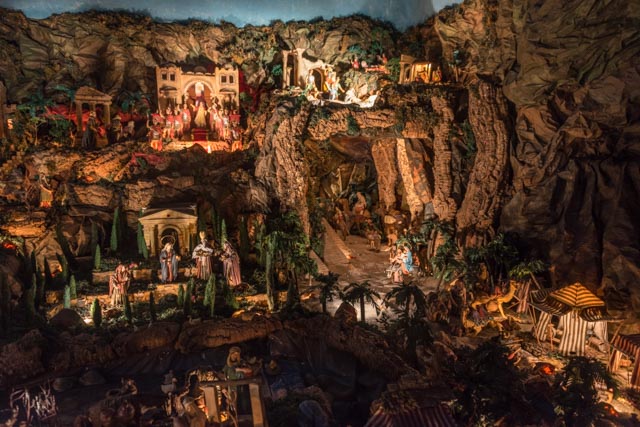
Yesterday’s nativity scene was impressive but the church opposite our apartment has outdone them. The scene is large, very detailed and beautifully lit, no waterfalls unfortunately.

Next was the Panama Canal Museum. This is an extensive display of everything related to the history of the canal itself and the surrounding area. It’s housed in the building which was the headquarters of the Fench and American companies who built the canal. Everything is captioned in Spanish, you can buy an English audio commentary for $3 but we only have an hour so decide against it. The museum covers three floors of the large building and we have to rush round. The headline on the front page of a Panamanian Newspaper is Un Triunfo de Omar – ‘A Triumph for Omar’. We’ve seen a lot of references to Omar Torrijos around the city. He was leader of the National Guard from 1968 to 1981 and effectively the ruler of the country. His most significant act was the negotiation of the treaty with the USA to hand over the canal to Panama in 1999. The United States however, retained the permanent right to protect what they would as the neutrality of the canal, allowing U.S. administration of the canal as well as military intervention through the now-legalized U.S. bases in Panama. These aspects of the treaty fell short from nationalistic goals and the ratification ceremony at Fort Clayton was somewhat of an embarrassment for Torrijos. At the signing ceremony, he was very drunk, his speech was slurred and had to lean on the podium to stay upright. He died in plane crash in 1981, there has been much speculation that he was killed by the CIA, documentation about is death disappeared after the USA invasion of Panama in 1989 (source).

We watched the sun go down over the sea and then stopped off on the way home at a nearby bar for a quick cocktail – frozen passion fruit daiquiris, very nice they were.

Presidential Suite

Early start this morning, 5:00 alarm – we have to fly out of our island paradise and back to Panama City. Bread and jam for breakfast and a quick coffee before we’re called to the boat, the usual quick hop across the water to the airport. They play at airlines by taking our passport numbers and weighing our bags.

There’re a few of us leaving today so there are two flights; we get the second one. We take off over our resort giving us one final glance and head eastwards down the coast first for about 10 minutes to another tiny airstrip before making our way to Panama City. We fly over another couple of Kuna island communities, they look very similar from above – very cramped.

It’s cloudy across the centre of the country but it clears as we reach the south coast and the tall buildings of the city come into view. We fly out across the Pacific before turning into the airport, the ocean is full of ships waiting their turn to pass through the canal. The plane comes in low over the container terminals before landing.

We’re met by a driver who takes us to our next accomodation, an AirBnB apartment in the old town – Casco Viejo. On the way we pass through some very run down edgy areas, definitely not places for tourists to walk around.

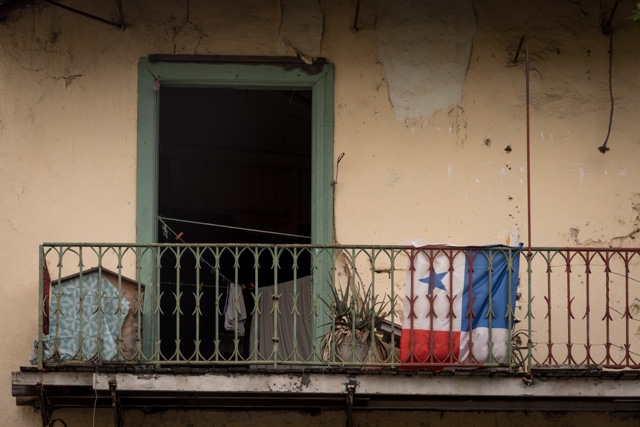
Casco Viejo was the second Spanish Capital in the area. Ten years ago the whole of Casco Viejo was a no-go area controlled by three gangs, killings were commonplace and the buildings were all slowly collapsing. It’s now being slowly restored and cleaned up, a number of former gang members now take tourists on walking tours of the area to explain how it was. It’s now so safe the president’s apartment is here.

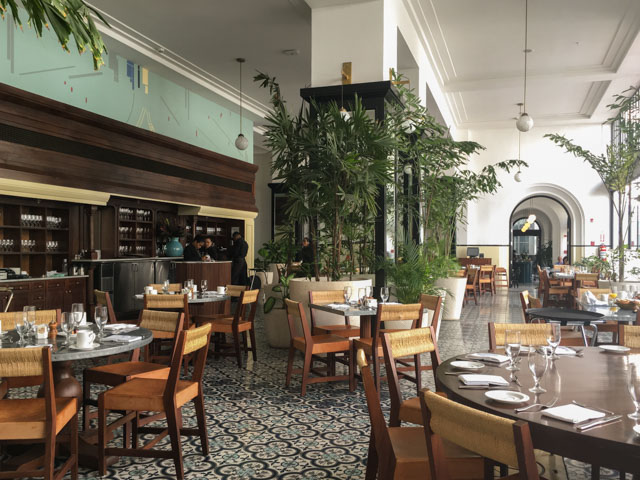
We splash out on breakfast – okay second breakfast, let’s say brunch – at the American Trade Hotel, we’re definitely out of place amongst the smartly dressed guests. This is about as far as you can get from our island this morning.

Whilst waiting for our host, Ariel, outside the apartment – a couple of walking tours pass by and we discover that the apartment is in the former Colombia Hotel, this was a favourite of U.S. presidents visiting to see the canal because it has a pool on the roof. We also find out the origins of the Panama hat – when President Roosevelt was giving a speech here and was wilting in the heat, he was given the nearest available hat which happened to be from Ecuador. The news pictures were soon all over the papers and it was christened the Panama hat.

Across the square is a restored church with the strangest nativity display we’ve seen; it has no baby, it is huge, it has a working waterfall and it has pyramids on the backdrop. A guide tells a group that it will be taken down this month – looks unlikely.

When we got into the apartment, we took a break to cool down, settle in and reconnect to the outside world, Florence gets some sad news so I’m put on blog duties.

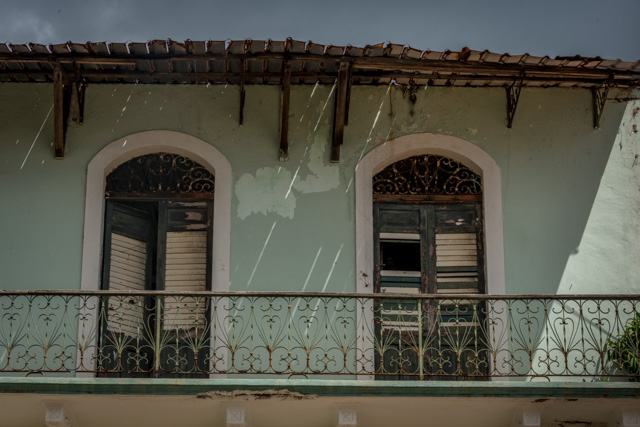
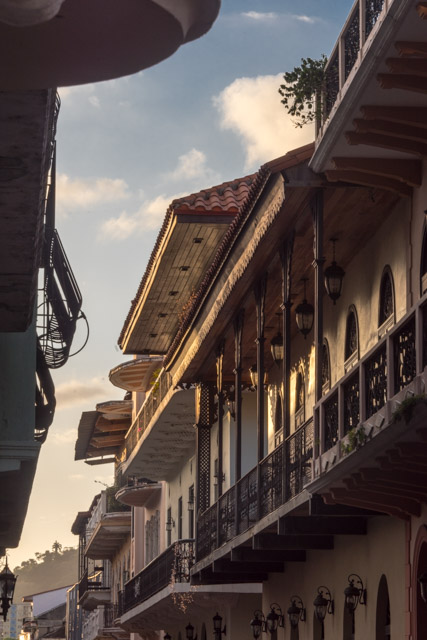
Go for a walk around the area. There are stark contrasts between the crumbling buildings awaiting restoration and the smart boutique hotels and restaurants. Ariel told us that every building is listed by UNESCO and all structures must be substantially preserved in any restorations.

Visit a supermarket to get some supplies for the next few days and watch the sunset from the rooftop terrace.

Island Time

Woken by this morning’s flight leaving at about 7:30, dozed a bit then got up at 8:00 – breakfast time. Breakfast today is a pancake with maple syrup, coffee and cereal, a good start to the day. Our meal is interrupted when a puffer fish is spotted, we all wander over to have a look before resuming eating.

We’re having another lazy morning, Florence has a massage booked for 11:30, we need to find something to do until then. The hammocks are calling, lay there for an hour reading, dozing and writing diaries. Then decide to go for a quick swim to cool off. There is a tiny beach on the edge of our island so we go there, the water is of course warm; we discover some coral right off the beach and quite a few fish too – this changes my plans for the afternoon.

Florence returns glowing and relaxed from her massage, we return to the hammocks until lunchtime. Lunch today is a green salad, plantains, beans, coconut rice and papaya.

The next activity is a boat trip to the mangroves at 15:30 but we’ve decided to do what anybody in a tropical paradise with a few hours to spare would do – booked a private visit to the cemetery.

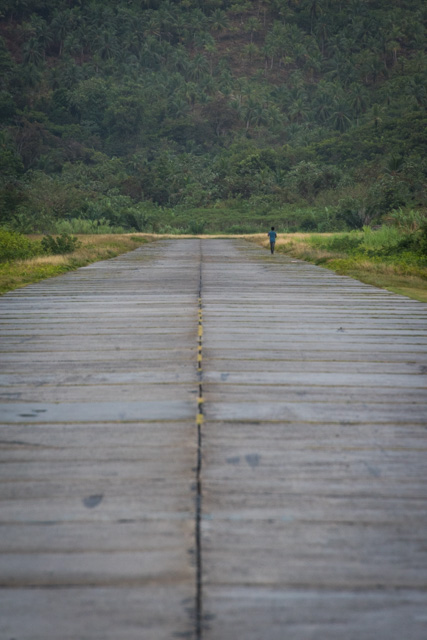
We’re taken by boat back to the mainland, only a ten minute journey. We then walk the length of the runway which becomes a footpath after the one flight of the day has come and gone. At the end we take another path into the jungle and up a small hill. There’s a great view over the island community and to our resort island beyond. After a few more minutes we reach the cemetery – it’s a very unusual site; there are makeshift looking shelters everywhere, cooking pots, fire embers and hammocks. Our guide Domi explains the burial process briefly: the body is laid in a hammock at home immediately after death, after a few days it’s brought to the grave yard and laid to rest in a deep hole in the ground, still suspended on a hammock. Some possessions, eight sticks representing the eight levels to be passed through on the way to heaven and a model boat to help the soul on its journey are also placed in the grave. It is then covered at the top with wooden slats and on top a plain mound of earth. The graves are all unmarked.

Hammocks are very important in Kuna culture. Babies are placed in them as soon as they are born, most people sleep in them and most people are conceived in them hence their importance in the burial process.

Each family has an area of the cemetery, this is what the shelters cover. It is up to the surviving relatives to decide where a body should go – with the parents or spouse’s family. The women from each family regularly visit the cemetery, between 8:00 and 12:00 each morning. There is a cooking area for them, as well as small fires throughout the site where they have been making food earlier. Domi has some helpful drawings to explain the process further. It’s a fascinating place, very different from anything we’ve seen before. There are however elements from other cultures creeping in: Kuna people who live in Panama City often bring plastic flowers when visiting relatives’ grave and one grave of a Kuna who adopted Catholicism had a headstone with a name on it.

Walking back down the runway we pass the local medicine man. Kuna believe in using medicinal plants as much as possible. We return to the island just before the Mangrove boat leaves. This is announced like all excursions and meals by a conch shell being blown. Florence goes on the excursion, it’s an enjoyable boat trip with some interesting wildlife – kingfishers, a white raccoon, starfish and a sea-cucumber – and a chat from Domi about how they hardly use plastic yet it is polluting their lives.

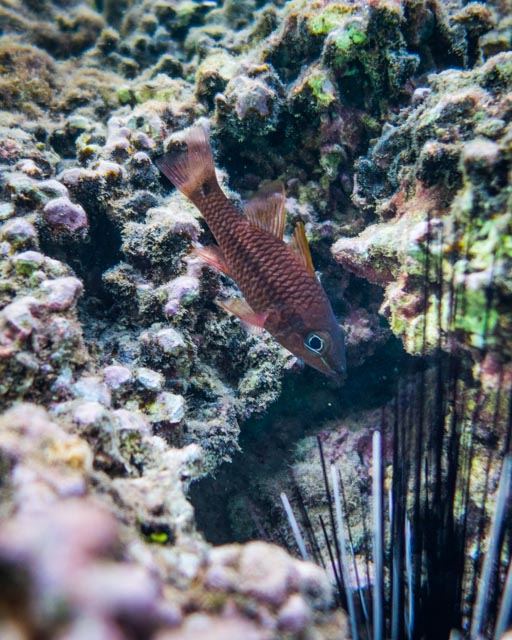
I stay behind to snorkel on the coral around the island, just off the beach there are so many different fish – the strangest is a stripy red one with huge eyes – a Longspine Squirrelfish.

Dry off in the hammock, just time for one more swim before dinner.

Days doing very little seem to pass very quickly here!

Panama Papers


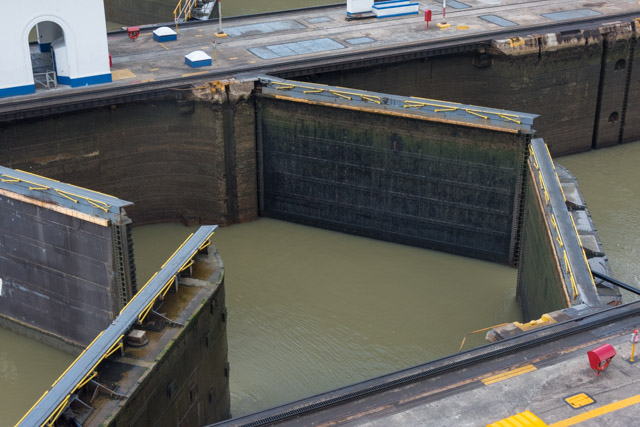
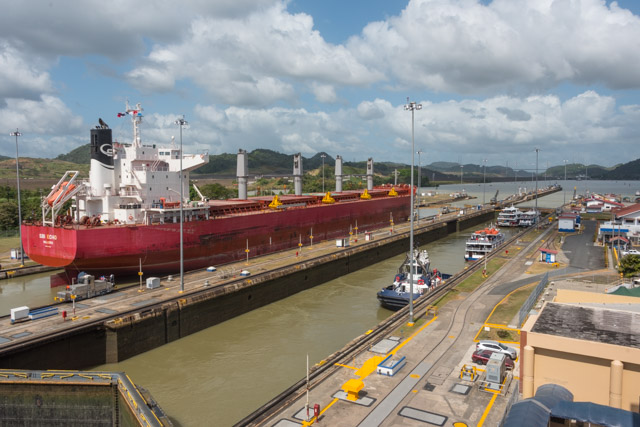
Today is all about the canal – four of us set off in a taxi at 9:30 to go to the visitors centre on the edge of the city. It’s about 15 minutes drive from the hotel. The centre overlooks Miraflores Lock, the first lock that take ships up from sea level. The majority of the canal is about 25m above sea level because it was created by flooding a valley to create a lake which forms the northern half of the route, this had to be higher to make it big enough and deep enough.

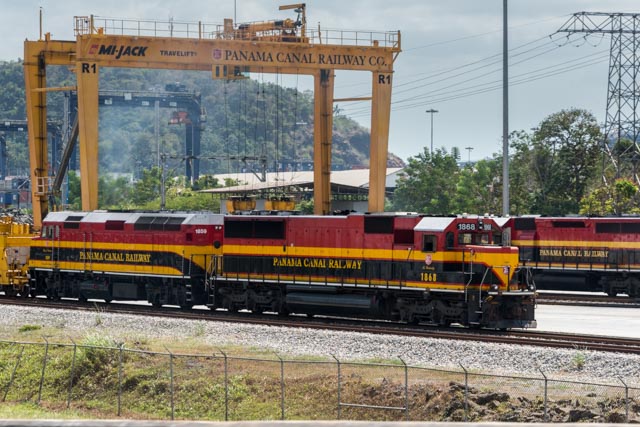
The Spanish conquerors had been investigating better ways to move goods across the isthmus of Panama since the 1540s, the majority of silver, gold and other goods they took from South America came through this area. Many plans were put forward over time. The Panama Railway was built in 1855, this is still in use and largely defined the canal route. The French started work on the canal in 1881, work continued until 1894 when the company ran out of money. The terrain had proved more difficult than expected and 25,000 workers from France and the Caribbean lost their lives. In a clever piece of political manoeuvring, Panama got help from the U.S. to gain its independence from Colombia. At the same time the U.S. bought out the French company and agreed to compete the canal; the first ship passed through the canal in 1914. This didn’t come for free however and the U.S. was granted control over the canal and the immediate surroundings along with the lion’s share of the income.  This continued until growing unrest in the sixties and seventies led to President Carter in 1977 agreeing to hand over full control to Panama in 1999.

The canal is now one of the major sources of income for the country, up to 25 ships a day pass through, charges are as high as $500,000 – estimated income is $3bn per annum. Because of the increase in sea traffic globally, the increase and the size of shipping and the threat of a Chinese-backed canal through Nicaragua it was agreed by a referendum in 2007 to spend $5bn on increasing the capacity of the canal. The new locks and channels opened in mid-2016, these allow for all but the very largest vessels to pass through.

Soon after we arrive a cargo ship is on its way into the locks from the Pacific, all traffic goes this way before midday and the opposite later. The canal operates 24 hours per day. We rush to the top floor and found a good vantage point, the railings are already crowded with spectators. The ship is eased into position by six diesel locomotives, three on each side of the lock. The captain of any vessel has to hand over command to a Panamanian pilot to pass through the locks. The gates close and the vessel almost imperceptibly starts to rise,  it looks like it’s empty as it floats very high in the water. After about 10 minutes, the lock is full and the engines ease the ship forward and into the canal itself. There are tug boats wait to pull it forward to the next lock a mile upstream. All of these locks are operating in exactly the way they were designed and built 100 years ago, an impressive feat. The visitors centre has a film, a museum and of course a gift shop – but first it’s coffee time. The coffee is from the producers in Boquete we recently stayed with – very good it is. There’s a plaque on the wall outside the cafe presented by the UK Government on the centenary of the opening in commemorating the British West Indians who worked on the canal. The film is massive PR promotion for the canal – would you believe no environmental damage was done by the recent $5bn project? We spend 3 hours at the centre, ships are queuing up to enter the locks from the North when we leave, we could easily have spent a few more hours watching them but our taxi is waiting.

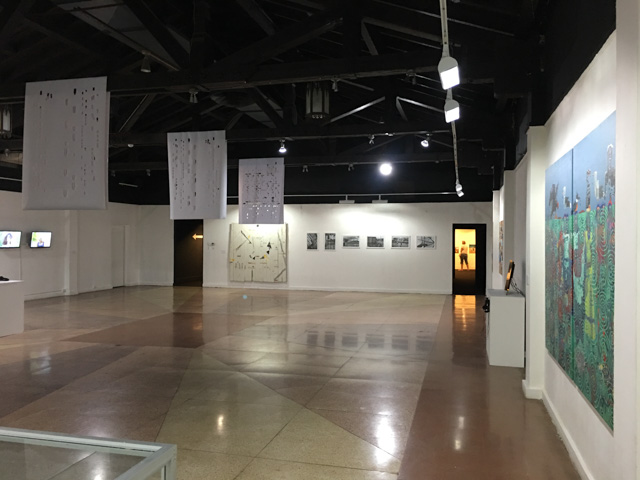
After the canal we head to the Museum of Contemporary Art, to shorten the walk we take a ride on the Metro. It’s very clean and efficient and costs 35 cents a journey. The Museum has an exhibition by a Panamanian artist David Solís on the ground floor. He has lived and worked in France for many years and this is one of his first major exhibitions in his home country. His work is interesting but doesn’t grab us too much, the same themes seem to repeat many times. The first floor has everything you expect from a Contemporary Art Gallery: obscure video works, bad photos masquerading as art, garish paintings, 3d works made from paper and a sound installation. It’s all interesting without any of it being really absorbing.

Take another metro one stop to the Albrook Shopping Mall – I need some new shoes – have to look good for Tahiti! It’s intimidating in its size, we look in a few shops and finally find an outdoor store. They have what I want but not in my size. Just time for a juice and snack before we return to the Hotel.

We’re off to the San Blas Islands very early tomorrow morning. Just like in Santa Catalina, we won’t have any internet access so we’ll post retrospectively on our return to Panana City.

Bus to the Big City

Start the day in our pink paradise. Cheese omelette sandwich for me for breakfast, plenty of jalapeños too, quite tasty – much better than the instant cappuccino.

Walk into ‘town’ to pick up some body boards but they’re closed today – not having much luck with surfing this trip. We’re leaving at midday so four of us walk down to the beach anyway, time for a quick swim before we go. The hotel dog decides it’s a good idea and comes with us.

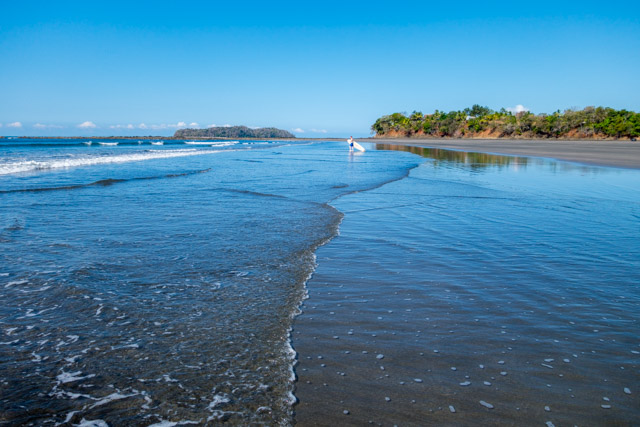
The tide is a long way out which means there’s even more hot sun to hop across. The water is lovely as ever, the sun hasn’t quite warmed it up yet so it’s slightly cooler but very refreshing. All too soon we have to say goodbye to all this and head back to shower, finish packing and catch the bus to Panama City.

The first hour or so is through lots of lush green countryside, then we turn onto the Pan-American highway and head for the big city. After about 30 minutes we stop in Santiago for a snack and toilet break. We get surprisingly good coffee and cakes from a bakery on the edge of the bus station.

Back on the road for another couple of hours. To the north there’s a range of mountains that form the spine of the country, and the continent at this point. The clouds cling to the peaks which look very jagged wherever they poke through.

We stop again in Coronado. It’s getting late for lunch now so we just get some emergency shopping – pencils for Florence, sun-cream for me.

On the last leg of the journey, there’s a sudden heavy rain-storm but it doesn’t last; as it clears we’re suddenly on a bridge high over the Panama Canal. The continent is only 50 miles wide here, the Caribbean is 40 miles to our North, Panama City and the Pacific are on the south side.

We turn off the highway and join the traffic queue heading into the city; we’d been warned that this would happen. In this area, the Canal is everything. We can see it in the distance through the trees, we pass a couple of cemeteries created for the workers who died in its creation. A lot of the buildings we pass are former US military accommodation now lived in by locals; it’s doubtful they were painted in so many bright colours in their former existence.

Our hotel is in the mid-town area between the high-rise offices and apartments of the financial district and the old town. We have an hour to settle in then we’re out for dinner. Taxis take us to a marina created on reclaimed land in the Canal mouth – they had to do something with all the spoil from the excavations. The roads around the city are very good, one takes us around the old town on a road built on a continuous breakwater to keep the waves way form the fragile old buildings. The marina has a large number of very expensive yachts for us to choose from – one has a helicopter on it – very ostentatious.

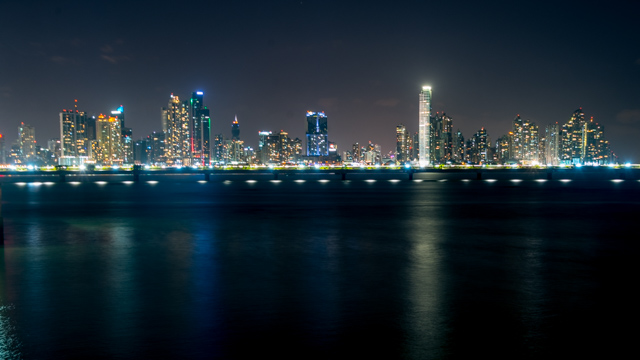
There’s a nice breeze from the water. In the distance we can see the lights of the offices. This is officially our last night meal even though the trip has one day to go – we have to leave in the middle of the night on Sunday morning so we need a quiet night tomorrow. The food is good, pasta and pizza for us – with a nice Chilean Pinot Noir to help it along. Brayan wants to learn to enjoy wine – he isn’t impressed with this one.

The big news in Panama today is that the former dictator, Manuel Noriega, is being allowed out of prison and to live under house arrest in preparation for an operation on a brain tumour. He has been in prison since his capture in 1989. The US invasion was deemed by the UN to have been illegal, he hid in the Vatican embassy in Panama City where the US were unable to touch him. They set up a helicopter landing pad next door and bombarded him with loud music – said to have included ‘Welcome to the Jungle’ – Guns n Roses and ‘I Fought the Law’ by the Clash. After ten days he gave himself up.

Two Little Yellow Ones

Start the day with the free ‘continental’ breakfast; the only thing we don’t really like about this hotel. Bit of exercise this morning, we walked to the top of the hill behind the hotel. It’s about 45 minutes walk but steeply up the hill all the way. We did it early so it wasn’t too hot.

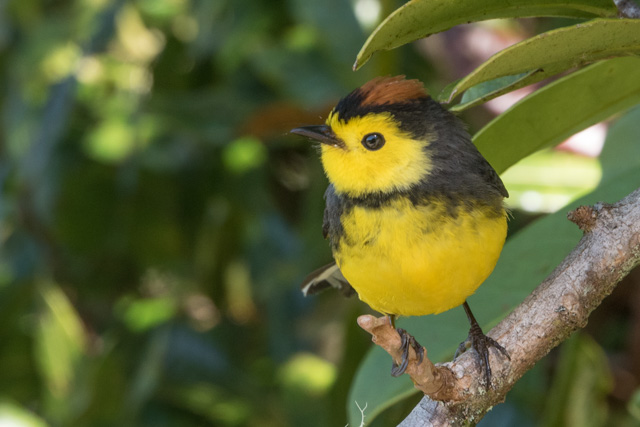
The climb starts in the shade with tall trees and plants either side of the path. After about half way, it opens out more and we get a view down the valley. Most of the way up there’s a viewpoint above a coffee plantation. We can’t get right to the top of the hill but when the path runs out there’s a spectacular view down the valley and up to the highest montain in Panama, Volacan Baru (3475m), beyond. It’s easier going down but still a bit hard on the knees because of the gradient. We were kept company for part of the walk down by two little yellow birds. They fluttered around very quickly – apparently taking the least direct route between one branch and the next.

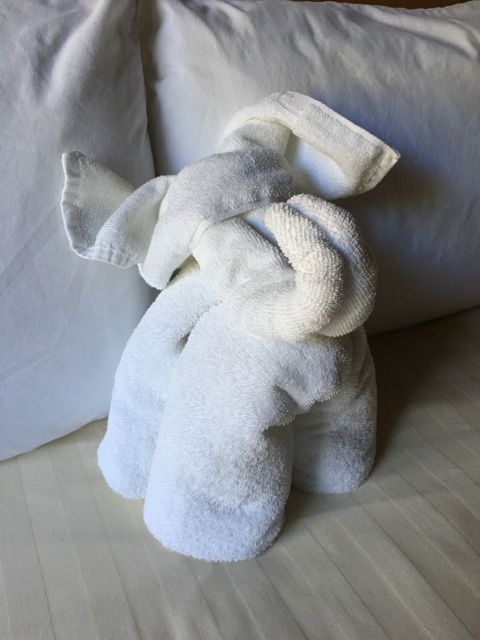
While we were out our rooms were tidied, the maid is very good at towel animals – today Florence had an elephant.

The hotel is 8km up hill from Boquete. We only saw the town briefly when we arrived so we took the hotel shuttle down for a few hours at lunchtime. There isn’t much to see. The railway station hasn’t seen a train in over 20 years. The fire station has a few old engines outside. We had lunch at Fish Tacos – tasty vegetable tacos. Not much else to do until the shuttle back at 3:00 so we tried the local craft beer – not bad, mine was a Hammock Time – it certainly had that effect on me. The local indigenous people are part of the Ngobe Bugle culture, the women still wear their brightly coloured traditional dresses.

Back in the hotel, the birds seem to know we’re leaving tomorrow and put on a good show while we’re writing diaries. The bright red and yellow ones from yesterday were next to each other right in front of us, our resident hummingbird was never far away either.

6pm was rum time on our patio – ’The Hummingbird Lounge’ – team get together to compare and contrast Panamanian dark and light rum and a Nicaraguan one too.

Red-faced in Panama

Breakfast in the hotel this morning. It’s included but not very good – white bread, processed cheese and orange juice from a box.

We’ve been warned that Panamanians are notoriously bad time-keepers, so much so that our guide normally tells them an earlier time than we actually need. Our pick-up is due at 9:20, they arrive about 20 minutes late, we could have walked to the jetty in about five minutes.

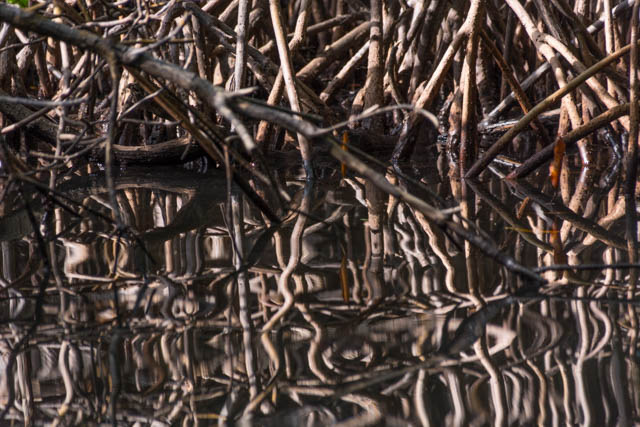
Today is a day on the water, in the water and under the water. We start by visiting a mangrove lagoon where dolphins are known to hang out. We do see a few but there are lots of boats there and it’s not a good experience for us and certainly not for the dolphins – although our captain is thankfully keeping a safe distance. There are lots of starfish in this area. We cruise slowly along the edge of the mangroves, the sea floor is covered with bright orange stars, some of them as big as 6 inches across.

After a brief stop to order lunch – or not – we head off for an hour and a half on the beach. We stop at a small island, there’s sand all along the edge with trees behind it. At the end of the island, the trees end and the sand carries on into the sea. There are a few other boats there but it’s not at all busy. The time passes quickly with a walk to end of the island, a swim and a chat.

Back to the restaurant for lunch. Most of us aren’t bothering and just have a drink. My pineapple juice comes from freshly juiced fruit – it’s lovely. Florence has a Mango Colado and expresses surprise that it has rum in it. Looks like we made a good choice, the food doesn’t look too appetising.

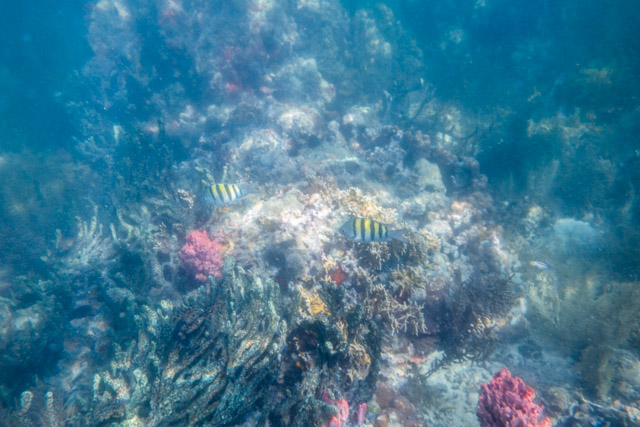
After lunch it’s time for a snorkel, there’s nothing like the variety we saw in Belize but there are a few interesting corals and fish to keep us occupied. Final stop is an island with some tall trees where some sloths live. We do see one but it’s quite high up and obviously asleep.

Back to town. We have a quick dip in the hotel pool to cool off. The sun has been strong all day and although we’d used quite a lot of suncream (factor 50), we both have some glowing red areas – particularly my face! Hopefully it will turn a shade of brown soon but I doubt it.

Out for the evening. We start with a cocktail at La Buena Vista – the good view – probably would be in the daytime but anyway it’s cooler by the water. The strong Margueritas go down well, with some black bean dip and tacos to help. Join the rest of the group for dinner, salad and beer for me. Florence has pasta and beer. Our group now has two Americans, one Kiwi, one Aussie and us. We spend dinner talking about how hard it is for Brian to cater for all flavours of English – if somebody asks for chips do they want deep-fried potatoes, crisps or tortillas? An English traveller before asked where she could find the ladies, the guide told her it was company policy not to offer this service – she had to explain the misunderstanding.

Jaguarundis and a Kinkajou

Breakfast at Bread and Chocolate, Florence pronounces her eggs and bagel the best of the trip so far. My fruit and granola is pretty good too.

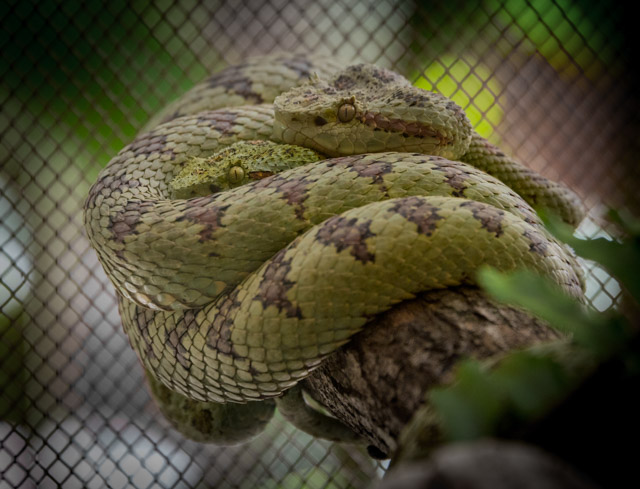
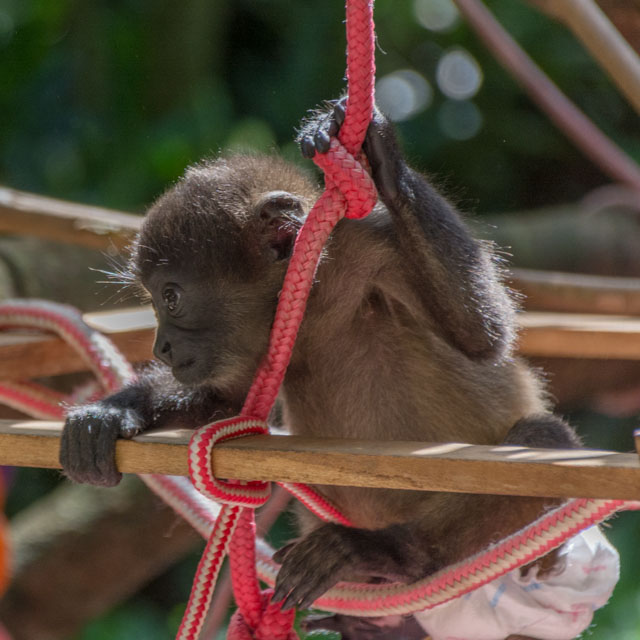
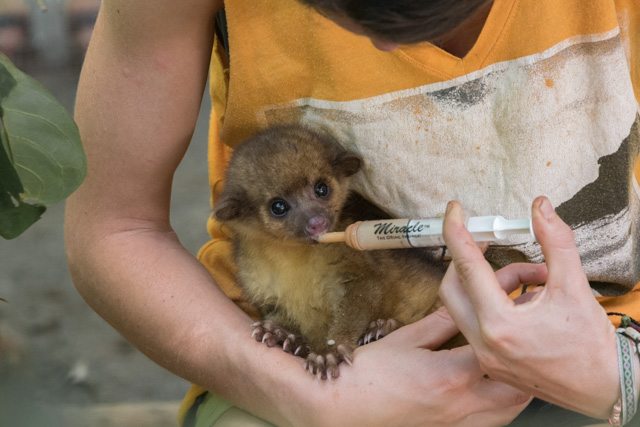
We have a full day with three activities today. First is the Jaguar Rescue Centre. The centre was set up in 2008, the name was chosen to help raise their profile but they take in any wild animals that need rescuing or rehabilitating and try to re-introduce them back to the wild. They haven’t had a Jaguar for a while; there are believed to be as few as 200 left in Costa Rica, numbers are reducing primarily because of habitat removal. They do have plenty of other beautiful creatures that we can get a good look at close up. Most of the staff are volunteers. We’re given a guided tour by Rachel who came for three weeks 18 months ago and hasn’t left yet, it’s easy to see why. First stop on the tour is the Sloth garden, the low trees and bushes have a number of juvenile sloths hanging from them, we can’t touch them but we can get very close. Nearby a volunteer is feeding a baby Kinkajoo with a syringe of goat milk, this the best general substitute they have for maternal milk. There are sad stories of babies being orphaned or otherwise separated from their parents. A crocodile is recovering from injuries it received when it was captured, bound in barbed wire and beaten by somebody trying to prove their strength. The crocodile is slowly recovering, the man is awaiting trial – these things are rightly taken very seriously in Costa Rica. It’s illegal to keep wild animals as pets in Costa Rica, the police often bring in animals they’ve seized, particularly snakes and lizards. Marley is a tiny orphan sloth, he has had a chest infection for a while but is slowly recovering, he needs to keep warm so spends his days sleeping on a blanket in the sun on a volunteer’s lap. One sloth has a mutation which means he only has one claw on each foot instead of the usual two or three – this is believed to be unique. This organisation is doing a fantastic job, please help them with any donations you can here: http://www.jaguarrescue.foundation/support-us/

Next stop is lunch, a buffet restaurant with surprisingly tasty dishes, the usual rice and beans and plantains. We’re now in the heat of the middle of the day so we go to a waterfall to swim and cool down. The water is lovely, as you get nearer the bottom of the falls the current gets stronger, enough to hold you up and give you a back massage if you lean into it.

Final stop is the Cahuita National Park, this covers a narrow strip of land about 8 miles long that follows the coastline. Because of the shape of the park and the atraction of the cool sea breezes to the animals, the wildlife is particularly easy to spot here. Within a few 100m we see a sloth and some basilisk lizards. The path is a few meters in from the sea so the sight and sound of waves is always with us, overhead there are capuchin, howler and spider monkeys. Along the path there are large spiders, iguanas, a raccoon and many others. A branch just over our heads is a highway for leaf cutter ants, these amazing creatures shuttle back and forth carrying pieces of leaf bigger than their bodies back to their colony; there are even inspector ants that quality control the leaves and reject any pieces that aren’t suitable.

The path ends after about a mile. The rest of the park is left wild, we retrace our steps as the sun goes down. Don’t feel like dinner so make do with cocktails and a snack at Koki Beach, a very good end to a very good day.

Sand between our toes

Today we’re back on the Caribbean coast, we haven’t seen the Caribbean since we left Caye Caulker over 3 weeks ago. We left San Jose at 8:00 for a 5 hour journey to Puerto Viejo. One short stop in Limon on the way for toilets and refreshments.

Limon is a container and liner port, on the way into the town there are huge yards full of Maersk, Hamburg Sud, Hapag-Lloyd and many other shipping containers. The port is currently being expanded to handle more traffic – mainly outbound refrigerated containers of Costa Rican produce, primarily bananas and pineapples.

We arrive at lunchtime, it’s warm but with a nice breeze from the sea. Check in to the hotel and have a quick orientation walk of the town, it’s only a few blocks so nothing is far away.

Bryan, our new guide, is from La Fortuna further north in Costa Rica (where we were a couple of days ago), he doesn’t like San Jose – too big and bustling, he’s much happier here.

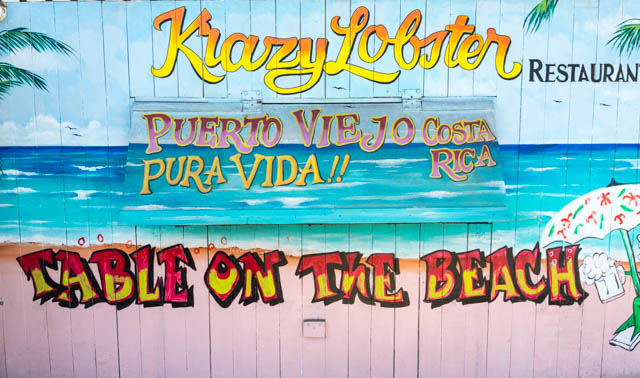
The town has a very Caribbean vibe, plenty of rum shacks, lots of reggae bars, pictures of Bob Marley all around. It’s very slow and relaxed, the sea seems to be at the end of almost every street.
We missed breakfast because of the early start so lunch is long overdue, we both have an avocado and cheese sandwich, mine is accompanied by a passion fruit smoothie – it’s all very good.

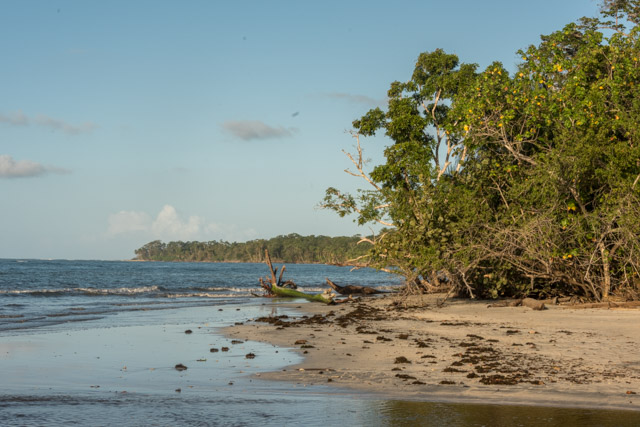
The best beach is a couple of kms out of town, it’s now a bit late for bike hire so we walk. The road follows the coast, either at the back of the beach or a little way inland with the sea visible through trees. All along the road there are more bars and restaurants. The beach is good, the sea much better. Nothing like the UK where you creep in up to your waist, the water is warm in the late sun. The waves break about 50m off the beach, the biggest are about 2m high, unfortunately the board-hire stalls are starting to close down for the day – maybe tomorrow.

Wander back to the hotel as the sun is going down, the sky above the sea turns many shades of pink.

Although lunch was very good the choice of food in Puerto Viejo is a bit disappointing, the majority of restaurants cater to tourists and the menus are mixed international rather than anything more local. We have pizza in a restaurant owned by a German lady.