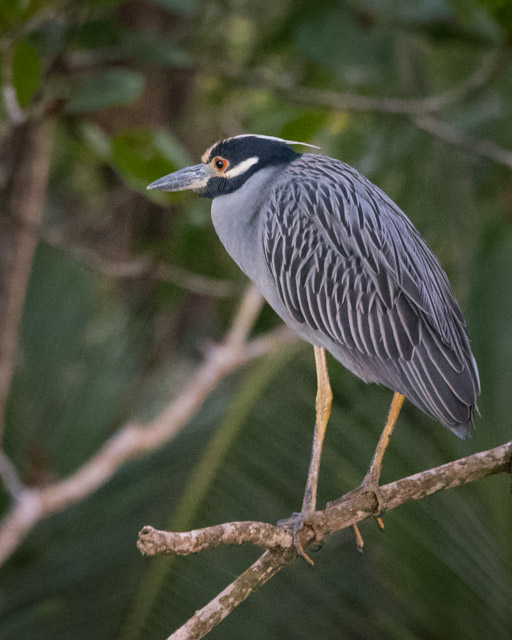
Jaguarundis and a Kinkajou

Breakfast at Bread and Chocolate, Florence pronounces her eggs and bagel the best of the trip so far. My fruit and granola is pretty good too.

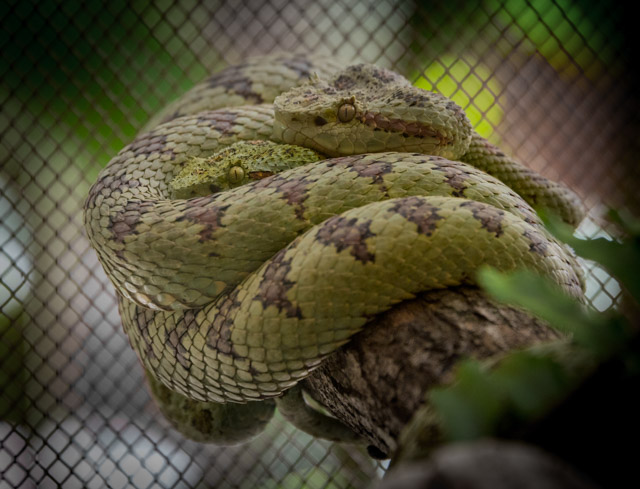
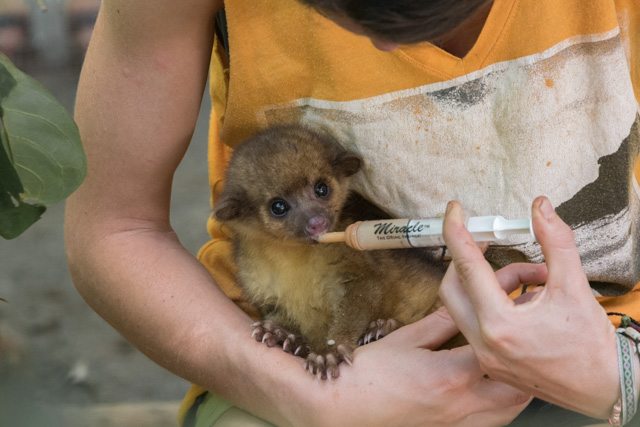
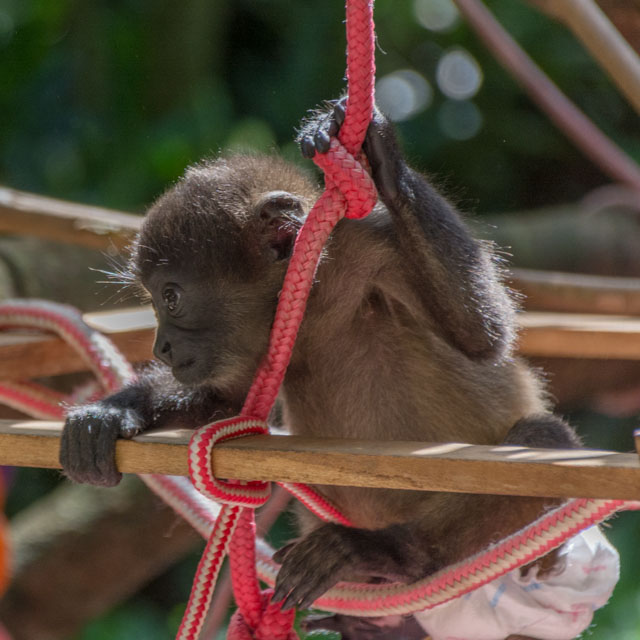
We have a full day with three activities today. First is the Jaguar Rescue Centre. The centre was set up in 2008, the name was chosen to help raise their profile but they take in any wild animals that need rescuing or rehabilitating and try to re-introduce them back to the wild. They haven’t had a Jaguar for a while; there are believed to be as few as 200 left in Costa Rica, numbers are reducing primarily because of habitat removal. They do have plenty of other beautiful creatures that we can get a good look at close up. Most of the staff are volunteers. We’re given a guided tour by Rachel who came for three weeks 18 months ago and hasn’t left yet, it’s easy to see why. First stop on the tour is the Sloth garden, the low trees and bushes have a number of juvenile sloths hanging from them, we can’t touch them but we can get very close. Nearby a volunteer is feeding a baby Kinkajoo with a syringe of goat milk, this the best general substitute they have for maternal milk. There are sad stories of babies being orphaned or otherwise separated from their parents. A crocodile is recovering from injuries it received when it was captured, bound in barbed wire and beaten by somebody trying to prove their strength. The crocodile is slowly recovering, the man is awaiting trial – these things are rightly taken very seriously in Costa Rica. It’s illegal to keep wild animals as pets in Costa Rica, the police often bring in animals they’ve seized, particularly snakes and lizards. Marley is a tiny orphan sloth, he has had a chest infection for a while but is slowly recovering, he needs to keep warm so spends his days sleeping on a blanket in the sun on a volunteer’s lap. One sloth has a mutation which means he only has one claw on each foot instead of the usual two or three – this is believed to be unique. This organisation is doing a fantastic job, please help them with any donations you can here: http://www.jaguarrescue.foundation/support-us/

Next stop is lunch, a buffet restaurant with surprisingly tasty dishes, the usual rice and beans and plantains. We’re now in the heat of the middle of the day so we go to a waterfall to swim and cool down. The water is lovely, as you get nearer the bottom of the falls the current gets stronger, enough to hold you up and give you a back massage if you lean into it.

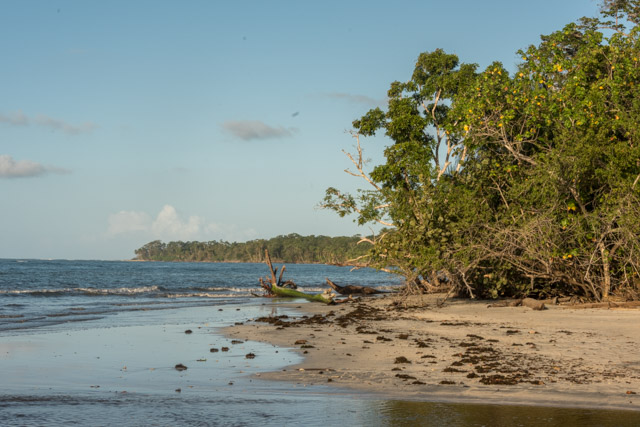
Final stop is the Cahuita National Park, this covers a narrow strip of land about 8 miles long that follows the coastline. Because of the shape of the park and the atraction of the cool sea breezes to the animals, the wildlife is particularly easy to spot here. Within a few 100m we see a sloth and some basilisk lizards. The path is a few meters in from the sea so the sight and sound of waves is always with us, overhead there are capuchin, howler and spider monkeys. Along the path there are large spiders, iguanas, a raccoon and many others. A branch just over our heads is a highway for leaf cutter ants, these amazing creatures shuttle back and forth carrying pieces of leaf bigger than their bodies back to their colony; there are even inspector ants that quality control the leaves and reject any pieces that aren’t suitable.

The path ends after about a mile. The rest of the park is left wild, we retrace our steps as the sun goes down. Don’t feel like dinner so make do with cocktails and a snack at Koki Beach, a very good end to a very good day.
Sand between our toes

Today we’re back on the Caribbean coast, we haven’t seen the Caribbean since we left Caye Caulker over 3 weeks ago. We left San Jose at 8:00 for a 5 hour journey to Puerto Viejo. One short stop in Limon on the way for toilets and refreshments.

Limon is a container and liner port, on the way into the town there are huge yards full of Maersk, Hamburg Sud, Hapag-Lloyd and many other shipping containers. The port is currently being expanded to handle more traffic – mainly outbound refrigerated containers of Costa Rican produce, primarily bananas and pineapples.

We arrive at lunchtime, it’s warm but with a nice breeze from the sea. Check in to the hotel and have a quick orientation walk of the town, it’s only a few blocks so nothing is far away.

Bryan, our new guide, is from La Fortuna further north in Costa Rica (where we were a couple of days ago), he doesn’t like San Jose – too big and bustling, he’s much happier here.

The town has a very Caribbean vibe, plenty of rum shacks, lots of reggae bars, pictures of Bob Marley all around. It’s very slow and relaxed, the sea seems to be at the end of almost every street.

We missed breakfast because of the early start so lunch is long overdue, we both have an avocado and cheese sandwich, mine is accompanied by a passion fruit smoothie – it’s all very good.

The best beach is a couple of kms out of town, it’s now a bit late for bike hire so we walk. The road follows the coast, either at the back of the beach or a little way inland with the sea visible through trees. All along the road there are more bars and restaurants. The beach is good, the sea much better. Nothing like the UK where you creep in up to your waist, the water is warm in the late sun. The waves break about 50m off the beach, the biggest are about 2m high, unfortunately the board-hire stalls are starting to close down for the day – maybe tomorrow.

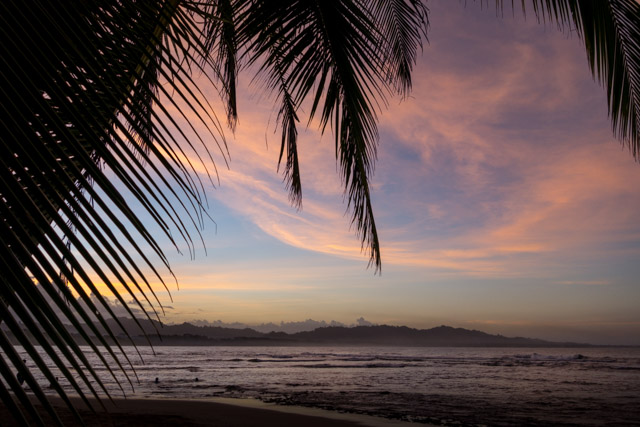
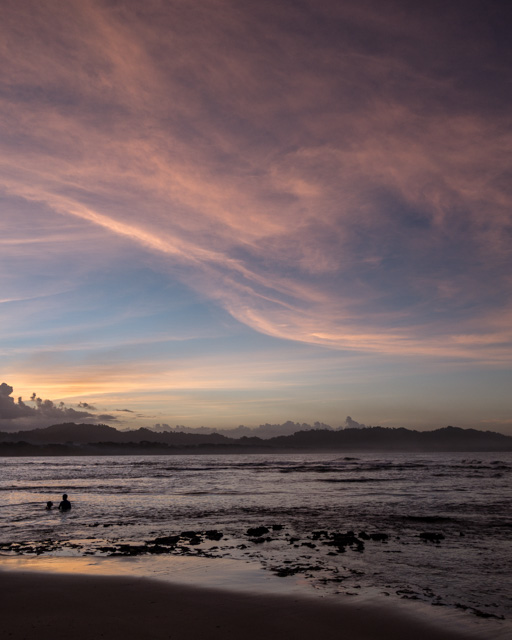
Wander back to the hotel as the sun is going down, the sky above the sea turns many shades of pink.

Although lunch was very good the choice of food in Puerto Viejo is a bit disappointing, the majority of restaurants cater to tourists and the menus are mixed international rather than anything more local. We have pizza in a restaurant owned by a German lady.

Guarde la calma

A rare thing happened this morning, we found out that breakfast was included in our hotel rate. We had fresh fruit, the desayuno típico and coffee.

As a parting gift, Dennis had arranged for a taxi to come and pick us up at 9am this morning to take us to the Poás volcano.

Fernando, our taxi driver, was punctual. The journey took just over one and a half hours, first through San Jose, and Alajuela and then a winding and scenic route through to the Poás Volcano National Park.

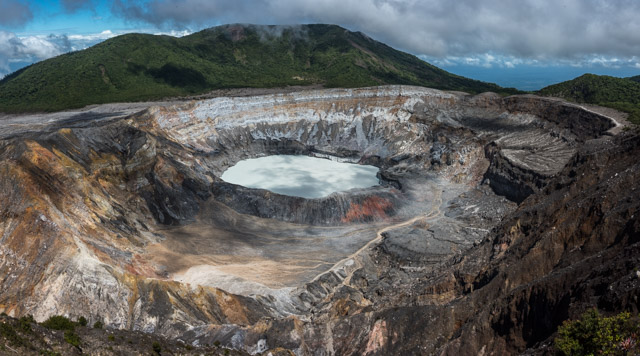
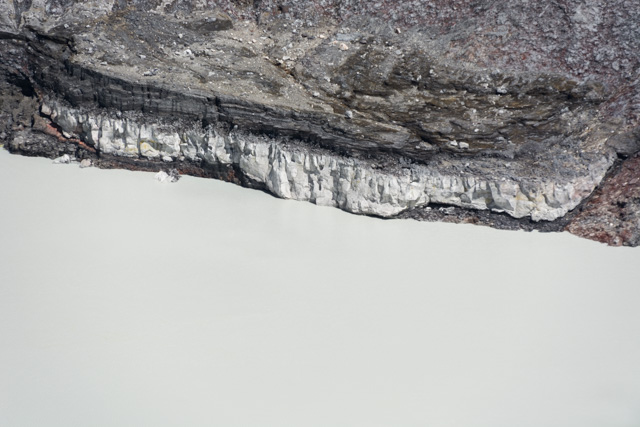
After a short walk (no more than fifteen minutes), we arrived at the viewing platform. The Poás volcano is active, and it is recommended that you don’t spend more than twenty minutes there due to the sulphur dioxide and other gases which escape from the crater. As there was little activity, we stayed just over an hour. The crater is stunning; at almost 1.6 km across it’s also the largest active crater in the world. The more you looked, the more there was to see. The colour of the water, the rocks, the smoke and steam rising from fumaroles. Truly spectacular.

Another trail through the forest led us to the Botos Lake. The now extinct crater is filled with rain water and due to its volcanic origin, it still contains traces of acidity which means that few micro-organisms live in it.

We did see a couple of Poás squirrels – a species endemic to the National Park.

The best time to visit the volcano is in the morning, before the clouds roll in. And as we made our way back from the Botos Lake to our taxi, we saw that the Poás crater was now pure clouds.

On our way back to San Jose, we stopped at a coffee plantation. The café overlooked the coffee plantations; it was a beautiful view and a very peaceful place, surrounded by colourful flowers and green hills. And the coffee was excellent.

San Jose has an odd feel to it. It certainly is a big city by Costa Rican standards, but there isn’t a lot to do or see. Having done the main tourist sites yesterday, we decided to focus on the more local places today… after the obligatory daily visit to the cash point. We have this funny thing going on:

  • Costa Rica is expensive so whenever you get money out, it goes (we seem to be spending colones like there’s no tomorrow)
  • You can only withdraw a certain amount daily (this is never enough)
  • You can’t withdraw more than a certain amount each week

We started with the Museo de Arte y Diseño Contemporáneo (MADC). It is a small museum, and ever smaller currently as they are refurbishing the main gallery. The temporary exhibition was excellent however. Simón Vega’s art explores the relationship between Central America, the U.S.A. and the U.S.S.R during the cold war in a playful and parodic way.

By chance, we stumbled across a colourful doorway I had seen on the internet, and which I’d added to my ‘must-see’ list… having no idea where it was.

We took a leisurely stroll through Barrio Amón, a residential area with many trendy cafes, bars and restaurants. It’s only two streets away from the main pedestrian street, but it may as well be in a different town altogether. We had a gooey cinnamon bun and fresh limonadas (pineapple for me and mango for Andy) at Café Miel Garage. And we shared a tasty avocado and jalapeño sandwich at Kula Café.

Being only a few minutes from one of the railway stations, we had hoped to hop on a train a few stops but there was a massive queue (‘rush hour’, a concept we used to be familiar with), so Andy had to make do with taking photos of an old engine in the courtyard.

We followed the rails back to our hotel just in time for our group meeting. Today is change over day. We met our new guide, Brian, and with only three new travelling companions joining us (us being the original three from Mexico City), it’s just going to be six of us for the final part of our Central America journey.

Formalities over, Andy and I walked to the Beer Factory – a bar which has craft beers, and football on TV (Honduras beat Panama 1-0).

Do you know the way to San Jose?

Hit the streets of La Fortuna at 7:30 in search of breakfast, easy to find as we’re going to the same place as yesterday. This time I have a bowl of fruit and yogurt. We’ve got an hour before departure time so we have time to try out the best coffee in town – a claim made by Down to Earth Coffee and backed up by TripAdvisor. My cortado is very good, Florence’s latte is a bit too milky.

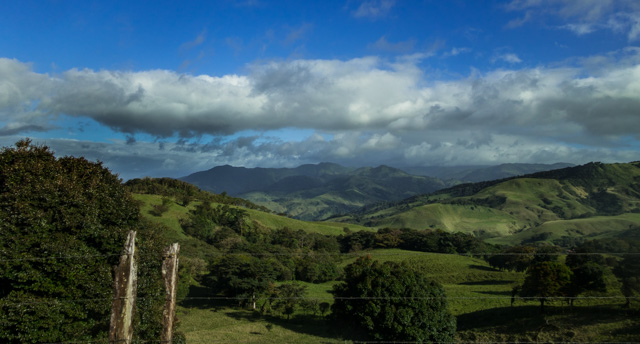
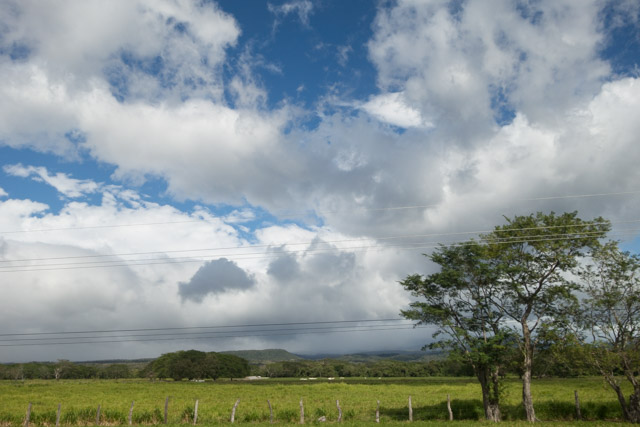
We’re leaving at 9:00 for the capital San Jose. Due to a quirk of our itinerary this is the first capital we’ll stay in since Mexico City. The journey begins with a long climb through green hills, we pass over a number of rivers in deep wooded valleys. Once we reach the hilltops the views are spectacular, the sky is light cloud, the sun occasionally breaks through to highlight a part of the landscape.

Unfortunately this can’t last and the scenery soon flattens out and becomes more built up. San Jose is a modern built up city of 300,000 inhabitants. This is a bit of shock, we haven’t been anywhere like this since we left Mexico. The hotel is about a mile from the city centre in a nice leafy suburb, just time to drop our bags and head out for our orientation walk. There’s a long pedestrianised street in the centre, this has multiple McDonalds, Starbucks and American trainer outlets. We’re warned to be careful of our belongings and left to explore.

First stop is the Cathedral. Built in 1850, it’s not particularly attractive inside or out. Stop for a quick drink and share a sandwich at the National Theatre cafe, inside this building could be any West End theatre.

Our next stop is one of the highlights of San Jose – the Gold Museum. This museum displays many pieces from pre-Columbian Costa Rica and also explains the background to the society of the time. There were many settlements which traded with other early American peoples from as far away as modern day Mexico and Bolivia. There were however no large cities or buildings like those further north.
The exhibition explains how gold working developed first around 1500bc in the Andes and slowly spread north, each area had its own techniques and designs. The museum has hundreds of gold pieces of all shapes. Not surprisingly security is tight, we’re warned not to photograph the security guards, any baseball caps must be warn backwards – presumably so faces are clear on CCTV.

Walking back to the hotel we notice the walls of what is now the Costa Rica National Museum are full of bullet holes. This was built as a Fort in 1917, the bullets holes are from the civil war of 1948. This lasted 44 days and accounted for over 2,000 lives. It started when the election results were anulled by the government alleging the opposition had won through fraud. A military junta overthrew the government and ran the country for 18 months, disbanding the armed services and introducing a new constitution and elected assembly.

We’d noticed some railway lines down the middle of the main road near the hotel earlier, they were shiny indicating a regular service. We found out why – a noisy old diesel engine chugged up the street blaring its horn, pulling three dusty old carriages. This stops the traffic while it passes. Having been back at the hotel for an hour it seems to be a regular service, hopefully it doesn’t start too early in the morning.

Pineapples and Potoos

Breakfast at the Rainforest Cafe. We both had the desayuno típico (eggs, gallo pinto and plantains) which was tasty and fairly cheap. And a good cup of coffee to wash it down.

We had a hotel pick-up at 7:45am. A two and a half hours drive to the Caño Negro wildlife refuge, near the border with Nicaragua.

En-route, we stopped to check out cool iguanas. The owner of the restaurant protected nine iguanas about 20 years ago and there are now hundreds about. A good bit of conservation, and a great way to get tourists to come to your place.

We learnt more about Costa Rica and how they are doing all they can to be as eco friendly as possible. Households and companies can have a blue achievement sticker. Everyone’s keen on recycling. There is no army here and it seems to be something they’re proud of (that fact is on t-shirts, one of the top souvenirs you can get).

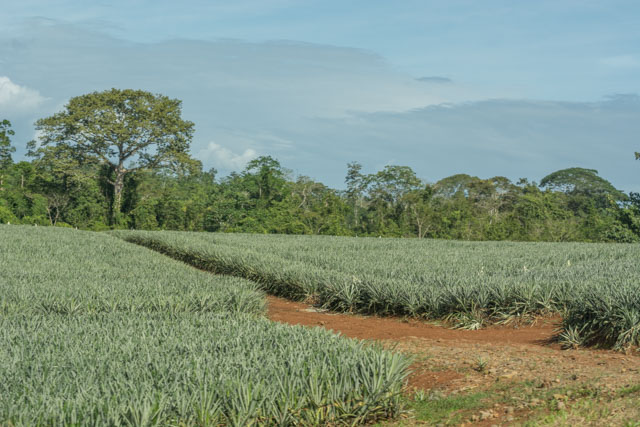
We passed large plantations – sugar cane, orange and pineapple. I was surprised to learn that a pineapple growing with the help of pesticides takes 11 months to ripen, and 18 without. No wonder organic stuff is dearer. The taste of pineapple here is incredible, this place has got me eating fruit… need I say more?

By the side of the road, we came across an active sloth. This was a three-toed sloth, and they are active during the day, as opposed to the nocturnal two-toed sloth we saw on our night walk a few days ago.

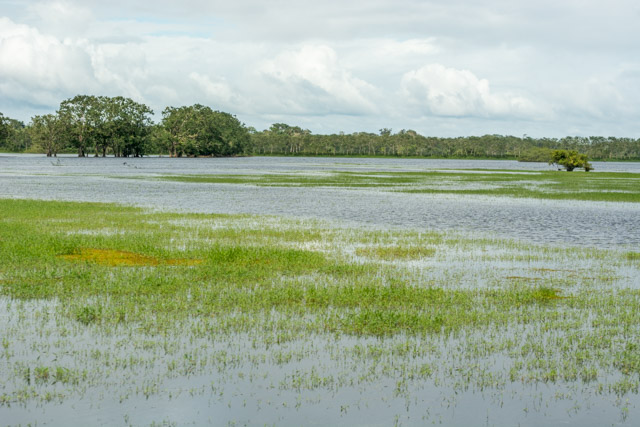
As soon as we left the main road for a dirt track, we saw a variety of wildlife: tiger heron, great egret, a tortuga (turtle), a caiman, Amazon kingfisher, fork-tailed flycatcher, king bird and wood stork amongst many others. The fields had recently flooded and the wildlife were making the most of it.

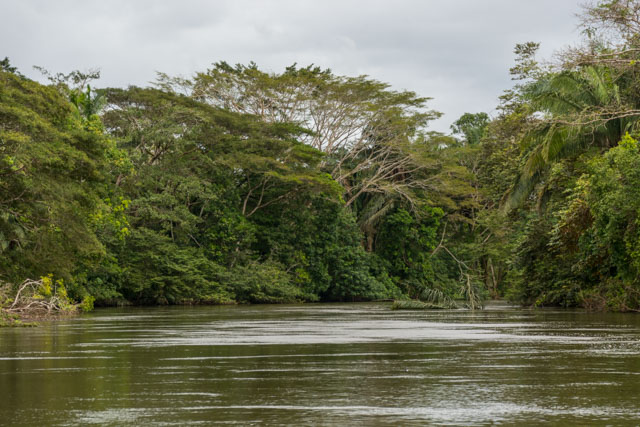
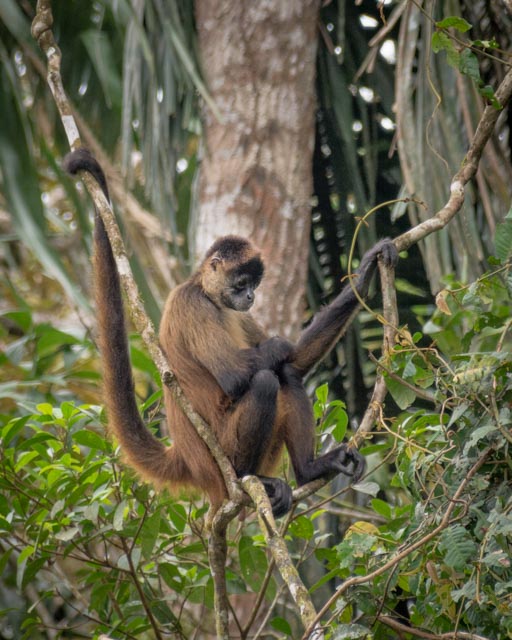
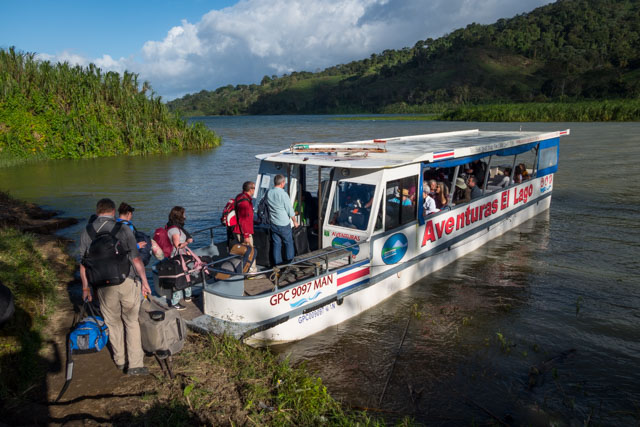
We boarded our boat and set out to explore the Rio Frío. I spent the whole journey on the bow. The scenery was lovely; the vegetation was wild and the wildlife was incredible. Many new birds: potoo, belted kingfisher, anhinga, laughing falcon (Herpetotheres Cachinnans), mangrove swallows (so pretty). A caiman, iguanas, a basilisk (vivid green lizard) and three types of monkeys. The howler monkeys had babies and it was fun to watch these making sense of branches and co-ordination. One female adult is in charge of the creche, and was busy supervising them all. The spider monkeys ignored us totally. And an orange monkey – a sadder story. Due to the predators, the monkeys don’t travel as much as they used to, so there is a fair amount of incest going on. This monkey is bright orange as a result and it was kicked out of the colony.

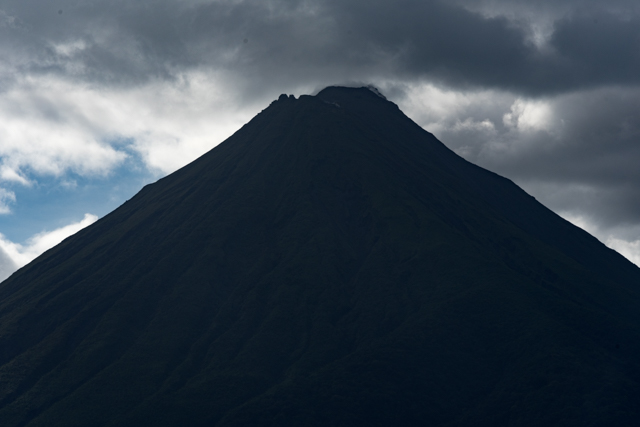
On the way back to La Fortuna, we were treated to a rare sight – the Arenal volcano was completely clear, no clouds.

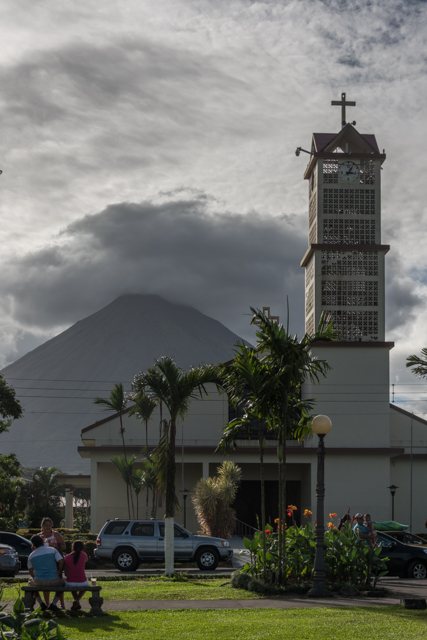
As it was still quite early, we decided to explore the town. Ten minutes later, having walked around the main square and visited the church, we treated ourselves to ice-cream.

We wandered to a bar near the hotel. We sat down, ordered margaritas and wrote our diaries. I declared today a top day. The river was so quiet, beautiful and so full of life.

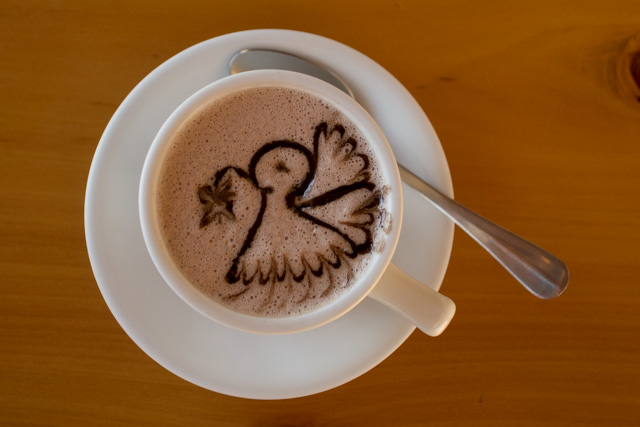
An angel in my chocolate

A very slow start to the day, although it amuses me that the days without an alarm call are the days I naturally wake up early. Andy went to get us mugs of coffee, and we pottered about in our room.
As we were going out for breakfast, we were told that the check out was now an hour earlier… so we backtracked and packed our bags. This made me grumpy. I left the room to go and have breakfast, not to go back in and pack.

I was well grumpy by the time we got to breakfast. A nice hot chocolate and an egg and cheese croissant somewhat helped to redress the balance.

As we were half-way to town, we continued down and checked out the supermarket for coffee to take home and then decided not to bother. At Beso, we had full flavoured cappuccinos. Back up the hill, we explored a burnt-out restaurant (this place would be condemned and out of bounds back home!) and a not very good art centre.

We sat outside our room for a while, and watched the birds feeding on bananas.

Whilst waiting for our bus, we faced-time Omar and Jenny and it was good to see the kitties looking happy and well.

Our two hour journey to the ferry was stunning. The landscape and the wildlife put on good shows. We stopped for a few minutes to watch a toucan, and a Montezuma Oropendola (or, as I would say another exotic looking bird).

The ferry journey was equally beautiful, with great views of the Arenal volcano.

We’re now in La Fortuna. We’re much lower down again, so it’s warmer – back to t-shirt weather – and there is no wind (but I can still hear it in my ears).

There are three main streets to the town, and that’s mostly bars and restaurants catering for young American tourists. We went to such a place to sample a few local craft beers, and then went round the block a few times to search for an elusive vegetarian restaurant. I can’t believe we had more luck finding a Quetzal in the rainforest yesterday!!!

So, we bought snacks in the supermarket and retired to our room.

Quetzal Hunting in the Cloud Forest


Thanks to our Guide for this image taken with a phone through a scope.

Early start this morning, leave the hotel at 7:00 for a cloud forest walk. Monteverde where we’re staying is 1,500m above sea level, the cloud forest is only at 1,800m but the flora and fauna are very different.

Our guide is well equipped for the walk with top of the range scope, tripod and North Face clothing – this is how things are in Costa Rica.

There are lots of interesting creatures and plants in the forest but the one thing that everybody wants to see is the Resplendent Quetzal. This bird is one of the most beautiful anywhere, the body is not much larger than a pigeon but the tail feathers of the male can be up to a metre long. They were used by the Aztecs for headdresses for the elite few. The Quetzal is now gone from most areas of Central America and has threatened status. Will we see one? Our chances are about 75%.

The richness of life in the forest is incredible. Our guide shows us one large wild avocado tree, it has about 70 smaller plants living on it. Where a tree has fallen it is soon taken over by a variety of ferns and mosses. The forest is a mixture of primary and secondary. The reserve has grown out of conservation projects started in the 1970s that were concerned about the reduction in wildlife habitat and started buying up agricultural land near to existing forest and replanting. It’s now hard to tell the difference between the two. Over 25% of Costa Rica is protected reserve, the tiny country has 5% of the world’s bio-diversity and over 10% of all butterfly species. The government recognises the importance of this, obviously from an environmental and tourism perspective and puts huge amounts of money into it too.

Our hawk-eyed guide spots an owl asleep in the highest branches, it’s hard to even see it with a naked-eye but it’s clear through the scope.

We are very close to the watershed between the Pacific and Caribbean coasts, the streams here run to the East into the Caribbean. We walk to a waterfall that cascades down the hillside in many small drops.

There are three well-known places to see a Quetzal, the guide scans the canopy above the first one but there’s nothing there.

One bush is full of tiny finches, they take no notice of us and fly very fast across the path looking for insects to eat.

After about an hour and a half we come across a group peering into the tree-tops, there’s a Quetzal up there somewhere. We can just see his turquoise back and some of the long tail, his red front is facing away from us. A little further up the path there’s a better view but still no full-frontal. After a few minutes he flies off – not a great siting but we’ve seen one.

The walk finishes at the Hummingbird Cafe. This has a number of nectar feeders set up around the verandah. The tiny birds fly all around us, you can hear a small buzz from their wings as they pass. The largest here weighs about 60g, the smallest only 12g, their wings beat up to 60 times a second. They are the only bird that has muscle in their chest that allows their wings to beat in a circular motion allowing them to hover absolutely still in the air. There are many different colours, as the light changes their glow iridescently. I could happily watch them – and try and photograph them – all day but our transport is waiting. We’re dropped in town for breakfast which has now turned into lunch.

We have no plans for the afternoon so decide to visit the Frog Centre. Costa Rica is famous for its frogs but they are very hard to see in the wild so this is our best chance. We can walk round on our own or have a guide – even within fairly small enclosures the frogs are very hard to see so the guide is worthwhile. The frogs and toads vary in size from 12cm long down to just 2-3cm for the tiniest. They come in many colours – the brightest has a bright red top and blue legs but we can only see his head. It’s not like seeing them in the wild but worthwhile all the same.

We had hoped to venture out of town to find a viewpoint to watch the sunset but it’s grey and rainy as the afternoon ends so nothing happening there.

Pizza and wine for dinner, not so traditional but Costa Rica are playing El Salvador on the tv in corner which keeps it local.

Costa Rica – Pura Vida

Lazy start to the day in our luxury suite, well our very nice room anyway, no need for an alarm. Start with a coffee in bed thanks to ‘room service’ – i.ee me. Breakfast at about 8:30, there are hummingbirds buzzing around outside the window. We have a fairly standard rice and beans with scrambeld eggs and some slices of fruit.

Florence is zip-lining this morning – on the longest line in Latin America, I’m continuing the lazy start to the day, write a few e-mails, book a holiday etc.

The hotel garden is full with birds of many colours, they leave out fruit on a bird table and birds of all colours and hues descend to eat it. There is a pecking order, the woodpecker is at the top, the little yellow ones near the bottom.

Wander down to a cafe in town for a coffee about midday, research on Costa Rican coffee of course, edit some photos until Florence is back, she is buzzing and slightly shaken but all in one piece.

Florence has this to say about zip-lining:

“I think the worst thing you can do is over-think it. I booked this last night and it played on my mind… right until it was my turn to go.

Andy and I did dare each other to do things that were out of our comfort zone on this trip, and this certainly was one of mine.

If you’re into zip-lining – or if you’ve ever thought about giving it a go, this is the place to do it. The staff are friendly and helpful; and the course certainly gets the adrenalin pumping! The key to it is just to go with it, and trust the equipment.

After being geared up, we had a safety and instruction briefing. It was only a short walk to the first zip-line – a short one to get us started, and the lowest too (they build up from there on). The second line is a bit longer, and the nerves kicked in a bit. After walking on a wobbly rope bridge, the next challenge was the short rappel, straight down from the top of a tree. I initially refused to do it but built up the courage to do a slow one… and felt my heart jumping out of my body.

I had to be ‘rescued’ during the longest zip-line (1,590 meters) as the wind had picked up, and a strong burst stopped me in my tracks.

Aware that the option to drop out at any stage was available to me, I pushed myself. I did the seven zip-lines (where you’re sitting in your harness), one short rappel and the two superman zip-lines (where you’re literally in the flying position). I had enjoyed my experience and was happy to leave it there. The views were stunning, the feeling of wind on your face, of being out of control, the feeling of flying… yes, that was one of the most challenging things I have ever done, and certainly the most exhilarating.

You can check out some general pictures on 100% Adventura’s website.”

Time for lunch – poached eggs and fried potatoes for Florence, mozzarella, tomato and pesto pitta for me – very tasty.

The town we’re in is based around the adventure travel business, there’s a small central square surrounded by shops, restaurants and travel agents. It’s built on the side of a hill so nothing is flat. Check out a few souvenir shops but nothing is grabbing us, wander back up the hill to the hotel and wile away a few hours until our next outing.

5:30 is time for our night walk, a couple of hours in the forest looking for creatures that only come out after dark. By the time we get onto the path it’s almost dark, just a red glow in the sky through the trees, soon the stars start to come out. Our guide has amazing vision, it’s hard enough to see things in the day time but he finds us plenty to look at by torch light. First creature is a green Katydid that looks just like a leaf. We were warned before the walk not to touch any trees in the dark, our next siting confirms why, it’s a bright green viper, quite young, about 50cm long, it will grow to up to about 2m. It sits in the tree waiting for passing rodents but its poisonous enough to kill a human. We see a few birds asleep in the trees, they seem totally oblivious to us even when they’re only a few feet away. Scorpions are only visible in UV light, they glow green, by torchlight they’re practically invisible. Then we spot what we’ve all been waiting for – a sloth, the first one is a bit high and it’s hard to telll which part of the bundle of grey-brown fur is which, but soon after we come across a younger one that, for a sloth at least, is being quite active. It slowly moves through the trees about 10m above us, we’re all moving to get the best view from the ground. Strange sloth fact – they come down from the trees once a week for a toilet break. The walk was very enjoyable, there’s quite an atmosphere to a forest at night with wind in the trees and the mystery of darkness just beyond the reach of our torches.

Back to the hotel, no dinner tonight, early night – early start tomorrow.

So many shades of green

We had an early alarm this morning. With today’s itinerary still unknown, we potentially only had a few hours left in Granada and we wanted to go back to The Garden Cafe. Breakfast was fabulous. I had a fresh orange juice, an americano and avocado with cumin and chia seeds on artisan bread. Andy had a posh version of chapiollo which is the staple breakfast here – gallo pinto (beans), scrambled eggs, cheese, avocado, pico de gallo (tomato and onion salsa), tortilla and fresh fruit. We sat in the courtyard again and were rewarded with two new bird sightings – a small bluey-grey one and a medium sized one with bright orange feathers.

Last night, over beers (The Garden Cafe has craft beers; we’re seriously thinking about moving into this cafe) we’d made a plan. We agreed we didn’t want another day in Granada, so if this was our option, we’d hire a car and a driver and would spend our day in León.

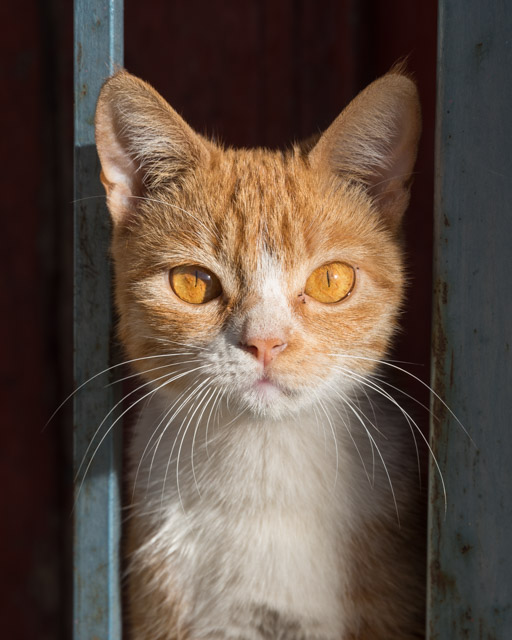
We walked back to the hotel via Calle El Arsenal. Near the hotel, I finally got to cuddle the shy little kitten we’d seen over the last few days. The first time, he ran away as soon as we walked near him, but I got chatting to him and slowly, very slowly, he came forward and we had a nice cuddle.

The news that awaited us is that we’d be leaving in an hour for Costa Rica. And whilst we’re sad to be leaving Nicaragua early, this was definitely the right call. Monteverde, our first stop in Costa Rica, is activity and wildlife central, and spending an extra day there would give us the opportunity to do more activities.

The drive to the border was uneventful. Now, this is what I call a border crossing! Off the bus, navigating money exchange men, hawkers, food sellers, pickpockets and container lorries. The place was brimming with activity, and noisy. We walked approx 600 meters, and with the formalities complete, we boarded our new bus.

Welcome to Costa Rica!

At once, the landscape’s totally different. By the road, the housing and the fields look more affluent. In the distance, rugged hills with more shades of green than  you’ve ever seen in your life.

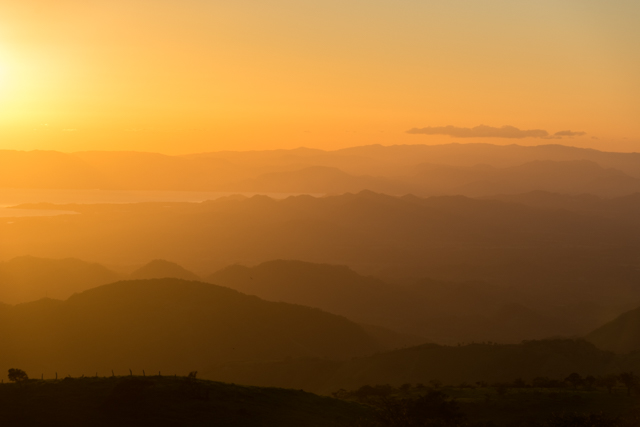
We stopped for sunset. The views over the Gulf of Necoya were spectacular.

As we were arriving in Monteverde a day early, we were going to spend the night in a hotel slightly out of town as everywhere else was full. Andy and I were allocated room 11, and straight away I did think something wasn’t quite right. Looking at the rooms (the hotel has a standard motel shape where you’re facing all the rooms from the car park), the last door had number 10 on it. Turned out, our room was a shed at the back, near the laundry room. When we went in, we noticed a hole in the ceiling, a variety of small animals (some dead, other alive). The tin roof was rattling in the wind. There was no door to the bathroom, and no light in there either. The bathroom had a second door which opened onto the car washing area; the worst thing about it was that above the door, there were wooden slats with big gaps between them… which were obviously letting more animal life in, including mosquitos. We got our bags together, Andy grabbed Dennis and asked for a lift to town, explaining that we would not be staying the night there. It all turned out well in the end. The hotel where we were going to spend the next two nights had one room left and it’s lovely. Big, spacious, airy… and the best thing? We don’t have to move for three nights. Yeah!

With this sorted, we went out for dinner. The wind was gusty and strong (the day before yesterday, the wind was 100 km a hour, with heavy rain). The temperature is fresher than we’ve had in a long while, so the warm layers came out. So much so that we had a bottle of Malbec for dinner; no beers in sight!

Early night. Tomorrow is full on!