






Breakfast at the Rainforest Cafe. We both had the desayuno típico (eggs, gallo pinto and plantains) which was tasty and fairly cheap. And a good cup of coffee to wash it down.
We had a hotel pick-up at 7:45am. A two and a half hours drive to the Caño Negro wildlife refuge, near the border with Nicaragua.
En-route, we stopped to check out cool iguanas. The owner of the restaurant protected nine iguanas about 20 years ago and there are now hundreds about. A good bit of conservation, and a great way to get tourists to come to your place.
We learnt more about Costa Rica and how they are doing all they can to be as eco friendly as possible. Households and companies can have a blue achievement sticker. Everyone’s keen on recycling. There is no army here and it seems to be something they’re proud of (that fact is on t-shirts, one of the top souvenirs you can get).
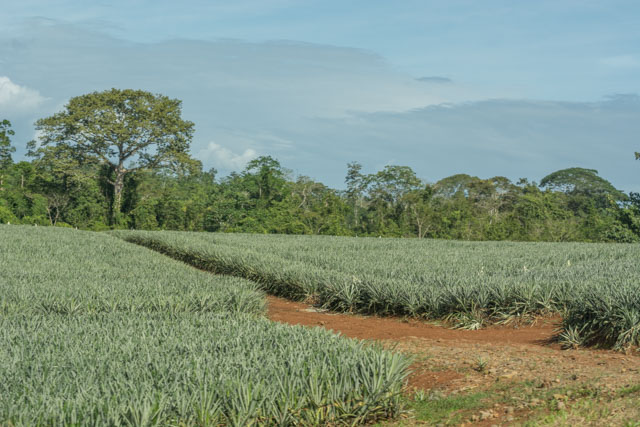
We passed large plantations – sugar cane, orange and pineapple. I was surprised to learn that a pineapple growing with the help of pesticides takes 11 months to ripen, and 18 without. No wonder organic stuff is dearer. The taste of pineapple here is incredible, this place has got me eating fruit… need I say more?
By the side of the road, we came across an active sloth. This was a three-toed sloth, and they are active during the day, as opposed to the nocturnal two-toed sloth we saw on our night walk a few days ago.
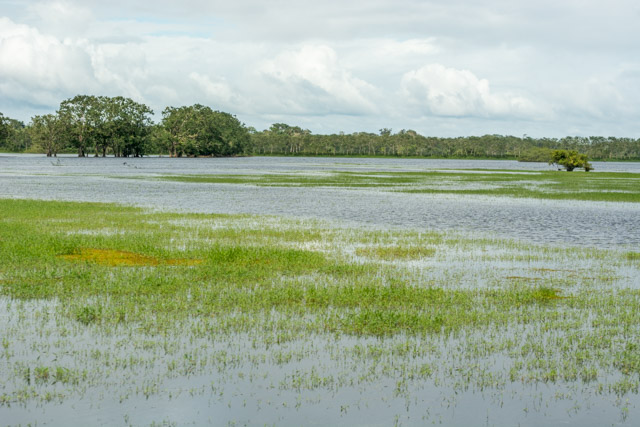
As soon as we left the main road for a dirt track, we saw a variety of wildlife: tiger heron, great egret, a tortuga (turtle), a caiman, Amazon kingfisher, fork-tailed flycatcher, king bird and wood stork amongst many others. The fields had recently flooded and the wildlife were making the most of it.
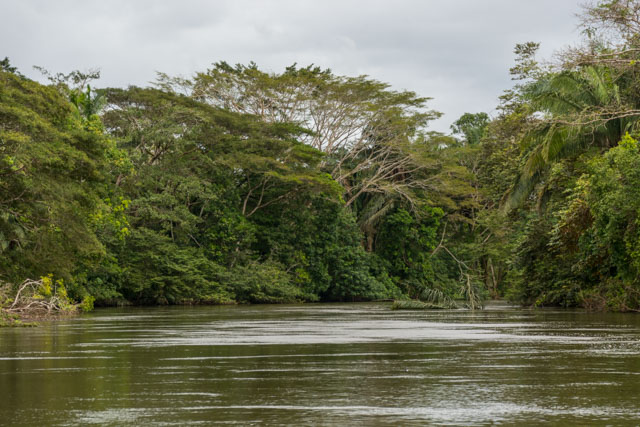
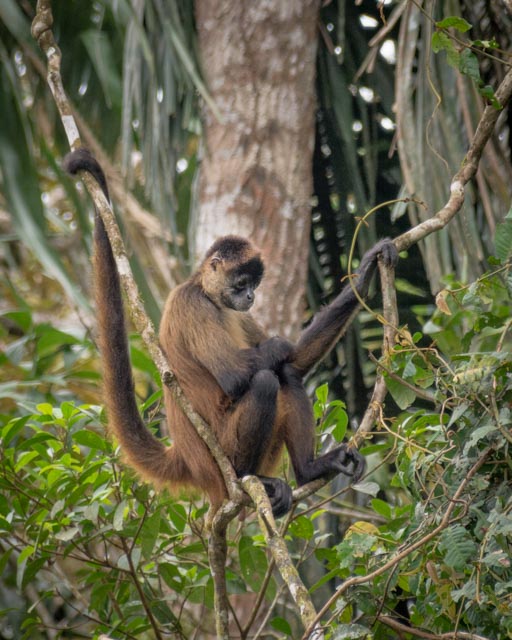
We boarded our boat and set out to explore the Rio Frío. I spent the whole journey on the bow. The scenery was lovely; the vegetation was wild and the wildlife was incredible. Many new birds: potoo, belted kingfisher, anhinga, laughing falcon (Herpetotheres Cachinnans), mangrove swallows (so pretty). A caiman, iguanas, a basilisk (vivid green lizard) and three types of monkeys. The howler monkeys had babies and it was fun to watch these making sense of branches and co-ordination. One female adult is in charge of the creche, and was busy supervising them all. The spider monkeys ignored us totally. And an orange monkey – a sadder story. Due to the predators, the monkeys don’t travel as much as they used to, so there is a fair amount of incest going on. This monkey is bright orange as a result and it was kicked out of the colony.
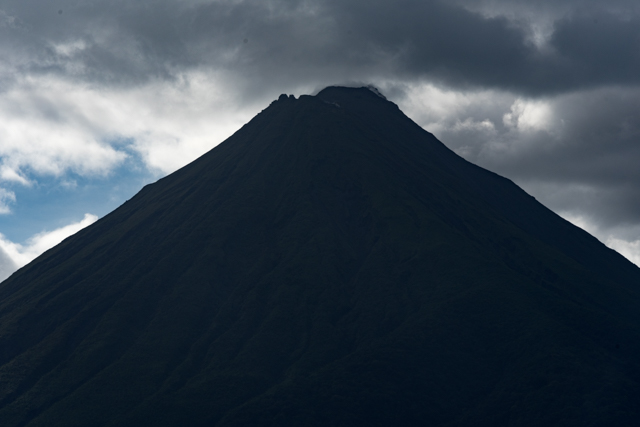
On the way back to La Fortuna, we were treated to a rare sight – the Arenal volcano was completely clear, no clouds.
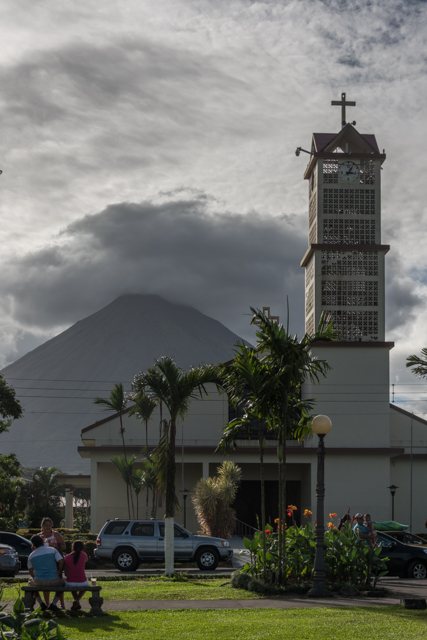
As it was still quite early, we decided to explore the town. Ten minutes later, having walked around the main square and visited the church, we treated ourselves to ice-cream.
We wandered to a bar near the hotel. We sat down, ordered margaritas and wrote our diaries. I declared today a top day. The river was so quiet, beautiful and so full of life.
you have timed your trip to perfection. We have just got through blue Monday: ‘A mixture of post-Christmas blues and debt, bad weather, the daily grind of returning to work and waning new year resolutions all combine to make January 16 the most depressing day of the year.’ But reading your blog is a great source of happiness.
Farewell dinner tonight, plenty of Pinot Noir, we’re happy.
Just love the wildlife pictures. It seems that much of it you are just coming across. Have you had to seek them out and freep up or is this the benefits of a good zoom lens?
Thanks, the hummingbirds seem oblivious to people so you can get close, but they are very quick. The rest are mainly from a boat, quite a long way way off – 300mm lens cropped quite a lot. A few more mm would help 🙂